
Centella Asiatica Extract | Skin Repair & Soothing Cica Active
Centella asiatica extract (INCI: CENTELLA ASIATICA EXTRACT, CAS 84696-21-9) — the triterpenoid repairing active better known as gotu kola extract or "cica" — supplied by Plamed in water-soluble and alcohol-soluble grades, standardized from 70% total triterpenes to 95% asiaticoside.
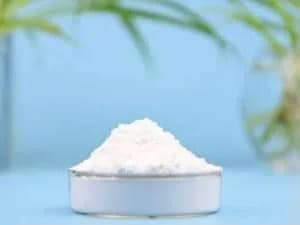
Centella Asiatica Extract
Centella asiatica extract is a botanical skin-repair active that soothes sensitive skin, supports the repair of a damaged skin barrier and promotes collagen synthesis — the plant active behind the "cica" trend in repairing, soothing and anti-aging skincare.
Plamed selects high-quality centella asiatica herb and supplies both water-soluble and oil-soluble grades — from 70% total triterpenes to 95% asiaticoside and 90% madecassoside — combining formulation flexibility with consistent, batch-to-batch quality for every dosage form.
At a glance
Attribute | Value |
INCI name | CENTELLA ASIATICA EXTRACT |
CAS number | 84696-21-9 |
Botanical source | Centella asiatica (L.) Urban, whole herb — gotu kola |
Key actives | Asiaticoside, madecassoside, asiatic acid, madecassic acid |
Specifications | 70% total triterpenes · 90% madecassoside · 95% asiaticoside · 36–44% asiaticoside + 54–66% asiatic & madecassic acid · 10% total triterpenes |
Appearance | Pale yellow to white powder |
Solubility | Water-soluble and alcohol-soluble grades |
Recommended dosage | 0.3%–1.5% in skin care; about 0.05% in shampoo |
MOQ | 1 kg |
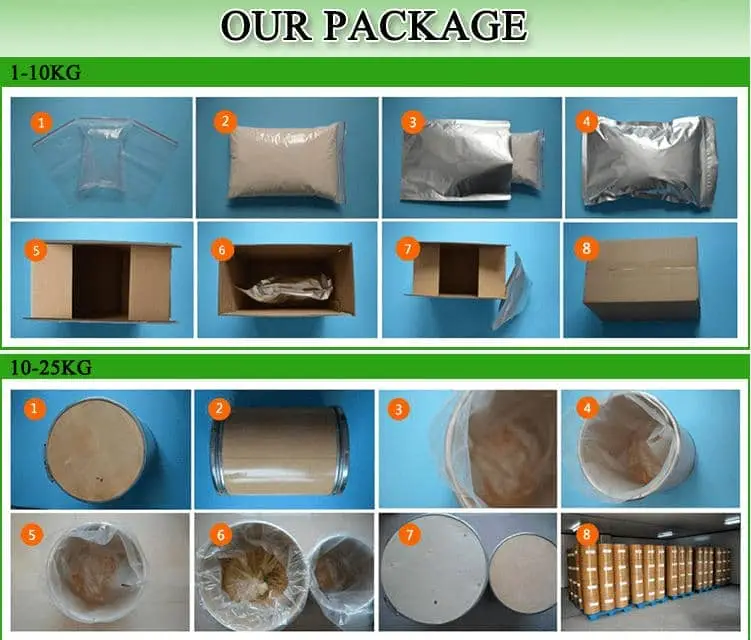
Package | 25 kg fiber drum with double PE liner |
Centella asiatica extract (INCI: CENTELLA ASIATICA EXTRACT, CAS 84696-21-9), also sold as gotu kola extract or simply "centella extract", is a triterpenoid-saponin repairing active. Its cosmetic activity comes mainly from four markers — asiaticoside, madecassoside, asiatic acid and madecassic acid — dosed at 0.3%–1.5% in skin care.
In short: Centella asiatica extract is a triterpenoid-saponin repairing active (INCI: CENTELLA ASIATICA EXTRACT, CAS 84696-21-9), also known as gotu kola extract — standardized by Plamed from 70% total triterpenes to 95% asiaticoside, dosed at 0.3%–1.5% in skin care, water-soluble and oil-soluble grades available.
What it is.
Centella asiatica — gotu kola, and the ingredient behind the "cica" naming trend — is a perennial creeping herb whose leaves have been used in Traditional Chinese and Ayurvedic medicine for more than 2,000 years. The extract is a herbal extract standardized to triterpenoid saponins: asiaticoside and madecassoside (glycosides) plus asiatic acid and madecassic acid (their aglycones). Plamed offers five cosmetic-grade specifications spanning water-soluble and non-water-soluble options.
How it works.
Asiaticoside and madecassoside promote the proliferation of keratinocytes and fibroblasts and stimulate the synthesis of collagen type I and III, while asiatic acid supports the same collagen pathway — together they accelerate the skin's own repair processes, improve barrier function and reduce the pro-inflammatory mediators (IL-1, MMP-1) behind redness and reactivity. The extract also shows antibacterial activity against Cutibacterium acnes, Staphylococcus aureus and Pseudomonas aeruginosa, plus antioxidant activity that supports brightening formulas.
Where it fits in skin care.
Repairing creams and serums for compromised barriers, cica-type soothing products for sensitive skin, anti-acne gels, post-procedure care, brightening lines and scalp-care shampoos (about 0.05%) — one extract covering repair, soothing, anti-aging and brightening briefs.
Where does centella asiatica extract come from?
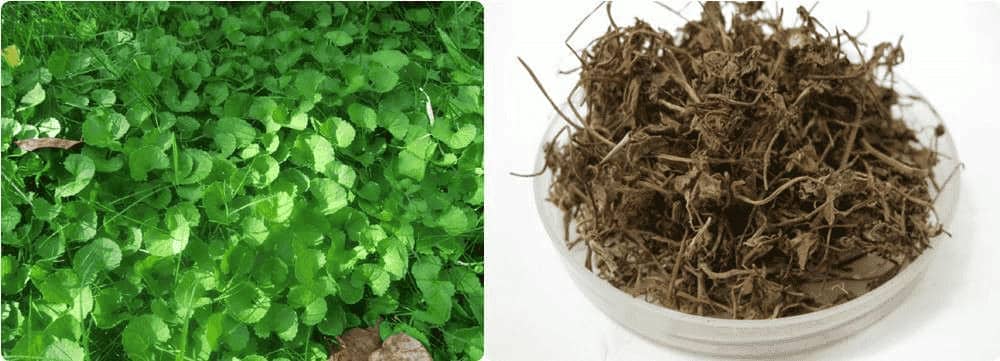
Centella asiatica — better known as gotu kola — is a perennial creeping herb native to the tropical and subtropical wetlands of Asia, with India as a classical origin. It grows on wet river banks, swamps and meadows, and has been used as medicine in China for more than 2,000 years; Madagascar, South Africa, Southeast Asia and South America also use it as a dermatological herb. Plamed selects high-quality centella asiatica herb as raw material — the leaf and whole-herb material is the source of gotu kola leaf extract. The actives used in cosmetics are asiatic acid, madecassic acid, asiaticoside and madecassoside.
Which centella asiatica extract specifications are available?
Conclusion first: five cosmetic-grade specifications cover both water-soluble and non-water-soluble formulation needs — pick the marker profile first, then the solubility.
Product ID | Specification | Appearance | Soluble in |
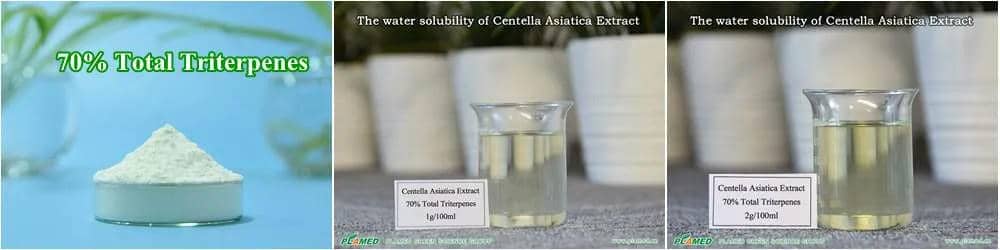
PMQD0801 | 70% Total Triterpenes (Asiaticoside + Madecassoside + Asiaticoside B) | Pale yellow to off-white powder | Water, alcohol |
PMQD0806 | 95% Asiaticoside | White powder | Alcohol |
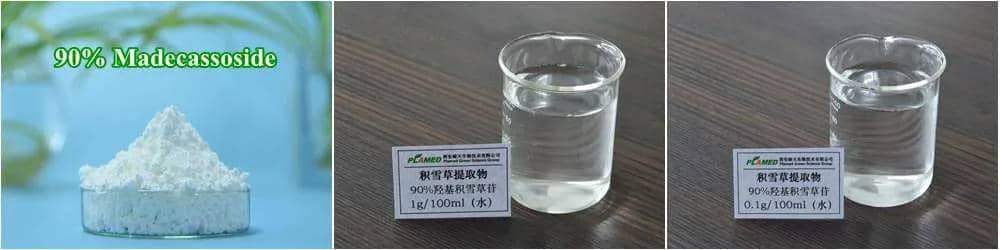
PMQD0803 | 90% Madecassoside (Madecassoside + Asiaticoside B) | White powder | Water |
PMQD0805 | 36–44% Asiaticoside (HPLC) + 54–66% Asiatic acid & Madecassic acid (titration) | Off-white powder | Alcohol |
— | 10% Total Triterpenes (Asiaticoside + Madecassoside + Asiaticoside B) | Off-white powder | — |
How to read the specification sheet:
70% Total Triterpenes (PMQD0801): the four markers total ≥70.0%; soluble in both water and alcohol, the most widely used full-profile grade for repair and soothing formulas (measured solubility: 1 g in 50 mL water).
90% Madecassoside (PMQD0803): madecassoside + asiaticoside B ≥90%; water-soluble, suited to cica serums for sensitive skin and post-procedure care.
95% Asiaticoside (PMQD0806): alcohol-soluble high-purity single glycoside, for formulas that need precise dosing.
36–44% Asiaticoside (PMQD0805): glycoside + aglycone dual pathway; alcohol-soluble.
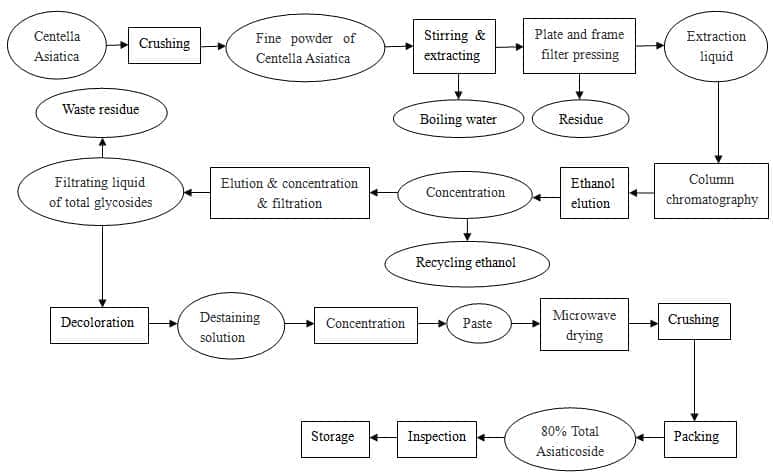
How is centella asiatica extract manufactured?
Conclusion first: a four-stage hot-water extraction and chromatography purification route turns dried gotu kola herb into a standardized triterpenoid powder.
1. Raw material preparation. Dried centella asiatica herb is cleaned and crushed into fine powder.
2. Extraction. The powder is stirred and extracted with boiling water; plate-and-frame filter pressing removes the waste residue and yields the extraction liquid.
3. Purification and enrichment. The liquid is concentrated, then purified by column chromatography with ethanol elution; ethanol is recycled. The total-glycoside filtrate is decolorized with a destaining solution and concentrated again into a paste.
4. Drying and finishing. The paste is microwave-dried, crushed, inspected for total triterpenoid content, packed in 25 kg fiber drums and stored.
What does centella do for skin?
Centella asiatica extract skin benefits cover four directions — soothing, repair, antibacterial support and antioxidant brightening — which is why it is the base of most cica products.
Soothing and anti-inflammatory care
Centella asiatica extract reduces the production of pro-inflammatory mediators such as IL-1 and MMP-1, calming redness and reactivity and helping correct irritation-driven barrier dysfunction. This makes it a core active for after-sun and sensitive-skin products.
Barrier repair and collagen support
Asiaticoside and asiatic acid promote the synthesis of collagen type I and III, stimulate fibroblast activity and support hyaluronic acid synthesis, improving moisture retention and skin elasticity. In cosmetic wording: it supports the repair of scar-prone, rough or stress-weakened skin and helps smooth the look of fine lines.

Antibacterial and anti-acne support
The extract inhibits Cutibacterium acnes, Staphylococcus aureus and Pseudomonas aeruginosa; asiatic acid disrupts bacterial outer membranes. Combined with its soothing action, it fits anti-acne gels and lotions — helping both the breakout and the redness it leaves behind.
Antioxidant brightening
Centella asiatica extract scavenges free radicals and helps moderate melanin activity, supporting a more even, brighter tone — a secondary but useful benefit in brightening formulas where strong actives need a soothing partner.
Is centella asiatica extract safe for cosmetics?
Centella asiatica extract is listed in the IECIC (Inventory of Existing Cosmetic Ingredients in China, 2021) and in the 2010 International Chinese Nomenclature Catalogue of Cosmetic Ingredients; there are no reported safety concerns for external use in cosmetics.
It is also listed by PCPC (formerly CTFA) as an accepted cosmetic raw material in the United States.
For any market-specific regulatory dossier, contact Plamed for the latest documents.
What do the pharmacological studies show?
Test item | Concentration | Result |
Asiaticoside: proliferation of human keratinocytes | 100 µg/mL | +16.1% vs blank |
Asiaticoside: proliferation of human fibroblasts | 50 µg/mL | +27.1% vs blank |
Asiatic acid: collagen production | 10 µmol/L | +50% vs blank |
Asiaticoside: collagen production | 10 µmol/L | +155% vs blank |
Asiaticoside: inhibition of scar fibroblast activity | 0.5 mg/mL | 59.7% inhibition |
Asiaticoside: inhibition of ear swelling in mice | 0.5 µmol/ear | 45.1% inhibition |
The data trace one coherent story: asiaticoside accelerates the proliferation of the two cell types that rebuild skin (keratinocytes +16.1%, fibroblasts +27.1%) and more than doubles collagen production at 10 µmol/L, while simultaneously inhibiting the over-active fibroblast response behind scar tissue (59.7%) and inflammatory swelling (45.1%). Repair without over-repair — the exact profile brands look for in a repairing active.
Which products can use centella asiatica extract?
Centella asiatica extract is used across repairing, soothing, anti-acne, brightening and anti-aging skin care, and in scalp-care shampoos. Reference dosage: 0.3%–1.5% in skin care; about 0.05% in shampoo.
Application scenarios:
Scenario | Recommended grade | Function positioning |
Cica-type soothing cream / serum for sensitive skin | 90% Madecassoside (water-soluble) | Calm redness, barrier comfort |
Barrier-repair cream / essence | 70% Total Triterpenes | Collagen support, barrier recovery |
Anti-acne gel / lotion | 70% Total Triterpenes | Antibacterial + soothing |
Post-procedure aftercare | 90% Madecassoside | Regeneration support, low irritation |
Brightening line | 95% Asiaticoside or 70% TT | Antioxidant, even tone |
Shampoo / scalp care | 70% Total Triterpenes | Scalp comfort, ~0.05% |
Reference formulas
Cuticle repair toner | ||
Phase | Ingredient | Concentration(%) |
A | Water | 12.48 |
Propanediol | 3.00 | |
Glycerin | 2.00 | |
Pentylene Glycol | 0.50 | |
Xylitol | 3.00 | |
Sodium Hyaluronate | 0.02 | |
B | Lavender Water | 59.70 |
Verbena Water | 10.00 | |
Orange Blossom Water | 5.00 | |
Centella Asiatica Extract | 1.00 | |
Chamomilla Recutita | 1.00 | |
Althaea Officinalis | 1.00 | |
Fucogel-1 | 0.50 | |
C | PE9010 | 0.80 |
1.Mix Phase A ingredients, heat to 80-85°C, stir until uniform, and keep warm;
2.Stir while cooling to below 45°C, then add Phase B and C ingredients,stir until thoroughly mixed
Repairing Essence Lotion Formulation | |||
Phase | No. | Ingredient | Concentration(%) |
A | 1 | WATER | 72.84 |
2 | BUTYLENE GLYCOL | 4 | |
3 | DIPROPYLENE GLYCOL | 4 | |
4 | SODIUM HYALURONATE | 0.05 | |
5 | PANTHENOL | 0.6 | |
6 | ACRYLATES/C10-30 ALKYL ACRYLATE CROSSPOLYMER | 1.2 | |
7 | BETAINE | 0.5 | |
8 | ALLANTOIN | 0.1 | |
9 | XANTHAN GUM | 0.03 | |
10 | PENTYLENE GLYCOL | 2 | |
11 | 1,2-HEXANEDIOL | 1.2 | |
B | 12 | PEG-20 METHYL GLUCOSE SESQUISTEARATE | 0.6 |
13 | METHYL GLUCOSE SESQUISTEARATE | 0.15 | |
14 | ISONONYL ISONONANOATE | 1 | |
15 | CAPRYLIC/CAPRIC TRIGLYCERIDE | 1 | |
16 | SQUALANE | 0.5 | |
C | 17 | ARGININE | 0.13 |
18 | WATER | 10 | |
D | 20 | MADECASSOSIDE | 0.1 |
Process:
1. Mix Phase A ingredients, heat to 80-85°C, stir until uniform, and keep warm;
2. Mix Phase B ingredients, heat to 80-85°C, stir until uniform, and keep warm;
3. While stirring, add Phase B to Phase A; after stirring until uniform, start homogenization; after homogenizing for 3-5 minutes, resume stirring;
4. Stir while cooling to below 65°C, then add Phase C ingredients;
5. Continue stirring until the temperature drops below 45°C, then sequentially add Phase D ingredients; stir until thoroughly mixed.
How much does centella asiatica extract cost, and what is the MOQ?
Supply:
Item | Detail |
MOQ | 1 kg |
Package | 25 kg fiber drum with double PE liner |
Storage | Cool, dry place, away from direct sunlight and oxidizing agents |
Lead time | Confirm with sales |
Documents | TDS, COA, MSDS |
Available Document of Centella Asiatica Extract
Centella Asiatica Extract 70% Total triterpenes TDS
Centella Asiatica Extract 90% Madecassoside TDS
Certificate of Analysis (COA)
Material Safety Data Sheet (MSDS)
Composition Statement / Compositional Breakdown
Manufacturing Process Flowchart
Analytical / HPLC Test Method
Regulatory Statements (Vegan, Halal, Animal-Free)
Third-Party Test Report (SGS Pesticide Residue, Microbial)
To request a quote or a sample, contact Plamed Green Science Group here.
Centella asiatica extract supplier and wholesale manufacturer
Plamed is a centella asiatica extract supplier and wholesale manufacturer offering water-soluble and oil-soluble gotu kola extract powder, standardized from 70% total triterpenes to 95% asiaticoside. Whether you are comparing the wholesale price of centella asiatica extract in skin care grade, looking for centella asiatica extract powder suppliers, or checking which centella asiatica extract is best for wholesale programs, Plamed supports the decision with batch COAs, solubility data and free lab-evaluation samples.
Price and wholesale supply
Centella asiatica extract price depends on the specification (70%–95%), order volume, packaging and destination documentation. To buy centella asiatica extract — or buy gotu kola extract powder — at the best wholesale price, source directly from the manufacturer: request a quotation matched to your volume, from 1 kg trial batches to full-container wholesale supply. Where to buy centella asiatica extract with consistent quality: from the factory in Xi'an, China, with batch-to-batch COA on every drum.
Why source from Plamed?
Gotu kola extract powder factory with in-house extraction and chromatography capacity; five specifications from one supplier; documents and samples before you commit; formulation support for water-soluble and non-water-soluble dosage forms.
Q1: What is centella asiatica extract?
A: Centella asiatica extract (INCI: CENTELLA ASIATICA EXTRACT, CAS 84696-21-9) — also sold as gotu kola extract or "cica" — is a herbal extract of the Centella asiatica plant standardized to triterpenoid saponins: asiaticoside, madecassoside, asiatic acid and madecassic acid. Plamed supplies it as cosmetic-grade powder in five specifications.
Q2: What does centella asiatica extract do for skin?
A: It soothes irritation by lowering pro-inflammatory mediators (IL-1, MMP-1), supports barrier repair and collagen synthesis (types I and III), inhibits acne-related bacteria and adds antioxidant, tone-evening activity — a repairing active for sensitive, acne-prone and aging skin.
Q3: Madecassoside vs centella asiatica extract — which is better for skincare benefits?
A: Pure madecassoside (90% grade) gives a single, precisely dosed molecule for soothing and repair — ideal for sensitive-skin and post-procedure formulas. Whole centella asiatica extract (70% total triterpenes) keeps the full marker profile — glycosides plus asiatic and madecassic acid — for broader repair, anti-acne and antioxidant support. Choose by formula goal, not by "which is stronger".
Q4: Is centella asiatica extract water-soluble?
A: Both. The 90% madecassoside and 70% total triterpenes grades dissolve in water (1 g in 50 mL for the 70% grade); the 95% asiaticoside and 36–44% grades are alcohol-soluble. Pick the grade that matches your dosage form.
Q5: What is the recommended dosage of centella asiatica extract in skin care?
A: 0.3%–1.5% for skin care products; about 0.05% in shampoo. This also answers the common "gotu kola extract dosage" question for cosmetics — higher doses are for topical formulation development, to be validated by stability and compatibility testing.
Q6: Is centella asiatica extract safe? What is its EWG rating?
A: It is listed in China's IECIC (2021) and by PCPC (formerly CTFA) as a cosmetic raw material, with no reported safety concerns for external use. On EWG Skin Deep, centella asiatica extract is rated low-hazard.
Q7: What is the MOQ, price and lead time?
A: MOQ is 1 kg; packaging is 25 kg fiber drums with double PE liners. Price depends on specification and volume — request a quotation for the wholesale price; lead time is confirmed per order.
Q8: Do you offer samples and documents?
A: Yes — free lab-evaluation samples with batch COA (including triterpenoid assay), plus TDS, MSDS and regulatory documents for your market.
Q9: Can centella asiatica extract be used in shampoo and scalp care?
A: Yes — at about 0.05% in shampoo for scalp-comfort positioning. The extract's soothing and antibacterial profile also fits scalp-serum formats.
Q10: How should centella asiatica extract be stored?
A: In a cool, dry place away from direct sunlight and oxidizing agents, sealed in the original 25 kg fiber drum with double PE liner.