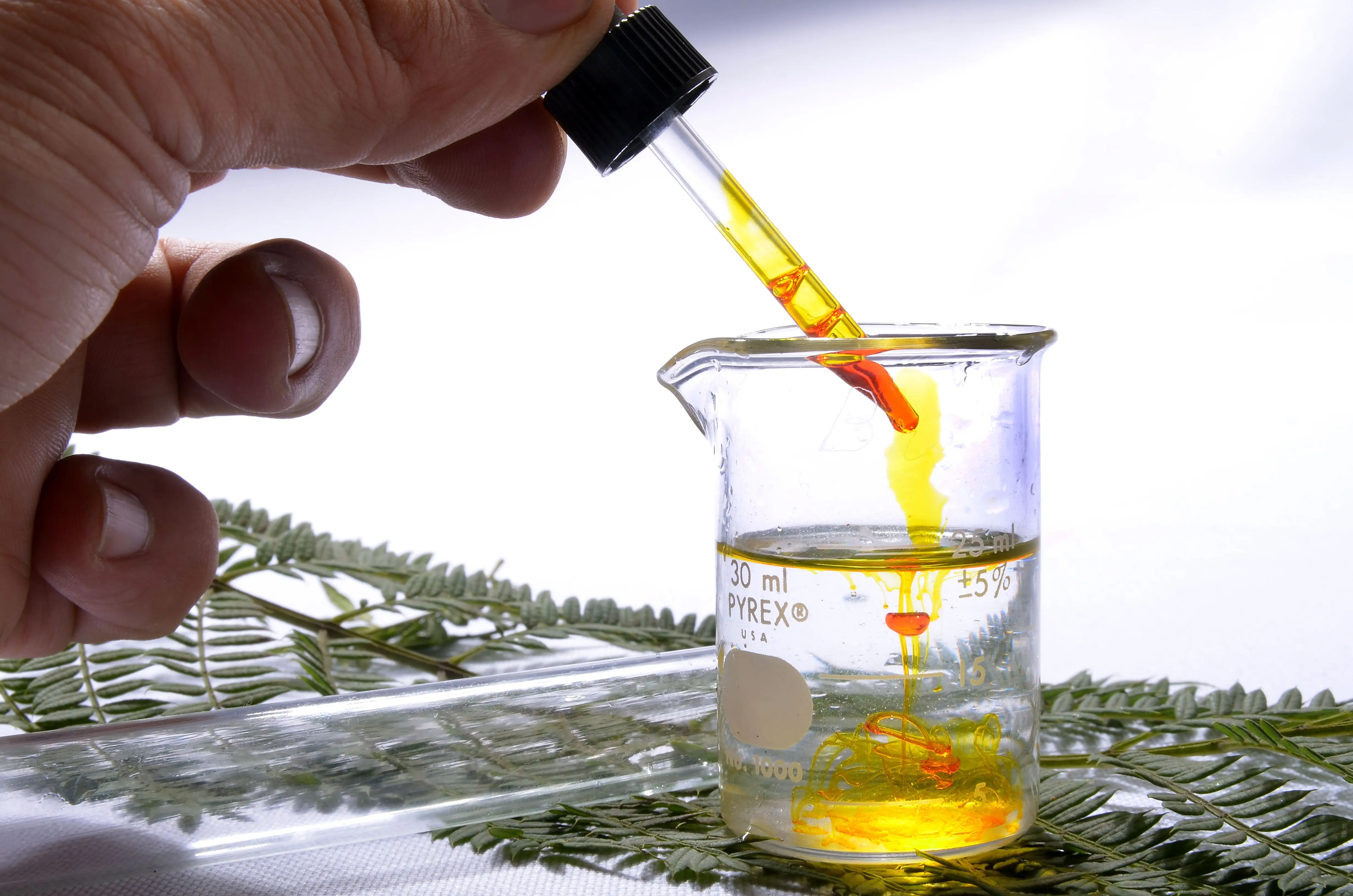
Plamed develops high-performance skincare ingredients through molecular cocrystallization, supramolecular encapsulation, liposome delivery systems, and synthetic biology.
Plamed converges molecular engineering, host–guest supramolecular science, and precision synthetic biology into four synergistic technology pillars, turning intractable active molecules into high-efficacy functional cosmetic ingredients.
Host–Guest Molecular Inclusion
Precision Fermentation & Bio-Manufacturing
Crystal Engineering & Synthon Design
Phospholipid Bilayer Nanovesicles
Host–Guest Molecular Inclusion
Converts insoluble botanical actives into transparent aqueous solutions while shielding active degradation.
Precision Fermentation & Bio-Manufacturing
Achieves ultra-high purity (>98%) without botanical harvesting limits or animal-derived origins.
Crystal Engineering & Synthon Design
Modifies crystal lattice energy without covalent modification, accelerating dissolution velocity.
Phospholipid Bilayer Nanovesicles
Mimics biological membrane dynamics to enhance stratum corneum penetration and sustained release.
| Platform | Working Mechanism | Core Value Translation | Key Applications |
|---|---|---|---|
01Supramolecular Encapsulation | Cyclodextrin hydrophobic cavity entrapment of lipophilic actives via non-covalent bonding | Converts insoluble botanical actives into transparent aqueous solutions while shielding active degradation. | PMSoothe® Kava97, PCR® Escin, PMRefresh® Willow |
02Synthetic Biology Platform | Metabolic pathway engineering and microbial cell factories for precise bio-synthesis | Achieves ultra-high purity (>98%) without botanical harvesting limits or animal-derived origins. | Natural Bisabolol (≥98%), Recombinant Collagen |
03Molecular Cocrystallization | Stoichiometric multi-component co-crystal lattice assembly through hydrogen & π-π bonding | Modifies crystal lattice energy without covalent modification, accelerating dissolution velocity. | Multi-target active co-crystals, Pharmaceutical-grade phyto-complexes |
04Liposome Delivery Systems | Amphiphilic phospholipid bilayer vesicles with aqueous core for dual-phase encapsulation | Mimics biological membrane dynamics to enhance stratum corneum penetration and sustained release. | Topical targeted anti-aging, barrier repair actives |
Mechanism: Cyclodextrin hydrophobic cavity entrapment of lipophilic actives via non-covalent bonding
Core Value: Converts insoluble botanical actives into transparent aqueous solutions while shielding active degradation.
Application: PMSoothe® Kava97, PCR® Escin, PMRefresh® Willow
Mechanism: Metabolic pathway engineering and microbial cell factories for precise bio-synthesis
Core Value: Achieves ultra-high purity (>98%) without botanical harvesting limits or animal-derived origins.
Application: Natural Bisabolol (≥98%), Recombinant Collagen
Mechanism: Stoichiometric multi-component co-crystal lattice assembly through hydrogen & π-π bonding
Core Value: Modifies crystal lattice energy without covalent modification, accelerating dissolution velocity.
Application: Multi-target active co-crystals, Pharmaceutical-grade phyto-complexes
Mechanism: Amphiphilic phospholipid bilayer vesicles with aqueous core for dual-phase encapsulation
Core Value: Mimics biological membrane dynamics to enhance stratum corneum penetration and sustained release.
Application: Topical targeted anti-aging, barrier repair actives
How our four scientific platforms translate directly into formulation advantages for cosmetic brand developers.
Transforms poorly soluble phytocompounds into high-clarity, sedimentation-free aqueous formats.
Protects active molecules against light, oxidation, temperature, and enzymatic degradation during storage.
Enhances skin stratum corneum penetration kinetics and controlled sustained cellular release.
Significantly moderates sensory pungency and irritation potential for delicate and sensitive skin.
Eliminates raw material seasonal variations via precision biomanufacturing and stable supply chains.
Supramolecular encapsulation technology utilizes the cavity of cyclodextrins to form non-covalent host–guest inclusion complexes with substrate molecules (guests), thereby significantly modifying their physicochemical properties without altering the chemical structures of the guest molecules.
Cyclodextrins are cyclic oligosaccharides composed of D-glucopyranose units linked by α-1,4-glycosidic bonds. They possess a unique truncated cone-shaped structure characterized by a hydrophilic exterior and a hydrophobic interior. The hydrophobic cavity serves as the key structural feature responsible for supramolecular encapsulation. Through non-covalent interactions such as van der Waals forces, hydrogen bonding, and hydrophobic interactions, cyclodextrins can selectively accommodate guest molecules with compatible molecular size and polarity, forming stable host–guest inclusion complexes.
This molecular inclusion mechanism forms the fundamental basis for the broad application of cyclodextrin-based supramolecular encapsulation technology.
Cyclodextrins can encapsulate poorly water-soluble molecules, converting them from crystalline or amorphous forms into a molecularly dispersed state. This significantly increases their apparent aqueous solubility, resulting in enhanced dissolution and improved bioavailability.
The cyclodextrin cavity provides a protective microenvironment for sensitive guest molecules, shielding them from degradation caused by light, oxidation, hydrolysis, and elevated temperatures. As a result, the chemical stability and storage stability of active ingredients are significantly enhanced.
The release behavior of supramolecular inclusion complexes can be regulated by environmental stimuli, including pH, temperature, enzymes, and ionic strength. This enables targeted, sustained, or pulsatile release profiles to meet the requirements of different applications.
By encapsulating active molecules within its hydrophobic cavity, cyclodextrin can effectively mask bitterness, undesirable odors, and irritation associated with certain active compounds. Consequently, the overall sensory properties and consumer acceptance of the final products are significantly improved.
Active: Kavalactones (Water-Soluble)
Focus: Instant soothing & neuro-calming via AP pathway
Active: Escin Inclusion Complex
Focus: Eye microcirculation, dark circle & puffiness relief
Active: Baicalin Inclusion Complex
Focus: Calming, sebum regulation & antioxidant defense
Active: Standardized Salicin (≥60%)
Focus: Non-irritating endogenous skin renewal & gentle pore clearing
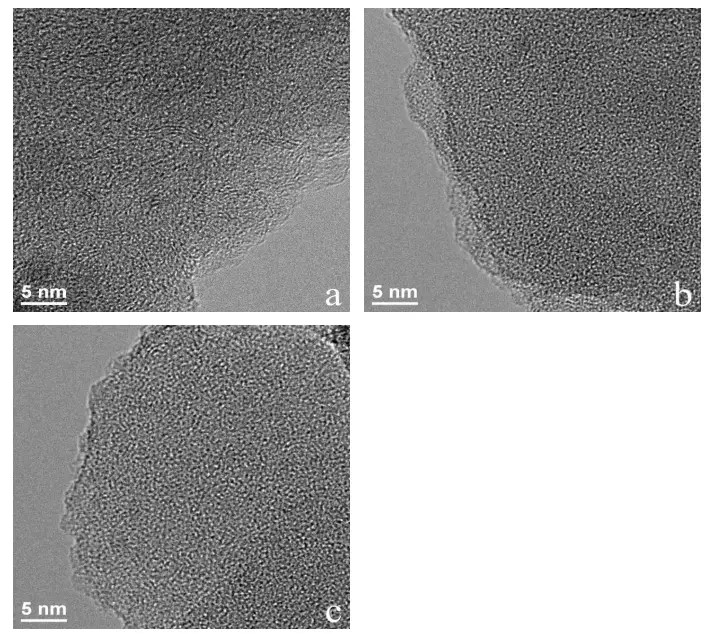
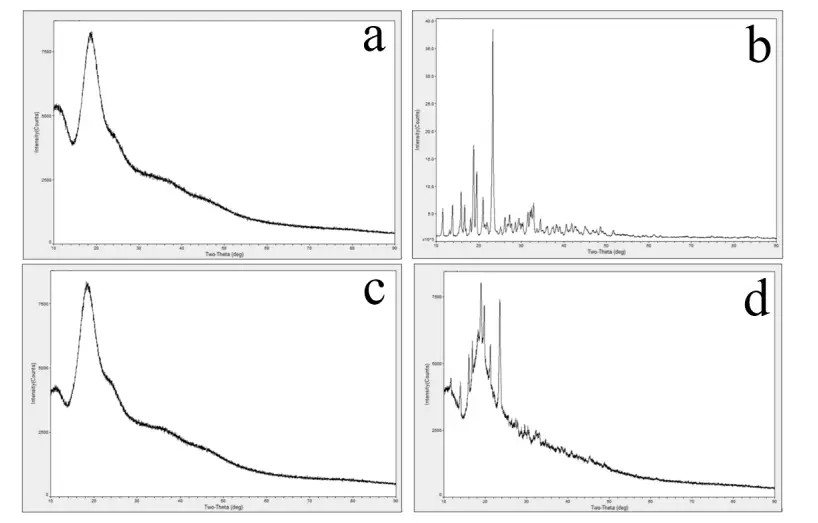
High-resolution Transmission Electron Microscopy (TEM) and X-ray Powder Diffraction (XRD) confirm that Plamed's supramolecular encapsulation forms authentic host–guest inclusion complexes rather than simple physical mixtures.
Nanometer-scale observation reveals uniform spherical inclusion vesicles with well-defined micro-boundaries, demonstrating molecular dispersion and complete encapsulation of lipophilic guest molecules.
Diffraction spectra show the complete disappearance of the sharp crystalline diffraction peaks of the raw active ingredients, confirming state conversion into amorphous inclusion complexes inside the cyclodextrin cavity.
| Parameter | Raw Active / Physical Mixture | SPEX® Supramolecular Complex |
|---|---|---|
| Phase State | Rigid crystalline lattice | Amorphous molecular dispersion |
| Aqueous Solubility | Poor / Precipitates in water | High apparent solubility, clear solution |
| Stability (Light/Heat) | Sensitive to oxidation & degradation | Cavity-shielded against oxidation |
| Sensory & Tolerance | High pungency, odor & irritation | Masked odor & enhanced skin tolerance |
Lipophilic or poorly soluble botanical actives form crystal precipitation and turbid suspensions when formulated in water. Through supramolecular encapsulation, active molecules are stabilized inside cyclodextrin cavities, producing high-clarity aqueous solutions without phase separation or sedimentation.
Homogeneous, optically clear, water-phase compatible solution.
Turbid suspension with quick active settling and precipitation.
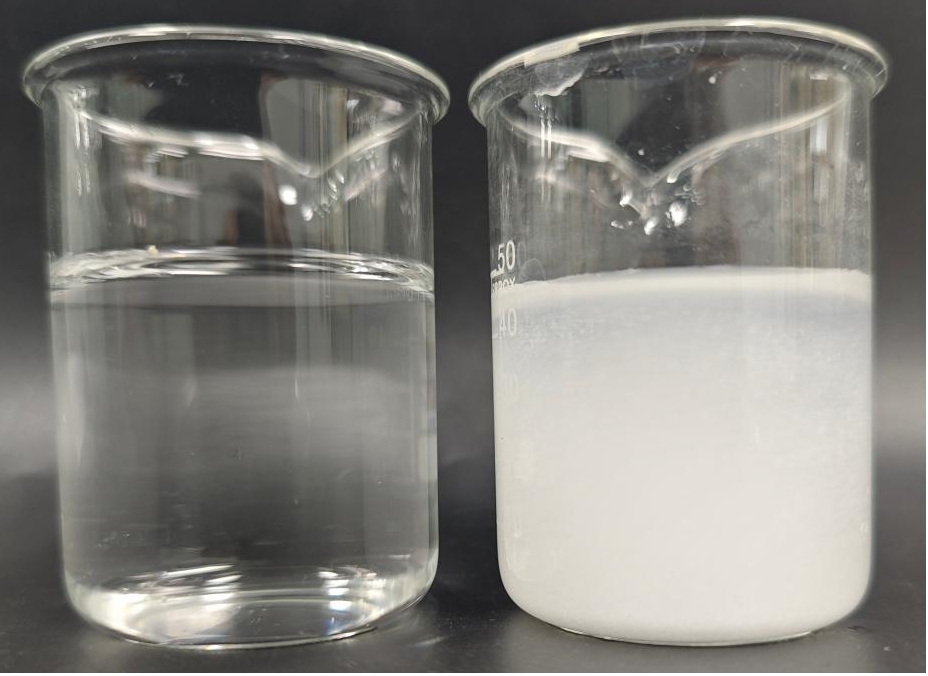
Left Beaker: Aqueous solution of the product prepared using supramolecular encapsulation technology.
Right Beaker: Aqueous solution of the same product prepared without supramolecular encapsulation technology.
Synthetic biology is an advanced bio-manufacturing technology that integrates gene editing, enzyme engineering, and precision fermentation. By rationally designing and engineering microbial metabolic pathways, it creates highly efficient "cell factories" capable of the precise biosynthesis of functional cosmetic ingredients.
This technology overcomes key limitations associated with conventional extraction and chemical synthesis. It addresses challenges such as low purity and inconsistent bio-activity in botanical and animal-derived extracts, as well as excessive byproducts and environmental burdens associated with chemical manufacturing. Through high-fidelity biosynthesis, synthetic biology can reproduce naturally occurring bio-active molecules while enabling targeted molecular optimization, delivering ingredients with enhanced activity, superior purity, and sustainable production advantages.
By integrating synthetic biology with skin science research, Plamed explores the development and application of bio-active peptides, recombinant proteins, and novel functional molecules. This approach continuously advances cosmetic ingredient solutions with enhanced quality, stability, and innovation.
Through the precise regulation of biosynthetic pathways and molecular structures, this platform eliminates impurity interference commonly associated with natural extraction processes. As a result, ingredient purity and structural consistency are significantly improved, ensuring reliable and high-performance efficacy.
Utilizing microbial fermentation as the core production method, this platform replaces resource-intensive extraction processes and high-pollution chemical synthesis routes. It significantly reduces environmental impact and resource consumption, aligning with the growing demand for clean beauty and sustainable development.
By overcoming the seasonal and resource limitations of rare natural materials, synthetic biology enables the large-scale production of scarce bioactive compounds through efficient cell factories. This ensures batch-to-batch consistency, reliable quality, and a stable, controllable supply chain.
The platform enables structural modification and functional enhancement of active molecules. Examples include improving peptide bioavailability and skin delivery efficiency, as well as enhancing the stability of antioxidant compounds. These innovations create next-generation ingredients that are difficult to achieve through conventional technologies.
Biosynthetic production pathways generate fewer unwanted byproducts and significantly reduce residual chemical solvents and heavy metals. This results in low sensitization potential and excellent safety characteristics, making these ingredients highly suitable for sensitive skin formulations and low-irritation skincare applications.
Active: (-)-α-Bisabolol ≥98%
Focus: High-purity calming with ultra-low farnesol (≤0.05%) for sensitive skin
Active: Type III Sequence Homology
Focus: 100% human sequence homology, ultra-low endotoxin barrier repair
Functional Skincare Solutions
Anti-Aging & Skin Repair
Sensitive Skin Formulations
Skin Health Management
Microbiome-Friendly Skincare
Sustainable Beauty Solutions
Molecular cocrystals are supramolecular complexes composed of two or more distinct molecules that coexist within a single homogeneous crystalline phase at a well-defined stoichiometric ratio. These molecules are held together by non-covalent interactions, including hydrogen bonding, halogen bonding, and π–π stacking. Unlike salts or solvates, all components within a cocrystal remain in their neutral molecular forms without proton transfer, thereby preserving the intrinsic chemical properties of each individual component.
The formation of molecular cocrystals relies on specific complementary intermolecular interactions between the constituent molecules, which are typically predicted and designed based on the concept of supramolecular synthons in crystal engineering. Afore-defined synthons as a multicomponent crystalline material in which the constituent molecules are integrated into the crystal lattice through non-covalent interactions rather than ionic bonding.
Coformers interact with active molecules, such as botanical phytochemicals and other bioactive ingredients, through non-covalent interactions including hydrogen bonding. These interactions modify the molecular packing within the crystal lattice and reduce lattice energy, making the active ingredients more readily solvated by water molecules. As a result, both aqueous solubility and dissolution rate are significantly improved.
Molecular cocrystallization effectively restricts the molecular mobility of active ingredients through strong intermolecular interactions, such as hydrogen bonding and π–π stacking. This enhances solid-state stability by reducing hygroscopicity, suppressing phase transitions, and preventing amorphization or other degradation processes during storage.
Molecular cocrystallization does not involve the formation or cleavage of covalent bonds within the active molecules. As a result, it preserves the molecular structure of the active ingredients and avoids the potential toxic metabolites or immunogenicity that may arise from chemical derivatization, thereby maintaining their established safety profile.
In addition, newly developed cocrystals are recognized as distinct crystalline forms that may qualify for independent patent protection. This offers pharmaceutical and botanical ingredient developers an effective strategy for product differentiation and intellectual property lifecycle management.
Enhancing the Oral Bioavailability of Poorly Water-Soluble Active Ingredients
Improving the Processing Performance of Active Ingredients
Developing Drug-Drug or Phytochemical-Phytochemical Cocrystal Systems
Emerging Applications in Anticancer and Antimicrobial Formulations
Liposomes are nanoscale vesicles composed of phospholipid bilayers. Phospholipid molecules are amphiphilic, with hydrophilic head groups oriented toward the aqueous phase and hydrophobic tails assembled into a lipid bilayer, thereby spontaneously forming vesicles with an aqueous core.
This unique structure enables liposomes to simultaneously encapsulate hydrophilic compounds within the aqueous core and lipophilic compounds within the phospholipid bilayer, making them an efficient delivery system for a wide range of active ingredients.
Because the structure of liposomes closely resembles that of biological cell membranes, they exhibit excellent biocompatibility and low immunogenicity. In cosmetic science, liposomes serve as versatile carriers for botanical extracts and sensitive active molecules to enhance penetration and skin compatibility.
The phospholipid composition of liposomes closely resembles that of biological cell membranes, providing excellent biocompatibility and minimizing the likelihood of undesirable skin irritation. This makes liposomes highly suitable for delicate skin formulations.
Liposomes effectively encapsulate poorly water-soluble or chemically unstable bioactive compounds, including botanical extracts and phytochemicals, protecting them from oxidation and premature degradation under formulation conditions. This significantly prolongs active stability and improves topical bioavailability.
Liposomes can be engineered for targeted skin layer delivery and controlled release in response to physiological triggers, enabling more sustained and effective ingredient action.
Liposome encapsulation moderates the release rate of potent active ingredients, reducing potential skin irritation while maximizing functional efficacy.
Transdermal Delivery Systems and Cosmetic Applications
Active Ingredient Protection and Skin Barrier Support
Targeted Topical Release Formulations
High-Tolerance Functional Skincare Solutions
Connect advanced molecular engineering and green bio-manufacturing with your formulation needs. Explore our catalog or speak directly with our technical team.
