
Ceramide NP | Skin Barrier Repair Active
Ceramide NP (INCI: CERAMIDE NP, CAS 100403-19-8) — the stratum-corneum lipid that rebuilds the skin barrier — supplied by Plamed as high-purity Ceramide 3B powder (A+B+C+D ≥95.0%, main component A ≥85.0%) with water-dispersible handling and batch-to-batch consistency.
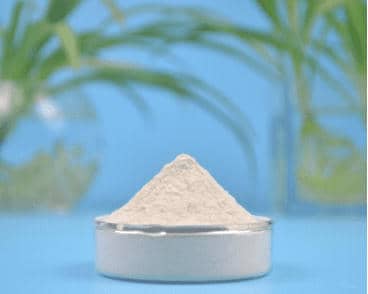
Ceramide
Ceramide NP is a skin-barrier repairing active that replenishes the lipids of the stratum corneum, strengthens barrier function and relieves dryness, dehydration and barrier damage.
Plamed supplies high-purity Ceramide NP with low impurity levels and consistent quality — a reliable raw material for moisturizing, barrier-repair and sensitive-skin care products.
At a glance
Attribute | Value |
INCI name | CERAMIDE NP |
CAS number | 100403-19-8 |
Product ID | PMS0101 |
Specification | Purity (A+B+C+D) ≥95.0%; main component A ≥85.0% |
Appearance | White to off-white powder |
Melting point | 98–108 °C |
Formulation pH | 5.5–7.0 |
Reference dosage | 0.01%–5% |
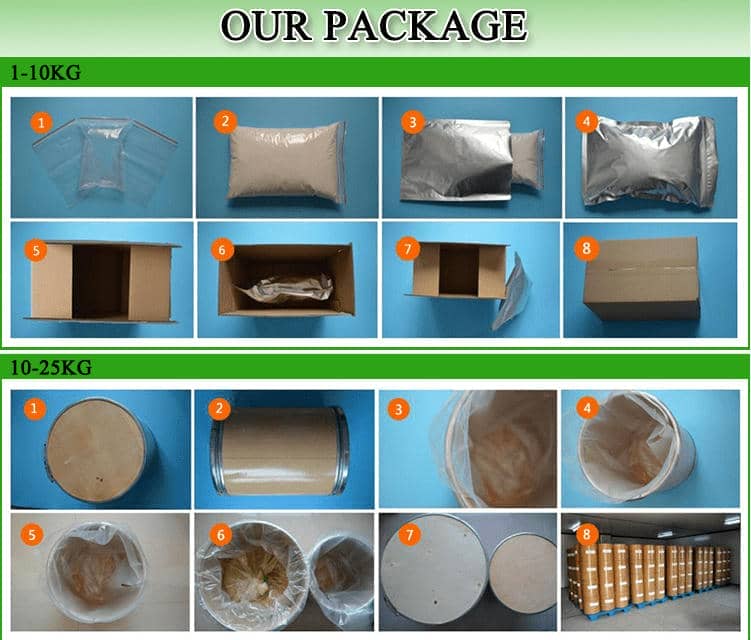
Minimal package | 1 kg aluminum-foil bag |
MOQ | 0.1 kg |
Ceramide NP (INCI: CERAMIDE NP, CAS 100403-19-8) is a ceramide cosmetic ingredient — one of the lipid molecules that hold the stratum corneum together. "NP" means the sphingoid base is phytosphingosine (P) bound through an amide bond to a non-hydroxy fatty acid (N), typically stearic or oleic acid. Plamed supplies the Ceramide 3B type of ceramide NP (PMS0101), a white to off-white powder dosed at 0.01%–5% in skin care.
In short: Ceramide NP is a stratum-corneum lipid and barrier-repair active (INCI: CERAMIDE NP, CAS 100403-19-8) — Plamed's Ceramide 3B powder (PMS0101) reaches A+B+C+D ≥95.0% purity, is added via the oil phase at pH 5.5–7.0, dosed 0.01%–5% in moisturizing and sensitive-skin formulas.
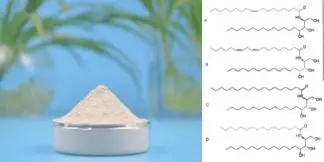
What it is.
Ceramides are the main lipid component between the cells of the outermost stratum corneum; they form the "mortar" between the corneocyte "bricks" of the skin barrier. Ceramide NP is not a single molecule but a family of ceramides sharing the same N+P structural principle — which is why the specification counts four components (A, B, C, D) and requires the sum to reach 95.0% or higher. Ceramide 3 and Ceramide 3B both belong to the ceramide NP category; Plamed mainly supplies the 3B type, chosen for moisturizing, skin repair and soothing formulas.
How it works.
Topical ceramide NP integrates into the intercellular lipid lamellae of the stratum corneum. Together with cholesterol and free fatty acids it rebuilds the lamellar network that locks water in and keeps irritants out — replenishing lost lipids, reducing trans-epidermal water loss and improving the smoothness and resilience of dry, barrier-damaged skin.
Where it fits in skin care.
Moisturizing lotions and creams, barrier-repair serums, sensitive-skin care, ceramide cream ingredients for anti-aging lines — and it works well alongside linolenic acid, hyaluronic acid and vitamins (see the niacinamide and hyaluronic acid pairing in Benefits).
Which ceramide NP specification does Plamed offer?
Conclusion first: one specification (PMS0101, purity ≥95%) with a four-component assay profile — ask for the batch COA to see all four peaks.
Items | Specifications |
Assay (HPLC-UV, external standard) | Component A ≥85.0%; A+B+C+D ≥95.0% |
Purity (HPLC-UV, area normalization) | Total ceramide NP peak area ≥95.0% (single main peak, A ≥85.0%) |
Appearance | White to off-white powder |
Melting point | 98–108 °C |
Loss on drying | ≤2.0% |
Residue on ignition | ≤0.5% |
Residual solvents | Methanol ≤3000 ppm; Ethyl oleate ≤2000 ppm |
Heavy metals | ≤20 ppm |
Total plate count | ≤500 cfu/g |
Yeast & mold | ≤100 cfu/g |
How to read the specification sheet:
Four components, A through D. The ceramide NP family is split into components A, B, C and D according to differences in the fatty-acid chain — the four molecular structures shown on this page. The specification therefore constrains both the main component A and the sum of all four components.
Two HPLC conventions. The assay is quantified by the external-standard method (measured against a reference standard), while purity is calculated by area normalisation (the proportion of peak area taken by impurities). The two columns often show the same figures but mean different things — do not treat them as interchangeable when comparing suppliers.
Handling. Ceramide NP powder is added in the oil phase and dissolved fully during emulsification. Keep the formula at pH 5.5–7.0 and avoid prolonged high-temperature heating to prevent discolouration. Store the powder sealed, protected from light, in a cool place.
What do ceramides do for skin?
Ceramides are the skin barrier's own building material — replenishing them is the most direct way to repair a compromised barrier.
Moisturizing and water-locking
Ceramide NP associates water molecules and forms a network structure within the stratum corneum, so it both retains moisture and locks it in. For dry, dehydrated skin this is the difference between short-term hydration and a barrier that holds water by itself.
Barrier repair for damaged skin
The rate of lipid synthesis falls as skin ages or is over-cleansed, and ceramide content in the stratum corneum drops — the root of dryness, peeling and roughness. Replenishing ceramide NP restores the lipid content, thickens the barrier's lipid layer and improves the skin's own water-holding ability: the mechanism behind "ceramide for skin barrier repair" claims.
Anti-aging support
With the barrier rebuilt, skin loses less water, feels smoother and resists fine-line formation better. Ceramide NP supports skin elasticity and helps delay visible signs of aging — which is why it is a staple ingredient in premium moisturizing and anti-aging creams.
How ceramide NP works with niacinamide and hyaluronic acid
Ceramide NP is usually formulated with the two actives that complete the barrier story. Niacinamide supports the skin's own ceramide synthesis, while topical ceramide NP replenishes the lipids directly — the classic ceramide + niacinamide pairing behind most barrier-repair launches. Hyaluronic acid holds water in the deeper layers while ceramide seals the surface, so the two together give both hydration and occlusion. Linolenic acid, vitamins and cholesterol/free-fatty-acid systems are also used to mimic the natural lamellar lipid profile.
Which products use ceramide NP?
Ceramide NP is widely used in lotions, creams, essences and toners. Reference dosage: 0.01%–5% (Ceramide 3B).
Application scenarios:
Scenario | Form positioning | Reference dosage |
Barrier-repair cream / lotion for dry skin | Replenish SC lipids, reduce dryness | 0.1%–0.5% |
Sensitive-skin serum | Barrier comfort, reduce reactivity | 0.05%–0.2% |
Anti-aging moisturizer | Elasticity, fine-line support | 0.2%–1.0% |
Ceramide + niacinamide brightening-barrier cream | Barrier repair with tone-evening support | 0.2%–0.5% |
Essence / booster | High-concentration barrier shot | 0.5%–5% |
Whitening/moisturizing cream
Ingredient | Content (%) |
Ceramide NP | 0.2 |
Sorbitan palmitate | 6.0 |
Sunflower oil | 9.0 |
Glyceryl stearate | 4.0 |
Fully hydrogenated squalane | 5.0 |
Glycerin | 5.0 |
Diisopropyl cyclohexane | 7.0 |
Preservative | 0.35 |
Fragrance | 1.0 |
Purified water | Add to 100(62.45) |
Total | 100.00 |
Is ceramide NP safe for cosmetics?(H2)
Ceramide NP is listed in the IECIC (Inventory of Existing Cosmetic Ingredients in China, 2021 Edition). Its INCI name follows the International Nomenclature of Cosmetic Ingredients; the Chinese standard name appears in the 2010 catalogue of Chinese cosmetic ingredient names (CAFFCI).
Compliance across major markets: standard INCI name, accepted in the EU (Regulation (EC) No 1223/2009), the US (FDA/MoCRA) and South Korea (MFDS) frameworks.
How much does ceramide NP cost, and what is the MOQ?
Supply:
Item | Detail |
MOQ | 0.1 kg |
Package | 1 kg aluminum-foil bag; 25 kg fiber drum with double PE liner |
Storage | Sealed, cool and dry, away from light and oxidizing agents |
Lead time | Confirm with sales |
Documents | TDS, COA, MSDS |
Available Document of Ceramide
Certificate of Analysis (COA)
Material Safety Data Sheet (MSDS)
Product Specification Sheet (SPEC)
Manufacturing Process Flowchart
Analytical / Test Method
Product Brochure & Technical Introduction
To request a quote or a sample, contact Plamed Green Science Group here.
Ceramide supplier and wholesale manufacturer
Plamed is a ceramide NP supplier and manufacturer offering high-purity Ceramide 3B powder for skin barrier repair. Whether you want to buy ceramides for a new barrier-repair line, compare ceramide NP price across ceramide powder for sale listings, or find a ceramide np for skin supplier who can document every batch, Plamed supports the decision with COAs, formulation guides and free lab-evaluation samples.
Price and wholesale supply
Ceramide NP price depends on purity requirements, order volume, packaging and destination documentation. To buy ceramide powder at the best value, source directly from the manufacturer: request a quotation matched to your volume — from 0.1 kg lab trials to ceramides wholesale volumes for production. Where to buy ceramides with consistent quality: from the factory in Xi'an, China, with batch COA on every lot.
Why source from Plamed?
For formulators who care about ceramides in skincare ingredient transparency and sustainability: full four-component assay disclosure (A+B+C+D) on every COA, documented residual-solvent limits, and a stable synthesis route that keeps batch-to-batch variation low.
Q1: What is ceramide NP?
A: Ceramide NP (INCI: CERAMIDE NP, CAS 100403-19-8) is a ceramide cosmetic ingredient — a stratum-corneum lipid in which phytosphingosine (P) is amide-bonded to a non-hydroxy fatty acid (N). Ceramide 3 and 3B both belong to this family; Plamed mainly supplies the 3B type as a ≥95% purity powder (PMS0101).
Q2: What do ceramides do for skin?
A: They replenish the lipids between stratum-corneum cells — ceramides form the main part of that intercellular lipid mortar — rebuilding the network that locks moisture in and keeps irritants out, which relieves dryness, peeling and roughness.
Q3: Ceramide vs ceramide complex — which should I choose?
A: A single ceramide NP targets the most abundant NP pathway with precise dosing; a "ceramide complex" blends several ceramide classes (NP, AP, EOP and others) to mimic the full lipid profile. For a first barrier-repair formula, ceramide NP 3B is the cost-efficient core; complexes suit premium lamella-mimicking systems.
Q4: How do you formulate with ceramide NP powder?
A: Add it to the oil phase and let it dissolve fully during emulsification; keep formula pH at 5.5–7.0 and avoid prolonged high-temperature heating to prevent discoloration. Store the powder sealed, away from light, refrigerated.
Q5: What is the recommended dosage of ceramide NP?
A: 0.01%–5% depending on the product type — around 0.05%–0.2% in sensitive-skin serums, 0.1%–0.5% in barrier creams, up to several percent in high-concentration essences.
Q6: Is ceramide NP safe and compliant?
A: Yes — it is listed in China's IECIC (2021) and by PCPC (formerly CTFA), with no reported safety concerns for external use; it carries a standard INCI name accepted in EU, US and South Korea regulatory frameworks.
Q7: What is the MOQ, price and lead time?
A: MOQ is 0.1 kg; packaging is 1 kg aluminum-foil bags or 25 kg drums. Price depends on specification and volume — request a quotation; lead time is confirmed per order.
Q8: Do you offer samples and documents?
A: Yes — free lab-evaluation samples with batch COA (four-component assay included), plus TDS, MSDS and regulatory documents.
Q9: What is the scientific evidence for ceramides repairing the skin barrier?
A: The barrier role of ceramides is established dermatology: they constitute the dominant share of stratum-corneum intercellular lipids, and reduced ceramide levels are consistently observed in dry and barrier-compromised skin. Replenishing ceramide NP topically restores the lamellar structure and reduces water loss.
Q10: Can ceramide NP be combined with niacinamide?
A: Yes — it is a classic pairing. Niacinamide supports the skin's own ceramide synthesis while topical ceramide NP replenishes lipids directly; the two are widely formulated together in barrier-repair products.