
Plamed PMWhite® Glabridin300: Water-Soluble Glabridin
A water-soluble glabridin active for skin brightening and uneven skin tone care.
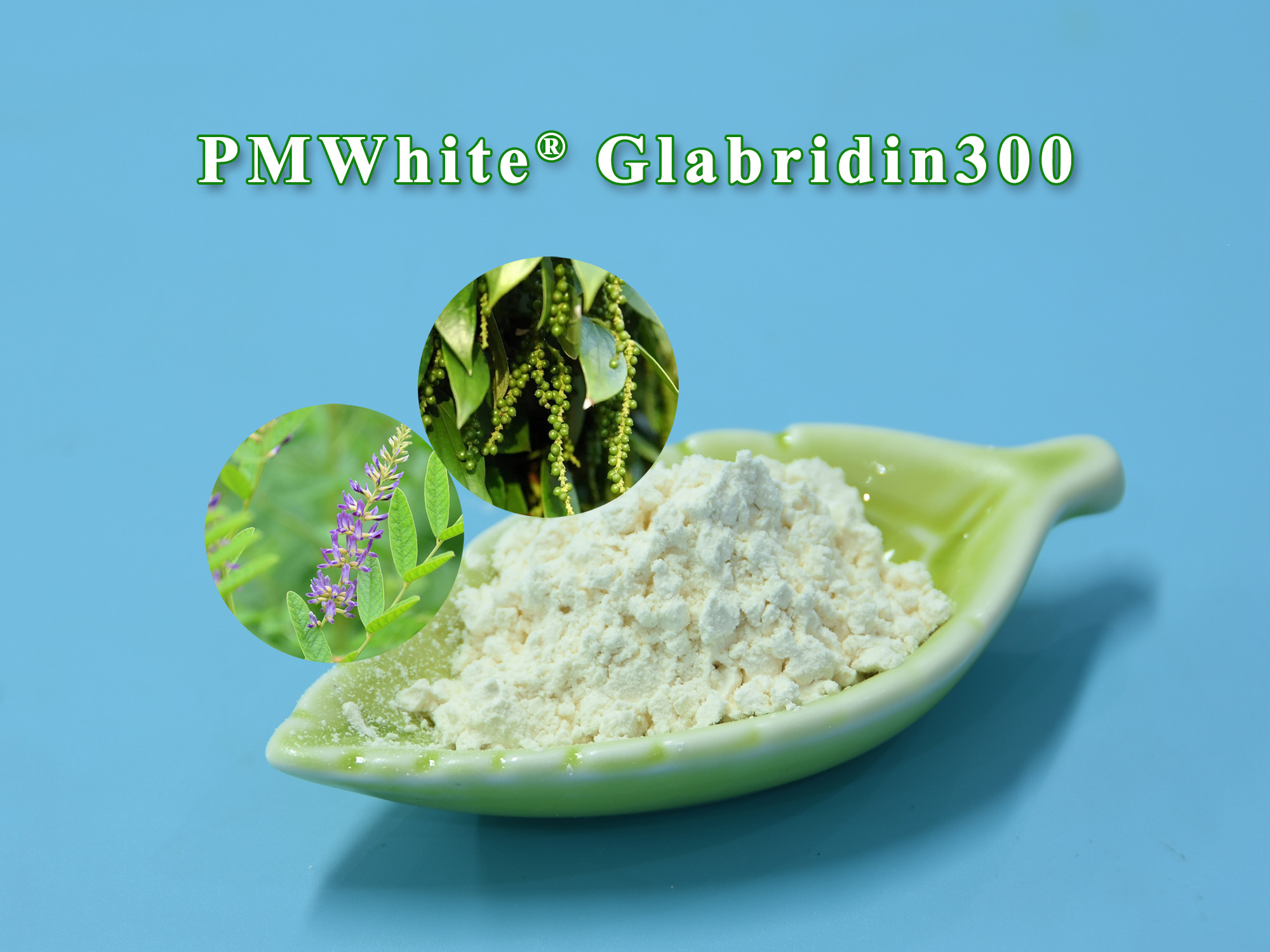
PMWhite® Glabridin300
PMWhite® Glabridin300 is a water-soluble composite active ingredient centered on glabridin derived from licorice. It helps improve the appearance of uneven skin tone and dark spots, making it suitable for skin brightening and tone-enhancing skincare formulations.
Compared with conventional glabridin, PMWhite® Glabridin300 features a product form that is easier to disperse in aqueous systems. It is suitable for use in serums, lotions, creams, and facial masks, providing a water-soluble glabridin ingredient option for cosmetic formulation development.
What Is PMWhite® Glabridin300?
Glabridin is a flavonoid extracted from the dried rhizomes of Glycyrrhiza glabra (licorice). Known as "whitening gold," it is valued for its potent whitening effect. By effectively inhibiting tyrosinase activity, Glabridin helps reduce melanin production, making it a promising whitening active ingredient with a mild and effective profile.
In-Vitro Whitening Potency: Published in-vitro assays demonstrate that Glabridin's tyrosinase-inhibiting and skin-brightening efficacy is 232 times that of Vitamin C (Ascorbic Acid), 16 times that of Hydroquinone, and 1,164 times that of Arbutin.
Source: Comparative in-vitro tyrosinase inhibition assays on B16 melanoma cells (Ref: Pigment Cell Res. 11:355–361; Fragrance J. 17(6):122–125).
Despite its strong whitening potential and popularity worldwide, this premium ingredient faces two key formulation challenges: poor water solubility and low transdermal absorption, which can limit its application in cosmetic formulations.
PMWhite® Glabridin300 is Plamed's solution to these challenges. As a water-soluble glabridin licorice extract complex, it offers greater formulation convenience while significantly improving bioavailability. Experimental data show that its bioavailability is 3.1 times that of ordinary Glabridin, helping customers improve ingredient utilization and reduce the cost of incorporating Glabridin into their formulations.
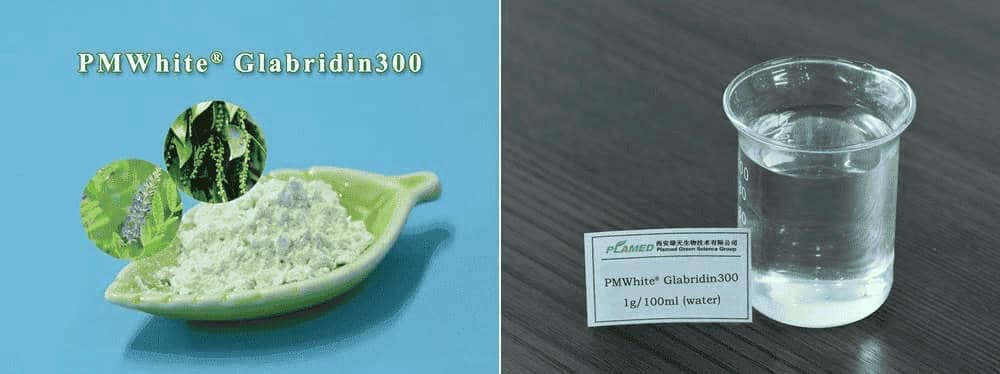
Items | Details |
Product Name | PMWhite® Glabridin300 |
INCI Name | HYDROXYPROPYL CYCLODEXTRIN, GLYCYRRHIZA GLABRA (LICORICE) ROOT EXTRACT, PIPER NIGRUM (PEPPER) SEED EXTRACT |
Product ID | PMFS0201/98% |
Specification | Glabridin ≥10% |
Minimal Package / MOQ | 100g / 100g |
Why PMWhite® Glabridin300
3.1 times the bioavailability of ordinary glabridin — cost-effective at lower inclusion;
Good water solubility: dissolves in water up to 70 g/100 ml, easy to add into cosmetic formulas;
Extracted from high-quality Glycyrrhiza glabra root; the glabridin extraction process is fully in-house.
PMWhite® Glabridin300 Manufacturer Specifications
Items | Specifications |
Glabridin | ≥10% (HPLC) |
Appearance | White powder |
Moisture | ≤10.00% |
Ash | ≤7.00% |
Solubility | Well soluble in water |
Pb | ≤10 ppm |
As | ≤2 ppm |
Hg | ≤1 ppm |
Cd | ≤5 ppm |
Total plate count | ≤1000 cfu/g |
Total yeast & mold | ≤100 cfu/g |
Thermotolerant coliform | Not detected |
Staphylococcus aureus | Not detected |
Pseudomonas aeruginosa | Not detected |
Heat-resistant Escherichia coli | Not detected |
Shelf life | 36 months when stored properly |
Three rows matter most for formulators. Glabridin (≥10% HPLC) is the actives payload of the cyclodextrin complex. Solubility (well soluble in water) removes the cold-water pain point of raw glabridin — the complex dissolves up to 70 g/100 ml. Shelf life (36 months) comes from the TDS and closes the storage commitment.
PMWhite® Glabridin300 Mechanism for Skin Whitening
Normally, the cause of skin darkening is tyrosinase and reactive oxygen species. Tyrosinase can regularly produce melanin, making the skin darker. External stimuli — including common ultraviolet rays, inflammation and allergies — can cause excessive secretion of tyrosinase, which makes the skin darker still.
Glabridin is an excellent melanin inhibitor, working on three levels:
Tyrosinase inhibition.
With the participation of glabridin, the activity of tyrosinase is significantly inhibited, thus blocking the biosynthesis of melanin in the skin.
Enzymatic-reaction blocking.
Glabridin can inhibit two proteins required in the process of melanin formation, thus blocking the enzymatic reaction and reducing the effect of melanin synthesis.
Endothelin antagonism.
Glabridin can act as an endothelin antagonist to reduce the regulation of endothelin on the proliferation of melanocytes, thus reducing melanin production and achieving the skin whitening effect.
Glabridin is currently a whitening ingredient with good curative effects and comprehensive functions, together with good safety. However, due to its poor water solubility and low transdermal absorption, it is not possible to add a large amount of glabridin into cosmetics — which is exactly what limits its efficacy, and what PMWhite® Glabridin300 is designed to solve.
Bioavailability test: PMWhite® Glabridin300 vs normal water-soluble glabridin
Glabridin is a well-established skin-brightening ingredient with multiple benefits and a good safety profile. However, its poor water solubility and limited transdermal absorption restrict its use in cosmetic formulations, making it difficult to incorporate at higher concentrations and potentially limiting its efficacy.
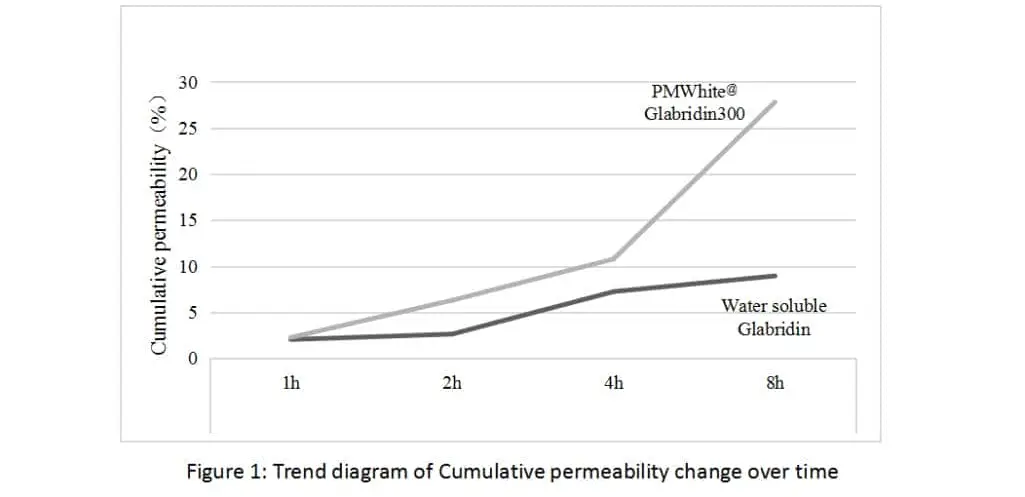
To address these challenges, Plamed developed PMWhite® Glabridin300, a water-soluble glabridin ingredient designed to improve its application in cosmetic formulations. In a comparative transdermal penetration test against conventional water-soluble glabridin products on the market, PMWhite® Glabridin300 achieved 3.1 times the cumulative permeation within 8 hours. This indicates a 3.1-fold increase in cumulative permeation under the tested conditions, offering a more efficient approach to glabridin delivery and potentially helping reduce ingredient costs for formulators.
Group | Cumulative permeability (%) | |||
1h | 2h | 4h | 8h | |
Water soluble Glabridin | 2.04 | 2.63 | 7.24 | 8.94 |
PMWhite® Glabridin300 | 2.27 | 6.30 | 10.78 | 27.82 |
Table Cumulative permeability of different samples
Whitening tests on 3D simulated skin
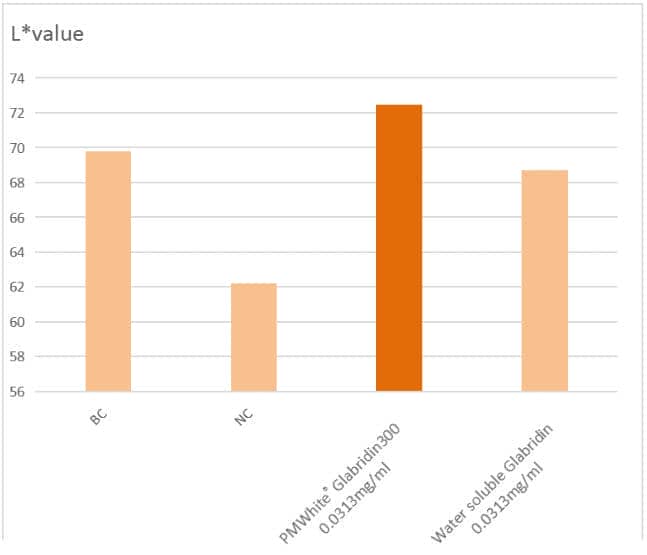
Colour: the apparent colour of the skin model was significantly whiter after 0.003% PMWhite® Glabridin300 treatment compared with the NC group | 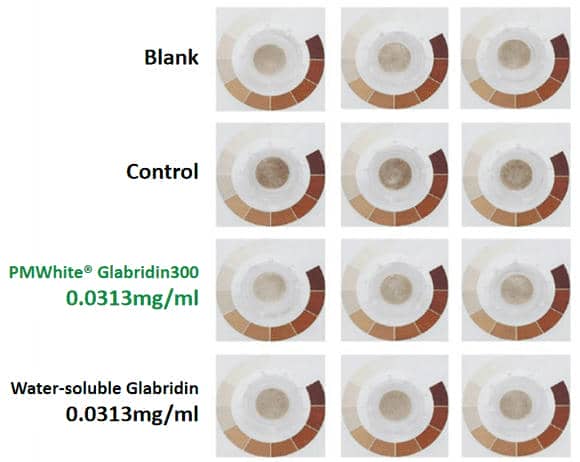 |
Lightness: the apparent lightness (L* value) was significantly enhanced by 16.5% compared with the NC group |
 |
Melanin: melanin particles were significantly reduced after 0.003% PMWhite® Glabridin300 treatment compared with the NC group | 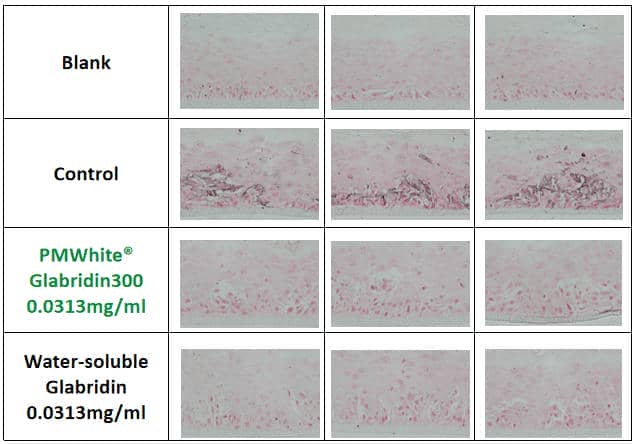 |
Glabridin Benefits for Skin: Whitening, Lightening and Antioxidant Support
Whitening and lightening support. Glabridin skin whitening performance rests on the three-step mechanism above: tyrosinase inhibition, enzymatic-reaction blocking and endothelin antagonism, which together reduce melanin production. Glabridin skin lightening effects are further backed by the 3D skin-model tests (whiter colour, +16.5% lightness, fewer melanin particles at 0.003%). To a certain degree, this has the potential to support brightening-even-tone formulas targeting the look of dull tone and dark marks.
Antioxidant support. As a glabridin antioxidant for skin, the flavonoid helps eliminate reactive oxygen species — one of the two root causes of skin darkening — and supports the antioxidant network of a whitening formula. Glabridin antioxidant activity is documented in in-vitro studies on licorice flavonoids.
Glabridin in Skincare: Uses, Dosage and pH Guidance
Glabridin for face care spans brightening essences, creams, facial masks, lotions, toners and emulsions — the main glabridin products for skin in current formulas. Reference dosage:
Product | Reference Dosage |
PMWhite® Glabridin300 | 0.1%–2.0% |
pH stability guidance: Through the stability test, PMWhite® Glabridin300 changes colour easily under alkaline conditions and stays stable under acidic conditions; when pH ≤ 5, trace substances may precipitate. Recommended: pH ≤ 6 in creams; pH 5–6 in lotions and essences; not recommended in alkaline systems.
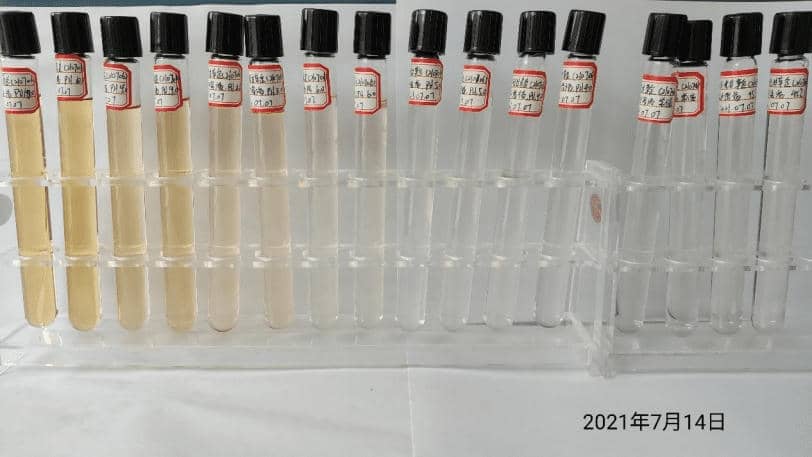
Figure. Different pH value of PMWhite® Glabridin300 water solution
PMWhite® Glabridin300 Safety, Packaging and Storage
Regulatory listings: CTFA has specified GLYCYRRHIZA GLABRA (LICORICE) ROOT EXTRACT, PIPER NIGRUM (PEPPER) SEED EXTRACT and HYDROXYPROPYL CYCLODEXTRIN as cosmetic raw materials; the plant raw materials listed in the IECIC 2021 (Inventory of Existing Cosmetic Ingredients in China, published by the NMPA) include all three, with no reports showing unsafety for external use.
Historical usage: the highest historical dosage in rinse-off products was 5.5%, 2% and 9% respectively for the three components; in leave-on products 5.5%, 0.375% and 9%.
Toxicology: PMWhite® Glabridin300 is practically non-toxic based on the acute oral toxicity test, and shows no irritation based on SN/T 2329-2009 (HET-CAM cosmetic ocular irritant and corrosive test).
Evaluation | ||||||
Pre-experimental conclusion: The test object is suitable for testing by this method, and the formal test is conducted with the reaction time method. | ||||||
Reaction time method | No. | Sec H | Sec L | Sec C | IS | Concentration: 0.5% |
CAIQCTC513230030001 | ① | 301 | 301 | 301 | 0.00 | IS = 0.00 Conclusion: |
② | 301 | 301 | 301 | 0.00 | ||
③ | 301 | 301 | 301 | 0.00 | ||
④ | 301 | 301 | 301 | 0.00 | ||
⑤ | 301 | 301 | 301 | 0.00 | ||
⑥ | 301 | 301 | 301 | 0.00 | ||
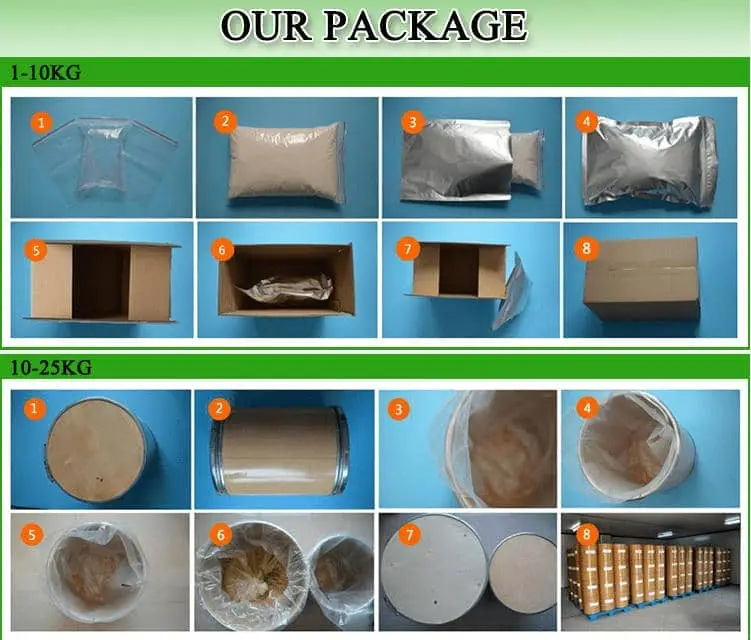
Package: 1–10 kg aluminium-foil bags; 10–25 kg fibre drums.
Storage: Stored in a cool dry place, away from direct sunlight and oxidizing agents (MSDS: tightly closed, dry and well-ventilated). Shelf life 36 months when stored properly.
Glabridin Powder Manufacturer & Supplier
Glabridin powder for sale: PMWhite® Glabridin300 (PMWT0201, glabridin ≥10%) is produced in Plamed's glabridin powder factory in Xi'an, China. As one of the professional glabridin extract manufacturers and glabridin powder manufacturers, Plamed serves brands and contract manufacturers worldwide — and is a trusted glabridin supplier among wholesale glabridin manufacturers.
Available Document of Troxerutin
Certificate of Analysis (COA)
Material Safety Data Sheet (MSDS)
Composition Statement / Compositional Breakdown (INCI Breakdown)
Manufacturing Process Flowchart
Third-Party Safety & Toxicology Reports (HET-CAM Eye Irritation, Acute Oral Toxicity)
Third-Party Efficacy & Bioavailability Reports (Transdermal Delivery, Whitening Assay, Bioavailability Study)
Third-Party Assay & Custom Inspection Report
Regulatory & Compliance Statements (Vegan, Non-Animal Testing, Halal, Gluten-Free, GMO-Free, Non-TSE/BSE, Source of Origin & Natural Statement)
Product Presentation Dossier & Technical Introduction
For samples, lead time and the full document set, contact Plamed Green Science Group here.
Q1. What is glabridin?
Glabridin is a flavonoid (isoflavan) extracted from the dry rhizomes of Glycyrrhiza glabra — licorice. Known as "whitening gold", it inhibits tyrosinase activity and melanin production, and is one of the most valued whitening actives in cosmetics.
Q2. What is licorice extract glabridin?
Licorice extract glabridin refers to glabridin, the signature whitening component purified from Glycyrrhiza glabra extract (licorice root extract). PMWhite® Glabridin300 carries it as a Glycyrrhiza glabra root extract INCI component, complexed with hydroxypropyl cyclodextrin for water solubility.
Q3. What are the glabridin benefits for skin?
Glabridin skin benefits include whitening (three-step melanin inhibition), visible-brightening support (16.5% lightness increase in the 3D skin model) and antioxidant protection against reactive oxygen species.
Q4. What is the glabridin structure?
The glabridin structure is a lipophilic isoflavan skeleton — the very reason raw glabridin is poorly water-soluble. PMWhite® Glabridin300 solves this by complexing glabridin with hydroxypropyl cyclodextrin, raising water solubility to 70 g/100 ml.
Q5. Is "glabridine" or "glabridina" the same as glabridin?
Yes. "Glabridine" is a common alternate spelling and "glabridina" is the Spanish/Italian spelling — both refer to the same molecule, the licorice-derived whitening active.
Q6. What is the glabridin solubility in water?
Raw glabridin is poorly soluble in water. PMWhite® Glabridin300 is well soluble in water — up to 70 g/100 ml — which makes it easy to add into water-phase serums, toners and emulsions.
Q7. What dosage and pH should I use?
The recommended dosage is 0.1%–2%. Keep pH ≤ 6 in creams and pH 5–6 in lotions and essences; avoid alkaline systems, where the product changes colour easily.
Q8. Is PMWhite® Glabridin300 safe?
The three INCI components are listed by CTFA and in the CFDA 2021 List of Used Cosmetic Ingredients. The product is practically non-toxic (acute oral toxicity test) and non-irritating (HET-CAM test, IS = 0.00).
Q9. Can I buy glabridin powder directly from the manufacturer?
Yes. Plamed is the manufacturer (PMWT0201, glabridin ≥10%). MOQ is 100 g, samples are available, and wholesale volumes ship with COA and full documentation.
Q10. Which glabridin skin products is it suitable for?
Glabridin skin products include brightening serums, whitening creams, facial masks, lotions, toners and emulsions — any water-phase formula targeting dull tone and dark marks. Glabridin skincare use keeps growing in brightening lines worldwide.