
Tetrahydrocurcumin: Antioxidant Cosmetic Ingredient
A high-purity, light-colored, and stable antioxidant ingredient derived from turmeric, designed to support skin brightening, anti-aging, and photoaging care formulations.
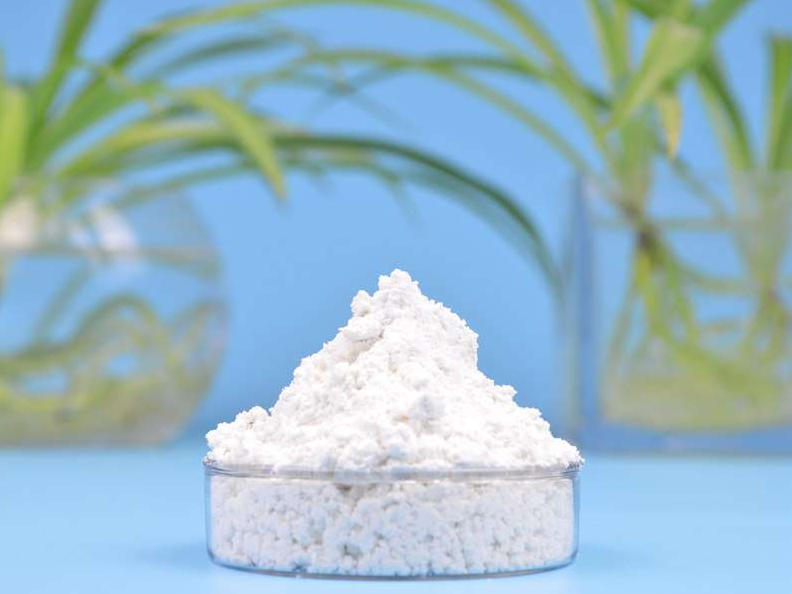
Tetrahydrocurcumin
Tetrahydrocurcumin is a natural antioxidant active derived from turmeric. It helps protect the skin against oxidative stress, improve dull-looking skin, and address photoaging. It is widely used in anti-aging, skin brightening, and skin protection skincare products.
Through optimized manufacturing processes, Plamed achieves high purity, a light-colored appearance, and high stability. Compared with conventional curcumin, tetrahydrocurcumin is easier to incorporate into cosmetic formulations, providing more stable and easier-to-use ingredient support for the development of antioxidant skincare products.
Tetrahydrocurcumin: A White Antioxidant Metabolite of Curcumin
Tetrahydrocurcumin (THC) is the principal hydrogenated metabolite of curcumin, obtained from the hydrogenation of curcumin that comes from turmeric root. As a natural antioxidant active ingredient, it helps prevent the formation of free radicals and eliminates the free radicals that have already formed — the basis of its antioxidant positioning in anti-aging, repairing and brightening-even-tone formulas. Plamed supplies tetrahydrocurcumin powder standardized at 98% (INCI: see Specifications), a white cosmetic raw material that is easier to apply in formulations than the yellow curcumin it derives from.
Items | Details |
Product Name | Tetrahydrocurcumin |
CAS Number | 36062-04-1 |
INCI Name | Tetrahydrocurcumin |
Molecular Formula | C21H26O6 |
Molecular Weight | 372.2 g/mol |
Molecular Structure | Hydrogenated curcumin skeleton — no conjugated double bonds |
Product ID / Specification | PMB0201 98% |
Minimal Package / MOQ | 1 kg / 1 kg |

Tetrahydrocurcumin Structure
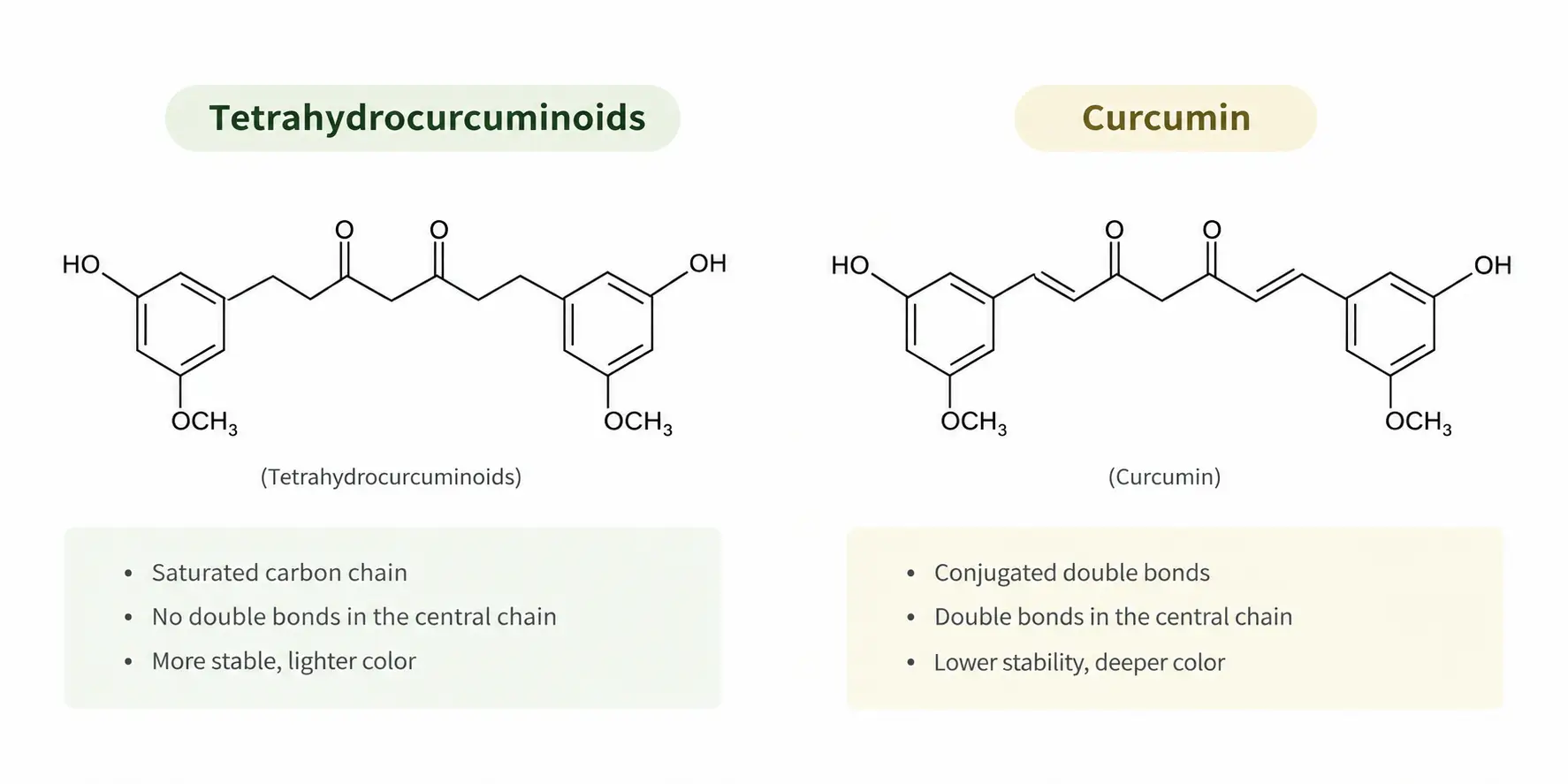
The tetrahydrocurcumin structure is the hydrogenated form of the curcumin skeleton (C21H26O6, 372.2 g/mol, CAS 36062-04-1). Unlike curcumin, it has no unsaturated C=C bond, so it lacks the conjugated double bonds a chromophore needs — which is why tetrahydrocurcumin changes from the yellow of curcumin to a white powder. Losing the conjugated system also makes it more stable, the structural reason behind its high stability and easier colour management in cosmetic formulas.
Source: Turmeric (Curcuma Longa L.)
Turmeric (Latin name: Curcuma longa L.) is a perennial herb of the ginger family with a well-developed root. It is also known as Yu-Jin, Bao-Ding-Xiang, Ma-Dian and Huang-Jiang. Leaves are oblong or elliptic and the corolla yellowish. It grows in several Chinese provinces, including Fujian, Guangdong, Guangxi, Yunnan, Xizang (Tibet) and Taiwan, China, and is widely cultivated in East and South-east Asia. The dried root has a long history of use in traditional Chinese and Indian practice, and it remains the commercial source of the botanical raw material behind tetrahydrocurcumin.

Manufacturing Route
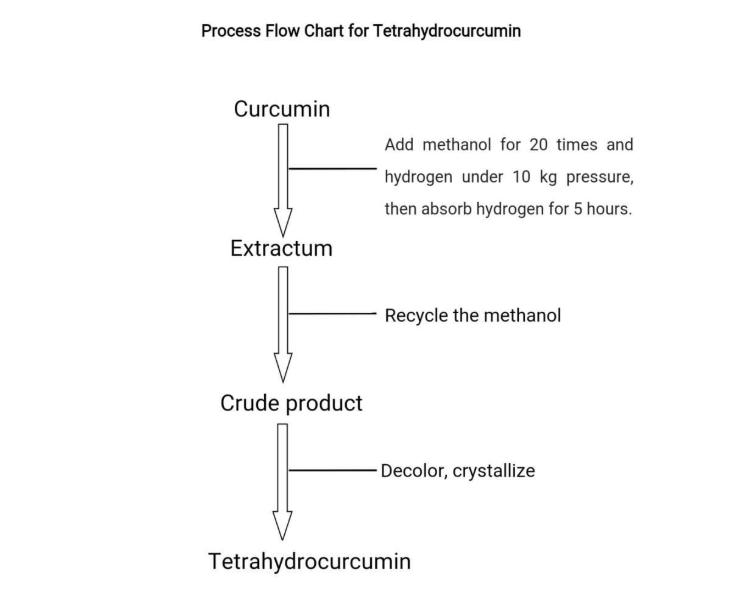
Plamed tetrahydrocurcumin is produced by hydrogenating high-quality curcumin: curcumin is dissolved in methanol (20-fold) and hydrogenated under 10 kg pressure for 5 hours to give the extract; the methanol is recycled; the crude product is then decolorized and crystallized to yield white tetrahydrocurcumin powder. The optimized route is what delivers the high purity, light colour and high stability described in this page.
Why Plamed Tetrahydrocurcumin
Good stability in heat, mechanical stress and pH, with no colour change during processing.
Small particle size with even distribution: the dispersion after processing is clear and transparent.
Easy to absorb: it promotes the absorption of active substances and shows potent bioactivity.
Whiter colour than comparable raw materials — a better choice as a cosmetic ingredient.
Tetrahydrocurcumin vs Curcumin
Dimension | Tetrahydrocurcumin (THC) | Curcumin |
Source & specification | Hydrogenated derivative of curcumin; market specification 98% | Extracted from the rhizome of turmeric; market specification 95% |
Colour | White | Yellow |
Molecular structure | No unsaturated C=C bond — lacks the conjugated double bonds a chromophore needs | Conjugated system gives the yellow colour |
Property | High stability, stronger antioxidant activity, higher bioavailability | Poor solubility, relatively unstable structure, low bioavailability |
Function | Same basis as curcumin: antioxidant activity and soothing support, brightening-even-tone positioning, skin repair support (mainly shown in promoting TGF-β, collagen and epidermal cell regeneration) | — |
Typical application | High-end cosmetics | Health care and functional food |
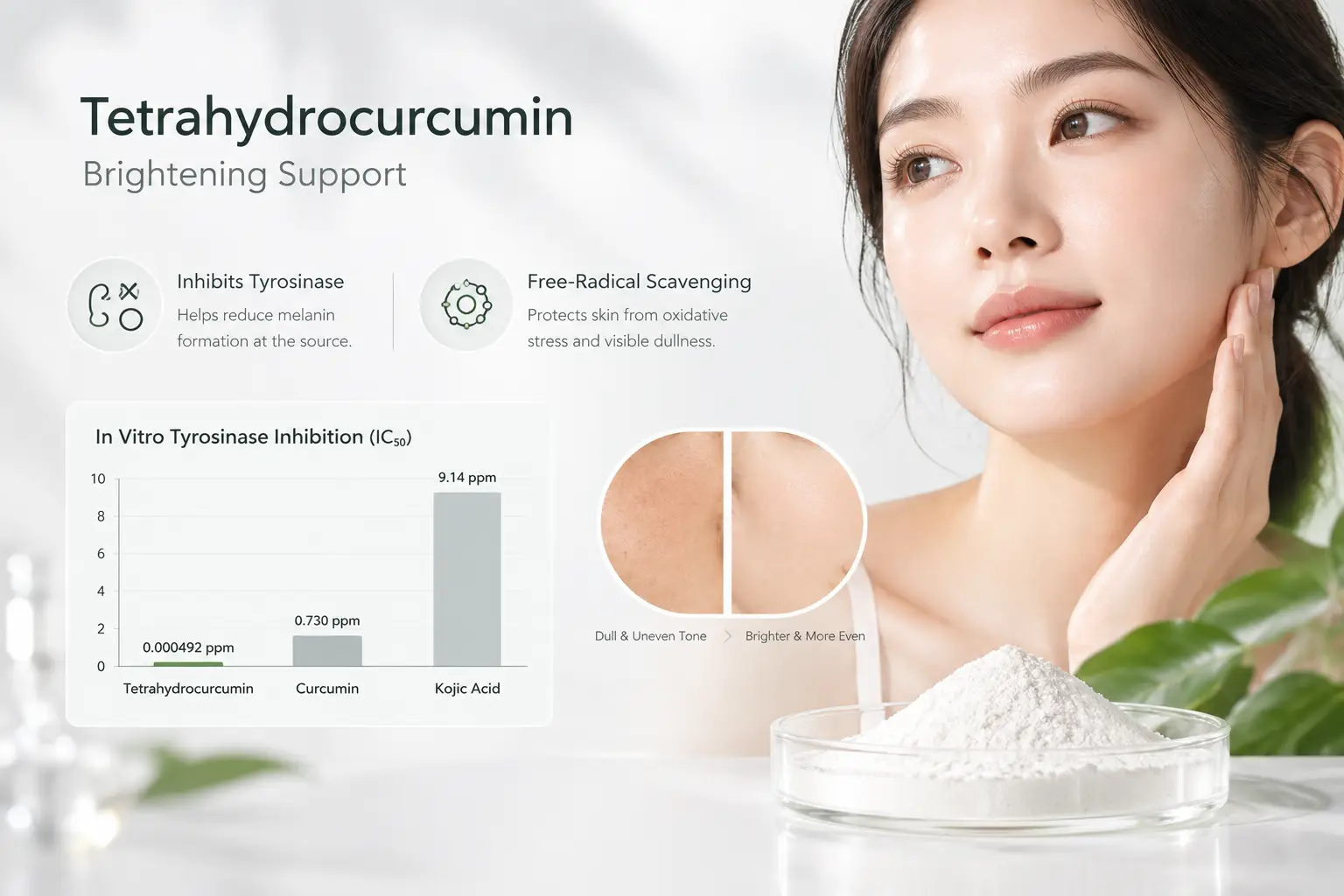
In an in-vitro tyrosinase study, the IC50 of tetrahydrocurcumin was 0.000492 ppm, versus 0.730 ppm for curcumin and 9.14 ppm for kojic acid — the data behind its brightening positioning, together with a white colour that suits cosmetic bases better than the strong yellow of curcumin.
Tetrahydrocurcumin Specifications
The 98% tetrahydrocurcumin powder (PMB0201) is released lot by lot against the specification below.
Items | Specification |
Assay | ≥98% (HPLC, enol form and keto form) |
Identification | NMR |
Appearance | Powder |
Color | White to off-white |
Odor | Characteristic |
Melting point | 91~97℃ |
Moisture | ≤1.0% |
Residue on ignition | ≤0.5% |
Pb | ≤10 ppm |
As | ≤2 ppm |
Hg | ≤1 ppm |
Cd | ≤5 ppm |
Total plate count | ≤1000 cfu/g |
Yeast & mold count | ≤100 cfu/g |
Pseudomonas aeruginosa | Not detected |
Staphylococcus aureus | Not detected |
Heat-resistant Escherichia coli | Not detected |
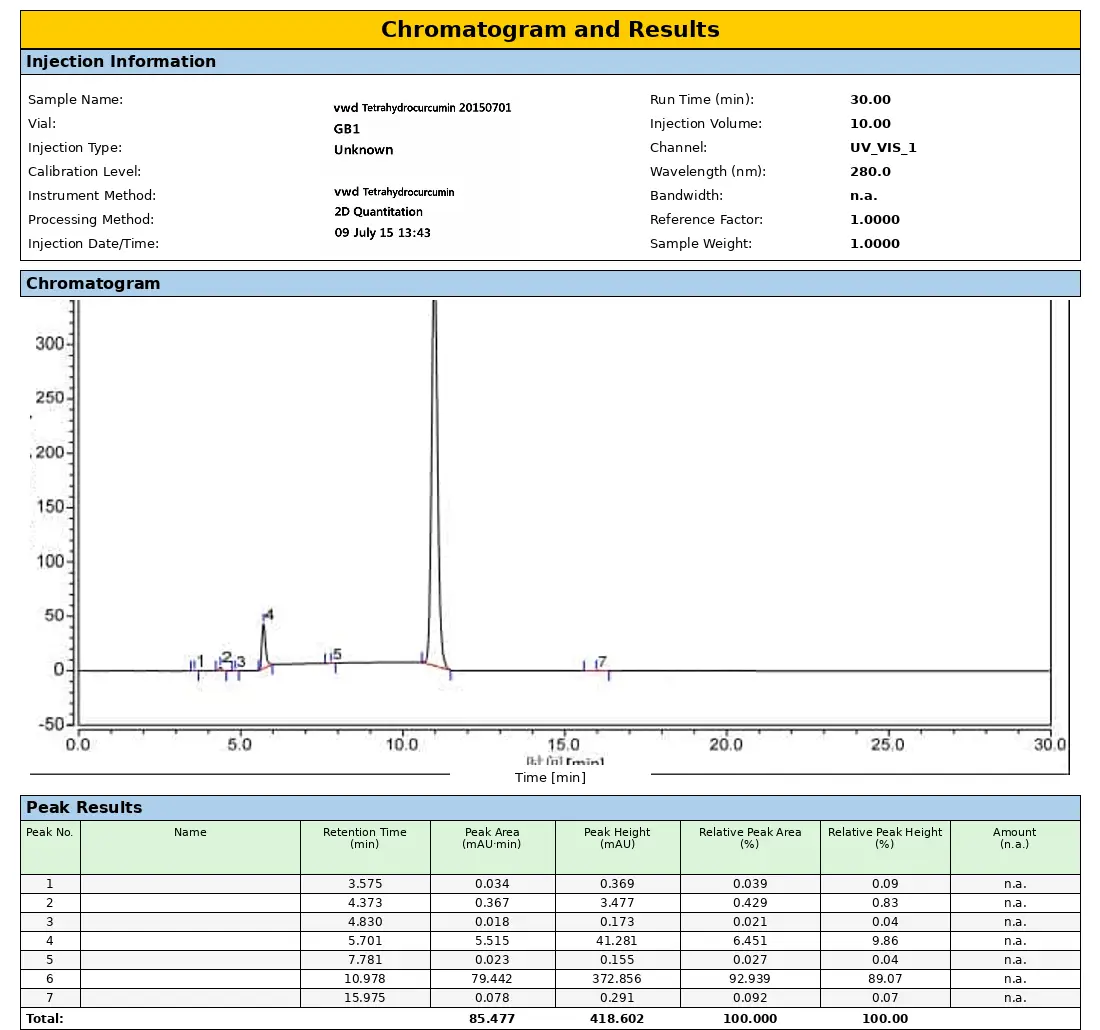
Three rows matter most for formulators. Assay (≥98%, enol and keto forms together) defines the concentrated grade for low-inclusion dosing. Colour (white to off-white) is the visual outcome of the hydrogenation-plus-decoloring route — the reason THC replaces curcumin in colour-sensitive bases. Melting point (91~97℃) supports process stability at typical emulsification temperatures.
Tetrahydrocurcumin Benefits for Skin: Antioxidant, Anti-Aging and Brightening Support
Antioxidant protection. Tetrahydrocurcumin has a great potency of antioxidant activity: it helps prevent the production of free radicals and eliminates the free radicals that have already formed. Scientific studies have also shown that THC is effective in protecting cellular membrane from damage caused by lipid peroxidation, and its antioxidant effect is stronger than that of other hydrogenated curcuminoids. This is the core of its antioxidant and anti-pollution positioning.
Anti-aging support. By countering the lipid-peroxidation chain that drives skin aging, THC helps protect skin structure against wrinkle formation and visible skin aging. To a certain degree, this supports anti-aging day-care formulas as a supporting antioxidant active rather than a stand-alone treatment.
Brightening support. Tetrahydrocurcumin can inhibit tyrosinase effectively, and its free-radical-capturing ability is the main mechanism behind its brightening positioning — in an in-vitro tyrosinase study its IC50 reached 0.000492 ppm (curcumin 0.730 ppm, kojic acid 9.14 ppm). To a certain degree, the white active has the potential to support brightening-even-tone formulas targeting the look of dull tone and dark marks; its own white colour also avoids the tinting risk that yellow botanical actives bring to cosmetic bases.
Skin comfort (traditional use and mechanism). Turmeric has a long history of traditional use on skin in India, and THC extracted from turmeric shows anti-inflammatory activity in studies — a mechanism relevant to soothing-positioning formulas. To a certain degree, this supports soothing and skin-repair-support concepts in combination with the antioxidant network above.
Tetrahydrocurcumin Uses in Skin Care Products
Tetrahydrocurcumin uses span antioxidant, anti-aging, brightening and protection skincare — creams, lotions and essences.
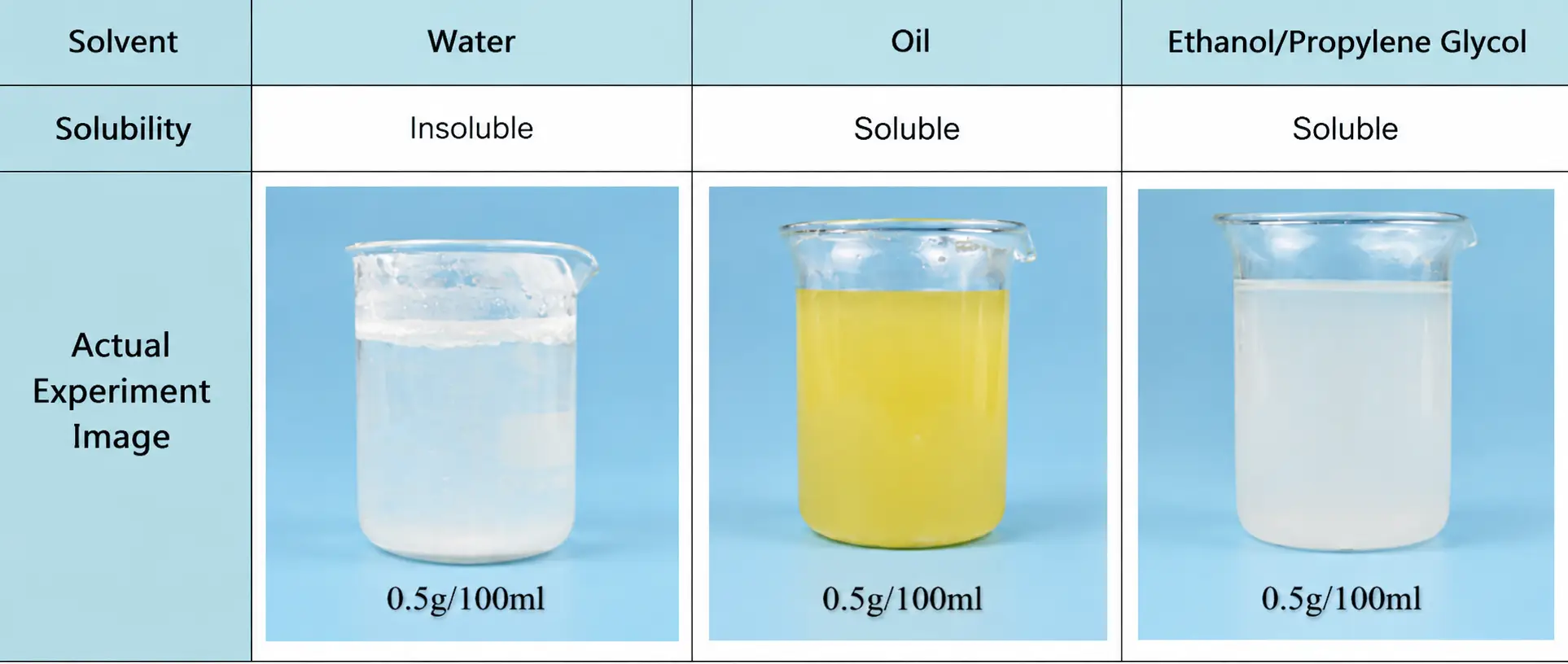
Tetrahydrocurcumin solubility: per the product SPEC, it is insoluble in water and soluble in oil and propylene glycol, so the powder should be pre-dissolved in the oil phase or propylene glycol before emulsification, which is also why it suits high-end emulsion and essence bases better than the poorly soluble curcumin.
Reference dosage:
Specification | Reference Dosage |
Tetrahydrocurcumin 98% | 1%–4% |
Formulation notes:
Pre-dissolve in the oil phase or propylene glycol; do not add directly into the water phase.
The fine particle size disperses to a clear, transparent system with even distribution.
Pair with vitamin C, vitamin E or other antioxidants for a synergistic antioxidant network.
Tetrahydrocurcumin Safety & Storage(H2)
Safety profile. Per the MSDS, tetrahydrocurcumin (CAS 36062-04-1) carries no GHS hazard classification: no pictogram, no signal word and no hazard or precautionary statements. It is supplied for cosmetic formulation use, and normal handling with good industrial hygiene practice — avoid dust formation, avoid contact with eyes — applies as for standard cosmetic powders.
Packing and Storage.
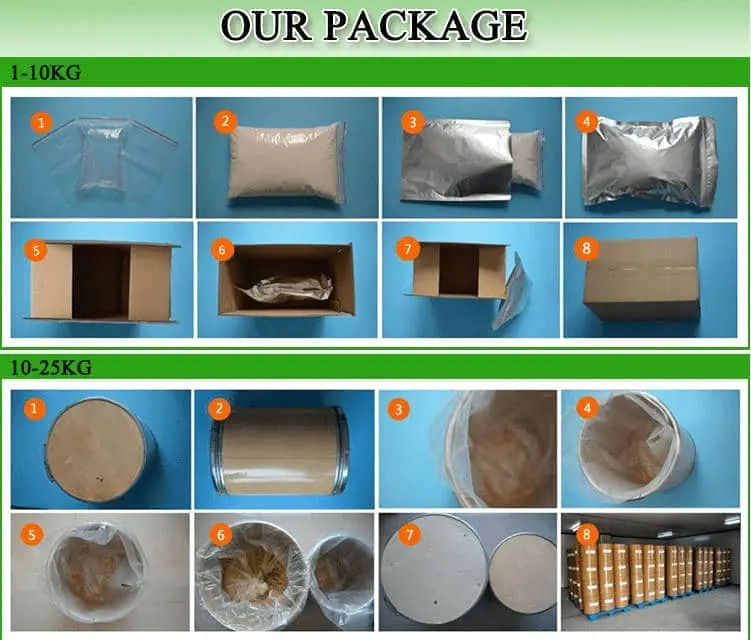
Package: 1–10 kg aluminium-foil bags; 10–25 kg fibre drums with double plastic bags inside.
Storage: store in a cool, dry place away from direct sunlight and oxidizing agents.
Tetrahydrocurcumin Documentation & Ordering
Plamed is a tetrahydrocurcumin manufacturer and tetrahydrocurcuminoid supplier based in China, offering 98% tetrahydrocurcumin powder from 1 kg MOQ. For wholesale tetrahydrocurcumin powder cooperation and bulk supply, contact Plamed for the quote, samples and the full documentation set. Whether you are comparing tetrahydrocurcumin manufacturers for a new antioxidant formula or auditing tetrahydrocurcumin powder manufacturers for long-term supply, the sample and COA of the matching lot ship with your inquiry.
Available Document of Tetrahydrocurcumin
Certificate of Analysis (COA, 98%);
Material Safety Data Sheet (MSDS);
Product Specification Sheet (SPEC);
Composition Statement / Compositional Breakdown;
Manufacturing Process Flowchart;
Method of Analysis (MOA — test method, NMR & HPLC spectra);
Halal Statement;
NMPA Raw Material Safety Dossier (Attachment 14 / submission code);
Product Brochure & Technical Introduction.
For samples, lead time and the full document set, contact Plamed Green Science Group here.
Tetrahydrocurcumin: Frequently Asked Questions
Q1. What is tetrahydrocurcumin?
Tetrahydrocurcumin (THC, CAS 36062-04-1) is the principal hydrogenated metabolite of curcumin, derived from turmeric root. It keeps curcumin's antioxidant basis but comes as a white, more stable powder — which makes it much easier to use in cosmetics.
Q2. What is the tetrahydrocurcumin structure?
The tetrahydrocurcumin structure is the hydrogenated curcumin skeleton (C21H26O6, 372.2 g/mol). It has no unsaturated C=C bond and therefore no conjugated double bonds — the reason it is white instead of yellow and more stable than curcumin.
Q3. What is the tetrahydrocurcumin solubility?
Per the product SPEC, tetrahydrocurcumin is insoluble in water and soluble in oil and propylene glycol. Pre-dissolve it in the oil phase or propylene glycol before emulsification.
Q4. What are the benefits of tetrahydrocurcumin for skin?
The main tetrahydrocurcumin benefits for skin are antioxidant protection (free-radical prevention and elimination, anti-lipid-peroxidation), anti-aging support and brightening-even-tone support (tyrosinase inhibition, in-vitro IC50 0.000492 ppm). See the Benefits and Comparison tabs for the underlying data.
Q5. Tetrahydrocurcumin vs curcumin — which suits cosmetics better?
Both share the same antioxidant basis. For cosmetics, tetrahydrocurcumin wins on three practical points: it is white instead of yellow (no tinting risk), more stable, and has higher bioavailability, with a much lower tyrosinase IC50 in vitro. Curcumin remains widely used in health care and functional food.
Q6. How do you use tetrahydrocurcumin powder in a formula?
The reference dosage of 98% tetrahydrocurcumin powder is 1%–4%. Because it is insoluble in water, pre-dissolve it in the oil phase or propylene glycol, then emulsify as usual.
Q7. What is the tetrahydrocurcumin price?
The tetrahydrocurcumin powder price depends on grade, order quantity and incoterms — 98% (PMB0201) is the standard commercial grade with 1 kg MOQ. Send an inquiry for a current quotation.
Q8. Where can I buy tetrahydrocurcumin powder?
You can buy tetrahydrocurcumin powder directly from Plamed: MOQ 1 kg, 98% grade, with COA and full documentation. For wholesale tetrahydrocurcumin powder cooperation, contact us for samples and pricing.
Q9. Is tetrahydrocurcumin safe for skin?
Per the MSDS, tetrahydrocurcumin carries no GHS hazard classification (no pictogram, no signal word). It is designed for cosmetic use — follow the reference dosage and standard powder-handling hygiene.
Q10. How do I choose among tetrahydrocurcumin manufacturers?
Check purity verification (HPLC assay, enol and keto forms), colour stability, documentation completeness (TDS/COA/MSDS/MOA) and regulatory support. Plamed, as one of the experienced tetrahydrocurcumin powder manufacturers, provides all of the above with an NMPA raw-material safety dossier for China registration.