
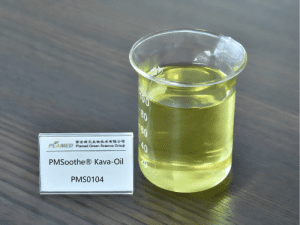
Where to buy Anti-irritating cosmetics ingredient PMSoothe® Kava-Oil with reasonable price and high quality? Where to find good information of wholesale Anti-irritating cosmetics ingredient PMSoothe® Kava-Oil? As the professional Anti-irritating cosmetics ingredient PMSoothe® Kava-Oil manufacturer, Plamed is your best choice.
In recent years, the appearance of sensitive skin has become more and more frequent, which significantly affects people’s life quality and increases their psychological pressure and anxiety. Sensitive skin has now become a health issue of global concern. According to the data of China Sensitive Skin Diagnosis and Treatment Expert Consensus, the proportion of Chinese women with sensitive skin is about 36.1%, which means that one out of three people has sensitive skin.

The current mainstream anti-irritation target is TRPV1. The TRPV family responsible for sensing external stimuli in the human body comprises six known members, ranging from TRPV1 to TRPV6. If an anti-irritation ingredient only targets TRPV1, it is highly likely to be ineffective against other TRPV receptors, thereby failing to comprehensively address the diverse irritants encountered by the skin. The market needs a novel anti-irritation mechanism that not only synergizes with the TRPV1 target but also inhibits irritation signals triggered by activation of all TRPV receptors.
Therefore, after many years of in-depth research by Plamed, it was found that Kava Pepper Root Extract is able to directly affect the transmission of stimulus signals-AP generated by the activation of various TRPV receptors through a novel mechanism of action. It has a broader and more reliable anti-irritating effect.
We already have PMSoothe® Kava97 (water soluble powder), it is highly popular in the cosmetics market due to its anti-irritation, skin repair, and anti-wrinkle properties. Some customers want oil-soluble kava extract, so we develop PMSoothe® Kava-Oil.

| Product name | PMSoothe® Kava-Oil |
| INCI name | PIPER METHYSTICUM ROOT EXTRACT, CAPRYLIC/CAPRIC TRIGLYCERIDE |
| Actives content | Kavain≥8000ppm Yangonin≥1500ppm |
| Solubility | Oil soluble |
| Recommended dosage | ≤10% |
| Function | Anti-irritation |
| Highlights★ | Superior ingredients for sensitive skin with strong anti-irritation and repair properties |
PMSoothe® Kava-Oil blocks the production of burning, pain and itching through two targets simultaneously, mainly acting on the skin sensory nervous system. It can inhibit both neural excitation (inhibiting TRPV1 protein expression) and neurotransmitter transmission (inhibiting AP signaling), thus achieving instant nerve relief.
Compared to traditional TRPV1 target, inhibition of action potentials (APs) blocks multiple stimulus signals more comprehensively. There are multiple receptor subtypes such as TRPV1-TRPV6 distributing in human skin, which perceive different stimuli respectively. Traditional TRPV1 inhibitors have the limitation of having a single target of action. However, regardless of which TRPV receptors is activated, the stimulus signals generated ultimately need to be transmitted to the brain in the form of AP. Therefore, inhibition of the AP can maximize the blockage of the transmission of various stimulus signals and provide a broader anti-irritation effect.

Kava has been eaten for 3,000 years in the South Pacific islands, where it is considered “sacred” by the indigenous people and used in religious and cultural ceremonies. Kava is used to make “Kava Wine”, which is considered the national drink and is consumed when entertaining VIP guests, holding important festivals or discussing important matters. Kava is considered a natural answer to stress, anxiety, depression, insomnia and more.
Plamed has conducted efficacy demonstration and mechanism of action research on Kava to soothe sensitive skin, and in 2021 verified that Kava can block neurotransmitter transmission.


