
Bakuchiol for Fine Lines, Skin Firmness & Texture Improvement
A high-quality, plant-derived anti-aging active with controlled odor, consistent color, and excellent stability for reliable cosmetic formulations.
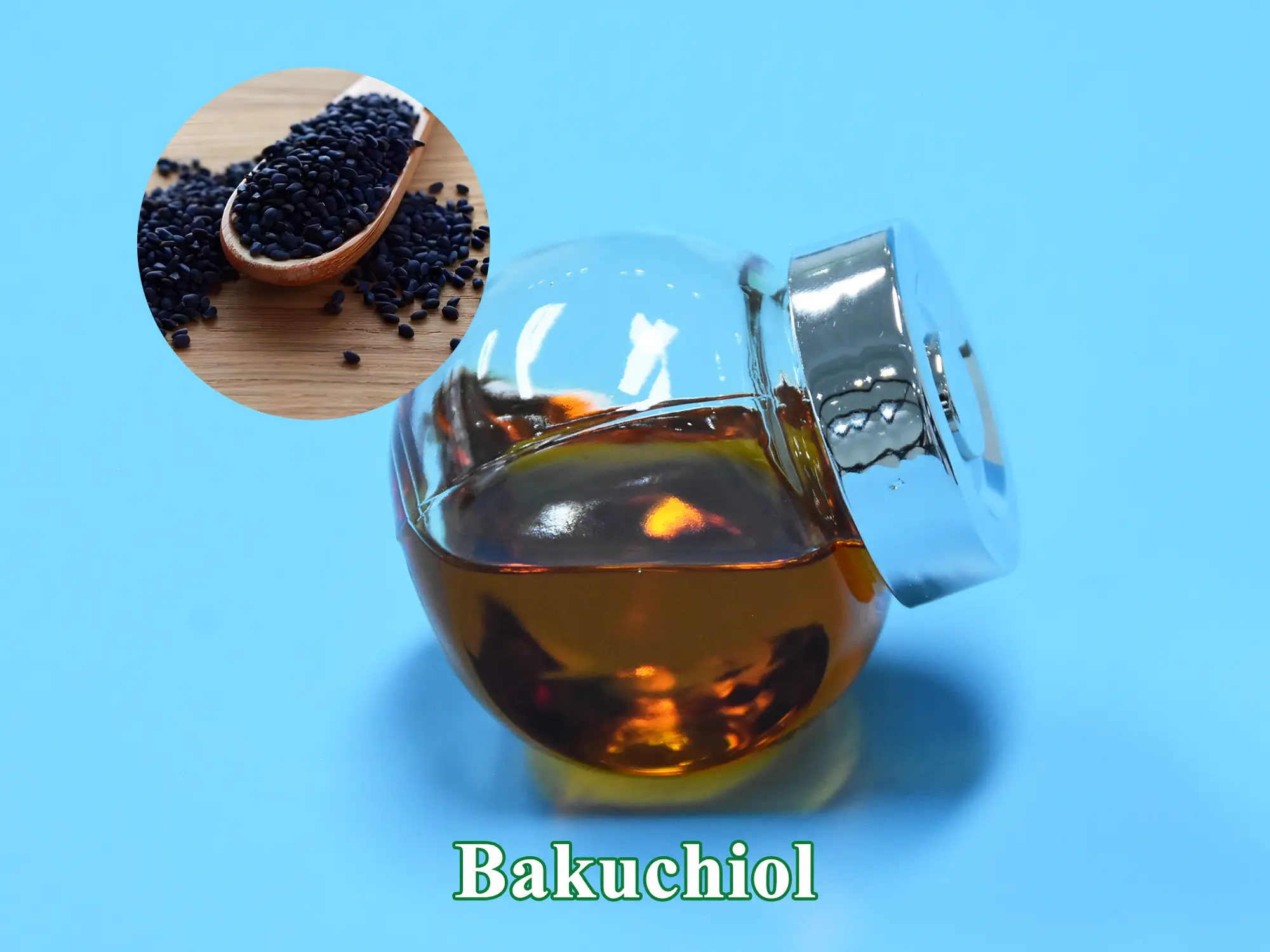
Bakuchiol
Bakuchiol is a widely recognized plant-derived anti-aging active that helps improve the appearance of fine lines, skin laxity, and uneven skin texture, offering a gentle alternative to retinol in skincare formulations.
Beyond high purity, Plamed places a strong emphasis on the end-product experience. Through stringent controls over odor, color consistency, and stability, we deliver high-quality Bakuchiol solutions that brands can rely on.
Bakuchiol Overview: What It Is, Where It Comes From and How It Works
Item | Detail |
Product | Bakuchiol |
Product ID | PMKZ1501 |
INCI | BAKUCHIOL |
CAS | 10309-37-2 |
Molecular formula / MW | C18H24O / 256.38 g/mol |
Specification | Bakuchiol ≥98% |
Form / solubility | Oil; soluble in butanediol and oils |
Reference dosage | 0.5–2% |
Minimal package / MOQ | 1 kg / 1 kg |
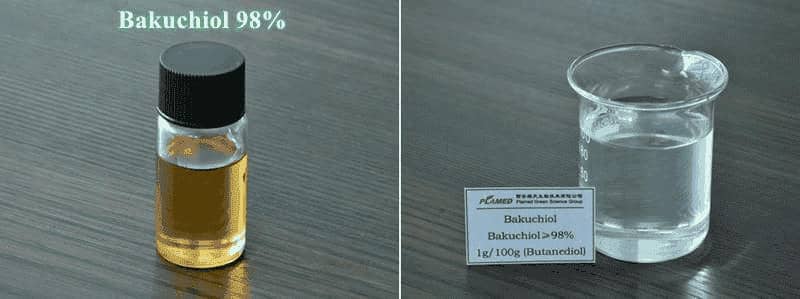
Bakuchiol is a botanical ingredient extracted from the seeds of Psoralea corylifolia (babchi), an annual plant used in traditional Chinese and Indian medicine. Chemically it is a meroterpene (C18H24O, 256.38 g/mol, CAS 10309-37-2) , structurally unrelated to retinol, which is why it delivers retinol-like results without the retinoid-style drawbacks.
As a bakuchiol active ingredient, it is valued for one main reason: it works as a plant based retinol alternative. It is more tolerant than retinol in formula and on skin, and unlike retinol it has no photo-sensitivity, so it can be used in daytime products. That is what makes it a gentle retinol for sensitive skin and one of the most requested natural retinol alternative materials among formulators. Searches for a bakuchiol gentle retinol alternative or a bakuchiol plant-based retinol alternative are usually looking for exactly this profile: retinol-like results with a cleaner tolerance record.
Plamed develops high-purity Bakuchiol at ≥98%, extracted from babchi seeds and standardized for low odour, colour consistency and stability.
Where does bakuchiol come from?
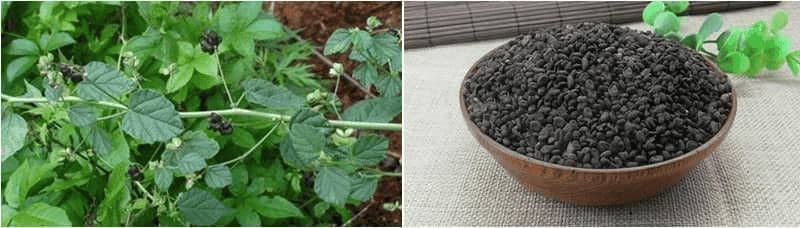
Bakuchiol is obtained from the seeds of Psoralea corylifolia, also named babchi, an annual plant distributed across China, India, Burma and Sri Lanka, and long used in Indian and Chinese traditional medicine. Its seeds are rich in coumarins such as psoralen and isopsoralen; Bakuchiol is extracted and purified from the seed, and Plamed's specification keeps psoralen ≤10 ppm, the parameter that separates cosmetic-grade material from crude extract.
What are bakuchiol's specifications? (PMKZ1501)
Items | Specification |
Bakuchiol | ≥98% |
Psoralen | ≤10 ppm |
Appearance | Light red-brown to light yellow oil |
Odor | Gentle and characteristic odor, not pungent |
Total heavy metals | ≤10.0 ppm |
Lead / Mercury / Cadmium | ≤2.0 / ≤1.0 / ≤0.5 ppm |
Total plate count | ≤1000 cfu/g |
Yeast & mold | ≤100 cfu/g |
E.Coli / Salmonella / S. aureus | Negative |
What does bakuchiol do for skin?
1. Anti-Aging: Collagen Pathway Support
Bakuchiol supports collagen maintenance by enhancing fibroblast activity, increasing TIMP-2, and reducing MMP-1 in reported cell studies. These mechanisms help explain its potential for improving the appearance of fine lines and supporting skin firmness, making it a plant-derived option among anti-wrinkle ingredients.
2. Skin Firmness and Texture Improvement
By supporting collagen-related pathways, Bakuchiol helps address visible signs of skin aging, including fine lines, reduced firmness, and uneven skin texture. Its plant-derived origin also makes it an appealing ingredient for natural anti-aging skincare formulations.
3. Skin Comfort and Formulation Compatibility
Bakuchiol is widely used as a plant-derived alternative to retinol, particularly in formulations designed for users seeking a gentler anti-aging approach. Its formulation suitability should be evaluated based on the overall formula, concentration, and compatibility with other active ingredients.
4. Bakuchiol for Evidence-Based Anti-Aging Formulations
For cosmetic formulators, Bakuchiol offers a combination of published research on collagen-related pathways and defined quality specifications. Plamed's Bakuchiol features a purity specification of ≥98%, psoralen ≤10 ppm, and batch-specific COA documentation, supporting quality evaluation and formulation development.
What do studies report for bakuchiol?
Test item | Concentration | Reported result |
Inhibition of tyrosinase activity | — | IC50 12.1 μg/mL |
Inhibition of collagen protease (MMP) activity | — | IC50 ≈0.1% |
Inhibition of myeloperoxidase | — | IC50 0.1 μmol/L |
Inhibition of prostaglandin PGE2 | 0.1 μmol/L | Inhibition rate 33.8% |
Inhibition of ear swelling in mice | 1% | Inhibition rate 5.74% |
Anti-pigmentation (SPF method) | 1% | Inhibition rate 2.86% |
Plamed Bakuchiol Characteristics: Odour, Colour and Stability(H2)
Good stability and little side effect: the material is stable in formulation and well tolerated at the reference dosage of 0.5–2%.
100% natural extraction with high purity: no synthetic blend, standardized at ≥98%.
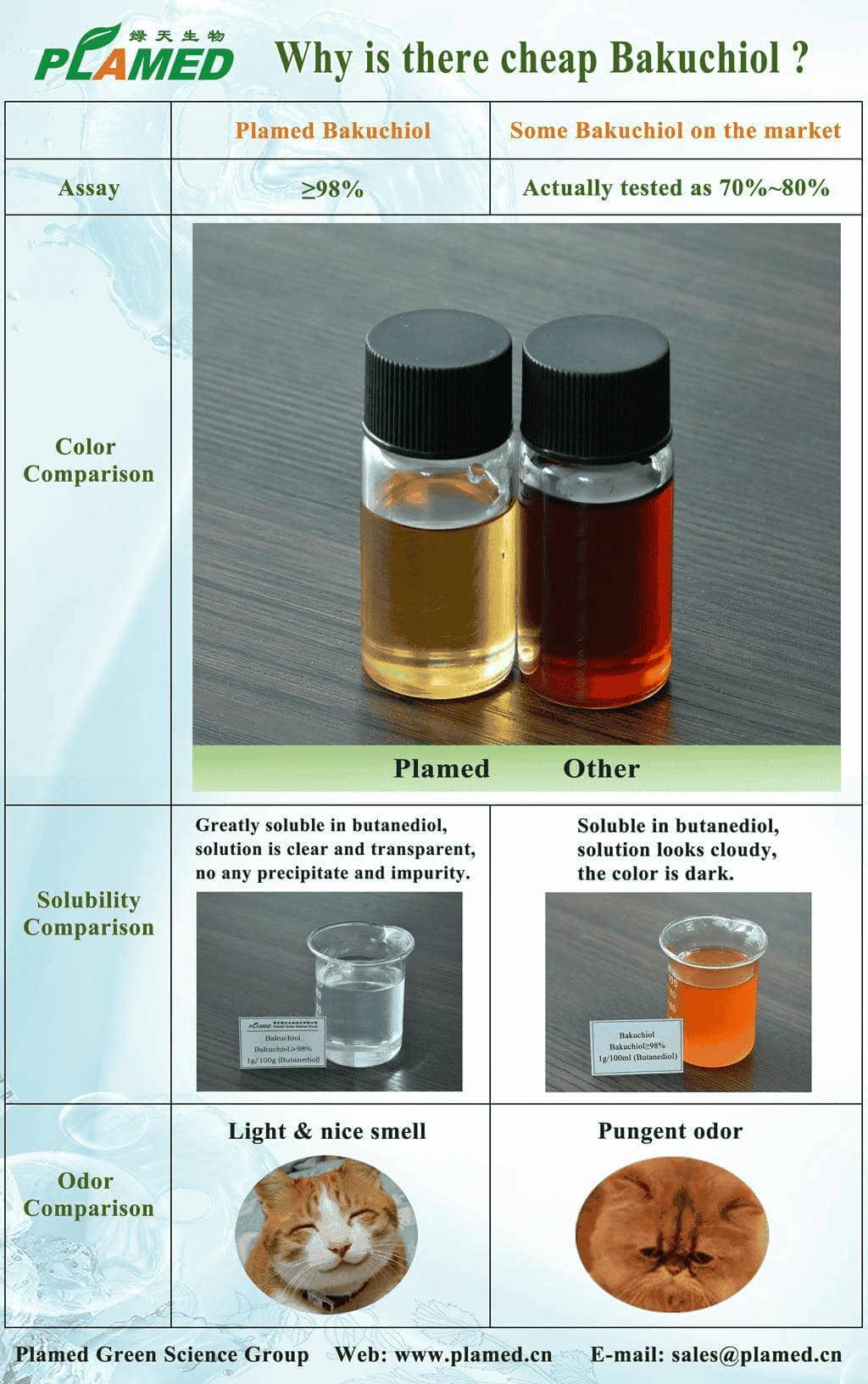
Lighter colour, lighter solution colour and lower odour, with fewer impurities than other Bakuchiol on the market: Plamed's internal control targets the two points end-consumers actually notice: a dark raw material limits light formulas, a pungent one limits premium skincare.
How do you use bakuchiol in a formula?
Bakuchiol is widely used in anti-aging, anti-acne and skin-evening cosmetics, sprays, toners, lotions, essences, face creams and sunscreens. As an oil-soluble active(soluble in butanediol and oils)it is best dosed into the oil phase; typical reference dosage is 0.5–2%.
Ingredient | Content (%) | Ingredient | Content (%) |
Bakuchiol | 1.0 | Salicylic Acid | 2.0 |
Glycollic Acid | 10.0 | Lactic Acid | 0.3 |
Butanediol | 1.0 | Hydroxyethyl Cellulose | 0.5 |
EDTA | 1.0 | Nalidone | 0.2 |
Sodium Hydroxide | 1.0 | Perilla Ocymoides Leaf Extract | 2.0 |
Olive Fruit Extract | 0.5 | Polysorbate | 1.0 |
Bisabolol | 0.2 | Deionized Water | Add to 100 |
Is bakuchiol safe? Regulatory status and storage
Regulatory listing
China, included in the International Catalogue of Chinese Cosmetic Raw Materials Standards (2010, published by CAFFCI).
United States, listed by the Personal Care Products Council (PCPC, formerly CTFA) as a cosmetic raw material.
Topical use, low irritation potential at the recommended use level of 0.5%–2%, with no photo-sensitivity; batch documentation travels with every order.
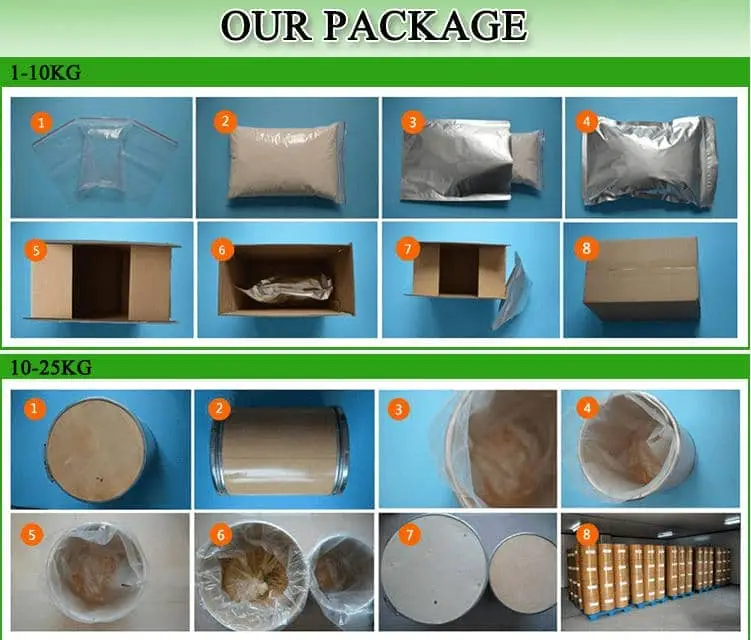
Packaging and storage
Samples, 30 ml / 50 ml glass bottles.
Small quantities, 1 kg / 5 kg / 10 kg PE bottles.
Bulk, 200 L drums.
Which ingredients combine with bakuchiol?
Bakuchiol is oil-soluble, so it is dosed in the oil phase or a solubilised system. It is commonly paired with niacinamide and vitamin C derivatives for tone, with ceramides or ectoin for tolerance, and with salicylic acid in anti-acne formats; Plamed's reference anti-acne formula lists bakuchiol at 1.0%.
How much does bakuchiol cost, and what is the MOQ?
Item | Detail |
Product ID | PMKZ1501 |
Specification | Bakuchiol ≥98% |
Minimal package | 1 kg |
MOQ | 1 kg |
Lead time | 3–5 working days after payment for standard items |
Samples | 30 ml / 50 ml glass bottles |
Available Document of Bakuchiol
Certificate of Analysis (COA)
Material Safety Data Sheet (MSDS)
Method of Analysis
Quality and Safety Information Overview (Annex 14)
Application Guide in the Formulation
To request a quote or a sample, contact Plamed Green Science Group here.
Bakuchiol Manufacturer and Wholesale Supplier
Plamed is a bakuchiol manufacturer and supplier based in Shaanxi, China, providing high-purity bakuchiol for cosmetic formulation and premium anti-aging skincare development. For brands, distributors, and ingredient buyers looking to source bakuchiol wholesale, we offer direct factory enquiries to discuss specifications, order quantities, and export requirements.
Bakuchiol Pricing and Wholesale Supply
Bakuchiol price per kg depends on order volume, purity specifications, packaging requirements, and the documentation needed for the destination market. Whether you are sourcing bakuchiol as a cosmetic ingredient or evaluating suppliers for long-term wholesale purchasing, share your target quantity and destination market to receive a tailored quotation.
Why Source Bakuchiol from Plamed?
Plamed's bakuchiol features a purity specification of ≥98% and a psoralen limit of ≤10 ppm, alongside controlled color and odor consistency. We provide batch-specific COA documentation to support material evaluation and quality review. Contact our team to request the product specification, discuss sample availability, and evaluate its suitability for your formulation.
Q1. What is Bakuchiol?
Bakuchiol is a plant-derived cosmetic active obtained from Psoralea corylifolia (babchi) seeds. Its INCI name is BAKUCHIOL, its CAS number is 10309-37-2, and its molecular formula is C₁₈H₂₄O. Plamed supplies Bakuchiol with a specified purity of ≥98% and a psoralen limit of ≤10 ppm. Although it is used as a retinol alternative in skincare, Bakuchiol is a meroterpene and is chemically distinct from retinol.
Q2. What does Bakuchiol do in skincare, and which products use it?
Bakuchiol is used in anti-aging skincare formulations to help improve the appearance of fine lines, skin firmness, and texture. Research has investigated its effects on fibroblast activity and collagen-related pathways, including TIMP-2 and MMP-1. Depending on the formulation and supporting compatibility data, it can be incorporated into serums, creams, and lotions, including products designed for aging or blemish-prone skin.
Q3. Is Bakuchiol a genuine retinol alternative?
Bakuchiol is a plant-derived alternative to retinol for formulations targeting visible signs of skin aging. Research suggests that it may help improve the appearance of fine lines and skin texture, while some studies report favorable tolerability. However, its effects and irritation potential depend on the concentration, formulation, and individual skin response. Bakuchiol is not a retinoid and should not be assumed to have identical effects to retinol.
Q4. Is Bakuchiol suitable for sensitive skin?
Bakuchiol may be considered for anti-aging formulations designed with skin comfort in mind, particularly when a plant-derived alternative to retinol is desired. Its suitability for sensitive skin depends on the finished formula, concentration, and other ingredients. Formulators should assess irritation potential and finished-product compatibility before making sensitive-skin claims.
Q5. Is Bakuchiol safe, and what is its regulatory status?
Bakuchiol's suitability for cosmetic use depends on the applicable regulations, product category, concentration, and destination market. Plamed's specification includes a purity level of ≥98%, a psoralen limit of ≤10 ppm, and defined limits for heavy metals and microbiological parameters. Buyers should review the current specification, Certificate of Analysis (COA), and relevant regulatory documentation to assess suitability for their intended application and market.
Q6. Bakuchiol vs. retinol: how should formulators choose?
Bakuchiol and retinol can both be considered in formulations targeting visible signs of skin aging, but they differ in chemical structure and supporting evidence. Bakuchiol may appeal to brands seeking a plant-derived retinol alternative, while retinol has a more established history of use in topical anti-aging skincare. The choice should be based on the desired product positioning, available efficacy data, tolerability requirements, formulation compatibility, and stability testing. Combining the two requires specific compatibility and finished-formula evaluation.
Q7. How much Bakuchiol should I use in a formula?
Plamed's reference use level is 0.5–2%, subject to the product specification and formulation requirements. Bakuchiol is oil-soluble, and its solubility and incorporation method should be confirmed using the relevant technical data and pilot testing. Formulators should evaluate finished-product stability, color, and compatibility with other active ingredients before scaling up.
Q8. Is Bakuchiol a natural, evidence-based anti-aging ingredient?
Bakuchiol is a plant-derived active studied for its potential role in improving the appearance of fine lines, skin texture, and firmness. When evaluating Bakuchiol or other anti-aging skincare ingredients, formulators should consider the quality of the supporting research, ingredient specifications, safety documentation, and batch-specific COA rather than relying on marketing claims alone.
Q9. Where can I buy Bakuchiol, and what are the price and MOQ?
Plamed supplies Bakuchiol directly to cosmetic brands, distributors, and ingredient buyers. Pricing depends on order quantity, specification, packaging, and destination-market documentation requirements. The standard MOQ is 1 kg, with 30 mL and 50 mL pilot samples available subject to confirmation. Contact our team with your target quantity and destination market for a quotation. Formulation support is available; please confirm the scope with our team.
Q10. What documentation comes with a Bakuchiol order?
The standard documentation package includes a Certificate of Analysis (COA), Technical Data Sheet (TDS), and Safety Data Sheet (SDS), subject to order confirmation. The documentation covers the applicable product specifications, including purity, psoralen, heavy metals, and microbiological parameters. Additional regulatory documents for specific destination markets may be available on request. Buyers should confirm their documentation requirements when requesting a quotation.