
Palmitoyl Tripeptide-1 | Collagen-Building Signal Peptide for Skin
Palmitoyl tripeptide-1 (CAS 147732-56-7) is a Matrikine signal peptide that tells fibroblasts to build new collagen — supplied by Plamed as a ≥98% HPLC pure powder with scientific chloride content control.
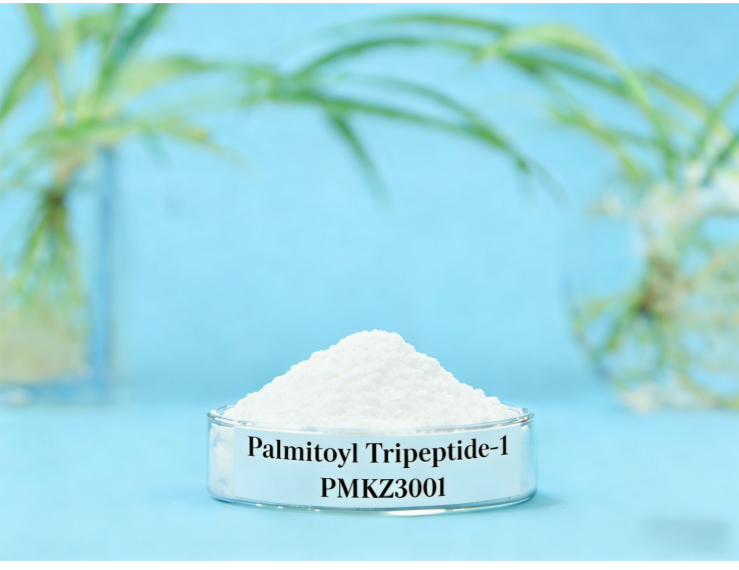
Palmitoyl Tripeptide-1
A classic collagen-building signal peptide. By activating fibroblast function, it helps support collagen production and skin firmness, and is widely used in anti-aging and wrinkle-smoothing formulations.
Plamed supplies Palmitoyl Tripeptide-1 as a high-purity (HPLC ≥98%) pure powder-grade raw material. Through scientific-range chloride content control combined with optimized active-peptide control, Plamed improves batch-to-batch stability and formulation consistency — dependable support for long-term, stable development.
At a glance
Item | Detail |
Product | Palmitoyl Tripeptide-1 (Matrikine signal peptide) |
Product ID | PMKZ3001 |
INCI name | PALMITOYL TRIPEPTIDE-1 |
Other names | Palmitoyl oligopeptide; palmitoyl tripeptide; GHK-palmitoyl peptide |
CAS number | 147732-56-7 |
Molecular formula | C₃₀H₅₄N₆O₅ |
Molecular weight | 578.8 g/mol |
Purity | ≥98.0% (HPLC); tested up to 98.9% |
Measured peptide content | Internal control ≥80.0%; batch tested up to 85.1% |
Chloride content | ≤15.0% (scientific control range, see below) |
Appearance | White to off-white powder |
Solubility | Soluble in ethanol/1,3-propanediol (EtOH/PDO) system |
Reference dosage | 0.001%–0.1% |
Minimal package | 10 g bottle |
MOQ | 10 g |
Storage | Sealed, 2–8 °C (no −20 °C cold chain required) |
Palmitoyl tripeptide-1 (INCI: PALMITOYL TRIPEPTIDE-1; CAS 147732-56-7) is a Matrikine signal peptide supplied by Plamed at ≥98.0% HPLC purity with peptide content ≥80.0%. Used at 0.001%–0.1%, it triggers collagen synthesis and supports firmness, and it is usually paired with palmitoyl tetrapeptide-7.
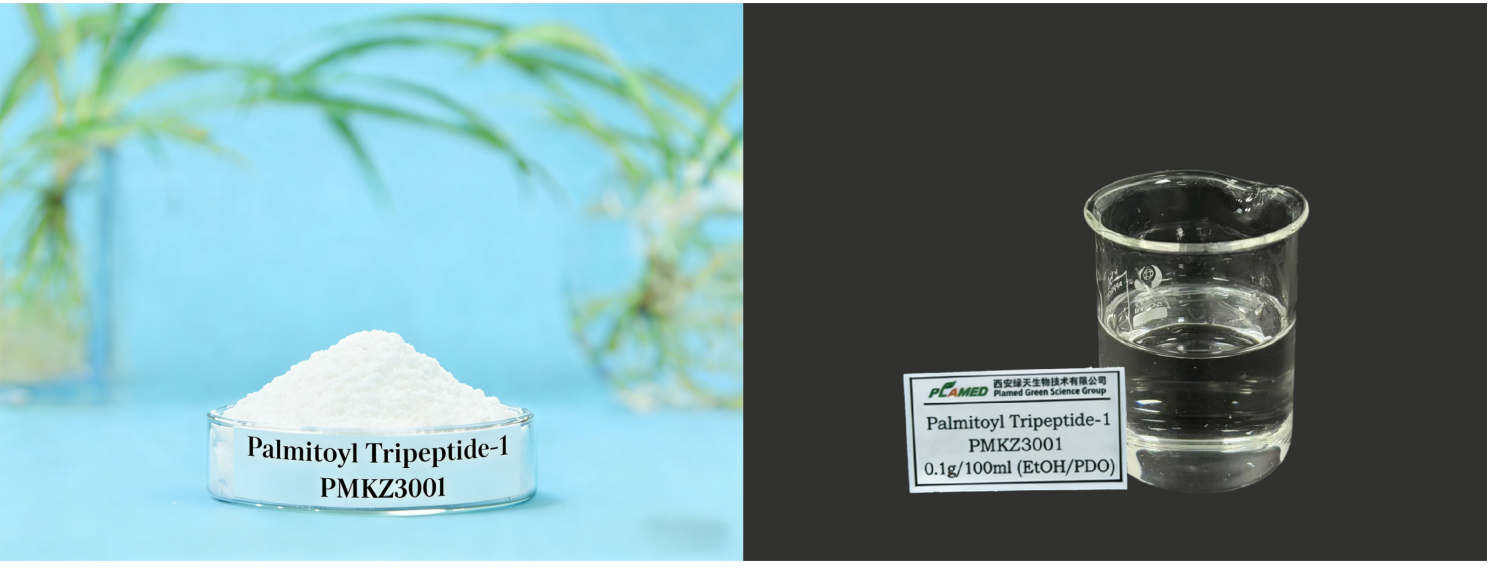
In short: Palmitoyl Tripeptide-1 is a classic collagen-promoting signal peptide and a core active for root-cause anti-aging, firming and wrinkle-reducing skincare. Also known as Palmitoyl Oligopeptide, it belongs to the Matrikine family — peptides derived from the body's own ECM-breakdown fragments.
How it works. It mimics the signal fragments released during collagen degradation (represented by type I collagen-related signal sequences), sending "collagen regeneration" signals to skin fibroblasts and triggering the dermis's self-repair mechanism. It regulates collagen-synthesis pathways such as TGF-β/Smad, upregulates type I/III collagen, elastin, fibronectin and glycosaminoglycans, and helps regulate MMP activity to reduce excessive collagen degradation — a two-way mechanism of "promoting synthesis + inhibiting degradation".
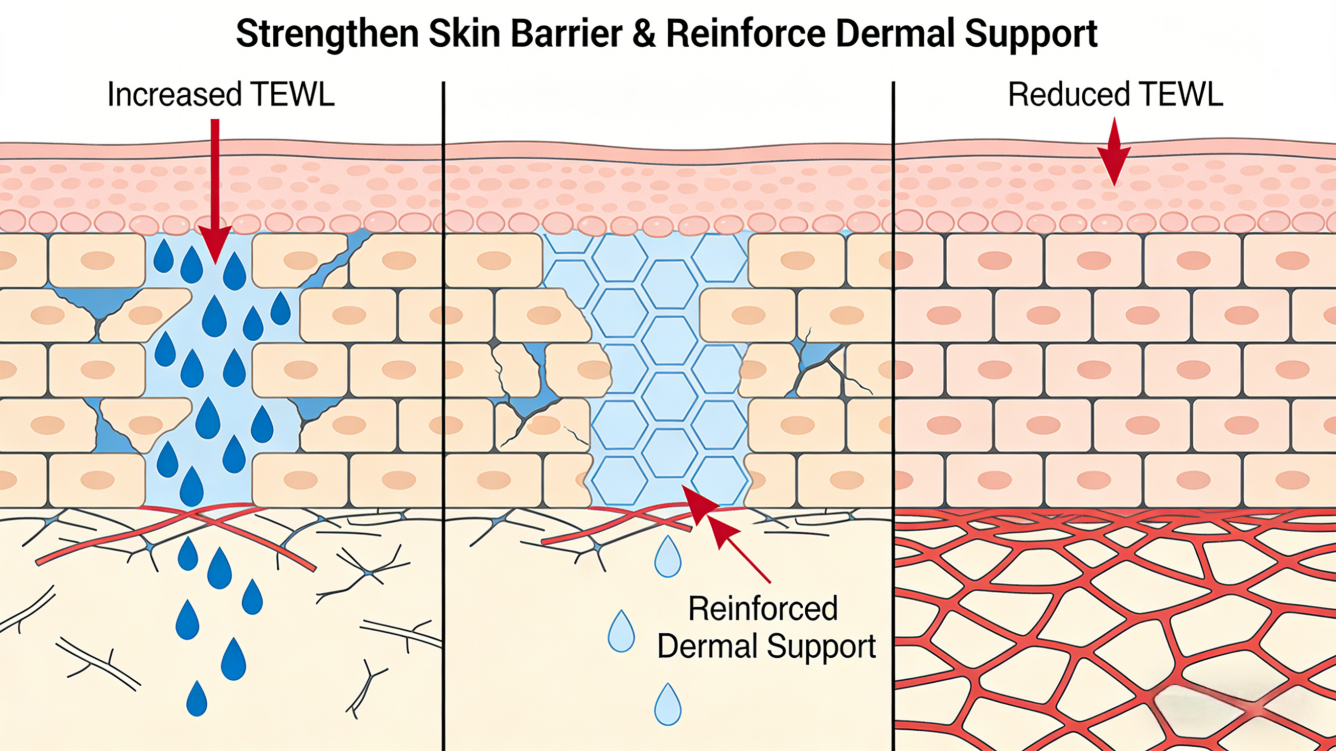
Barrier co-benefit. By promoting ECM reconstruction it improves the skin microenvironment and keratinocyte function, upregulating barrier proteins such as filaggrin and reducing transepidermal water loss (TEWL).
How it is made. Cosmetic-grade Palmitoyl Tripeptide-1 is chemically synthesized; Plamed produces it by Solid Phase Peptide Synthesis (SPPS), supplying a high-purity powder with HPLC purity ≥98.0% and peptide content internal control ≥80.0% (batch tested up to 85.1%).
The differentiated quality metric: scientific chloride content control. Chloride ions arise from salt formation and neutralization during peptide manufacturing. The industry's conventional free-HCl index is calculated indirectly via chloride conversion, involving salt-form assumptions and conversion errors. Plamed analyzed the potential salt-forming sites of Palmitoyl Tripeptide-1 and set a scientific control range (≤15.0%) with reference to the theoretical maximum salt-forming chloride content — accurate, unambiguous data that reduces formulation fluctuation risk, shortens adjustment cycles and improves long-term finished-product stability.
Where it fits. Signal-activated anti-aging that improves dry lines, fine lines, sagging and elasticity loss from collagen decline — widely used in high-end anti-aging, firming, wrinkle-reducing and barrier-repair products.
How is palmitoyl tripeptide-1 made? SPPS versus LPPS
Conclusion first: Palmitoyl Tripeptide-1 is chemically synthesized, and Plamed's optimized SPPS route delivers high purity, high peptide content and scientifically controlled chloride residues.
Chemical synthesis has two main routes — Solid Phase Peptide Synthesis (SPPS) and Liquid Phase Peptide Synthesis (LPPS). Plamed has achieved breakthroughs in scientific chloride content control, high purity, high active peptide content and low impurity residue, meeting compliance, efficacy and global promotion requirements of high-end cosmetic raw materials.
SPPS vs LPPS at a glance
| Solid Phase Peptide Synthesis (SPPS) | Liquid Phase Peptide Synthesis (LPPS) |
Production process | Raw materials — Synthesis — Purification — Drying — Packaging | Multi-step amino acid coupling, deprotection, stepwise extraction and purification, freeze-drying and refining in pure liquid phase |
Advantages | High active content: HPLC purity ≥98%, peptide content ≥80.0% (batch tested to 85.1%); low moisture and chloride impurities, degradation-resistant; fully process-controlled, supplied as a solvent-free powder with no solvent dilution | Low raw-material cost; high flexibility for small-batch custom synthesis; suited to short peptides and small-molecule fragments |
Limitations | Higher synthesis cost than LPPS; high technical requirements | Complex synthesis steps; difficult purity control; high scale-up cost |
How to read this table: the decisive buying factors for a Matrikine signal peptide are actual peptide content, chloride control and batch consistency — Plamed's SPPS route releases every lot against one published specification with a batch COA.
TEST ITEMS | SPECIFICATION |
Purity & content |
|
Purity | ≥98.0% HPLC |
Peptide content | ≥80.0% HPLC |
Chloride content | ≤15.0% |
Organoleptic |
|
Appearance | Powder |
Color | White to off-white |
Odor | Characteristic |
Physical characteristics |
|
Water content | ≤8.0% |
Heavy metals |
|
Pb | ≤10 ppm |
As | ≤2 ppm |
Hg | ≤1 ppm |
Cd | ≤5 ppm |
Microbiological |
|
Total plate count | ≤1000 cfu/g |
Yeast & mold count | ≤100 cfu/g |
How to read this specification. Three numbers matter most:
Purity ≥98.0% (HPLC) — chemical identity of the peptide fraction; Plamed batch tested up to 98.9%.
Peptide content ≥80.0% (HPLC) — whole-sample share of active peptide; batch tested up to 85.1%, above the release specification.
Chloride content ≤15.0% — the differentiated metric. Set by salt-forming-site analysis with reference to the theoretical maximum salt-forming chloride for this specific peptide, it replaces the industry's indirect free-HCl conversion index. The result: small batch-to-batch variation and unambiguous compatibility data for formulators.
A batch-specific COA is provided with every order.
Plamed produces palmitoyl tripeptide-1 powder through a controlled four-stage SPPS process:
1. Raw material — protected amino acid building blocks and palmitic acid derivatives released against incoming specifications.
2. Synthesis — stepwise peptide coupling builds the GHK tripeptide sequence; the palmitoyl group is attached under controlled conditions.
3. Purification — combined purification removes uncoupled fragments and process-related impurities; purity, peptide content and chloride are verified by HPLC and ion testing.
4. Drying & product release — lyophilization yields a solvent-free white-to-off-white powder, packed in sealed pharmaceutical bottles and released only after COA verification of purity, peptide content, chloride, heavy metals and microbiological limits.
What does palmitoyl tripeptide-1 do for skin? Collagen, firmness and barrier
In short: palmitoyl tripeptide-1 is the "construction" peptide of the Matrikine family. Mimicking signal fragments generated during ECM degradation, it sends "collagen regeneration" signals to fibroblasts, regulates TGF-β/Smad pathways, and upregulates type I/III collagen, elastin, fibronectin and glycosaminoglycans — supporting dermal structural integrity and density, filling dry lines and fine lines, and improving firmness and elasticity.
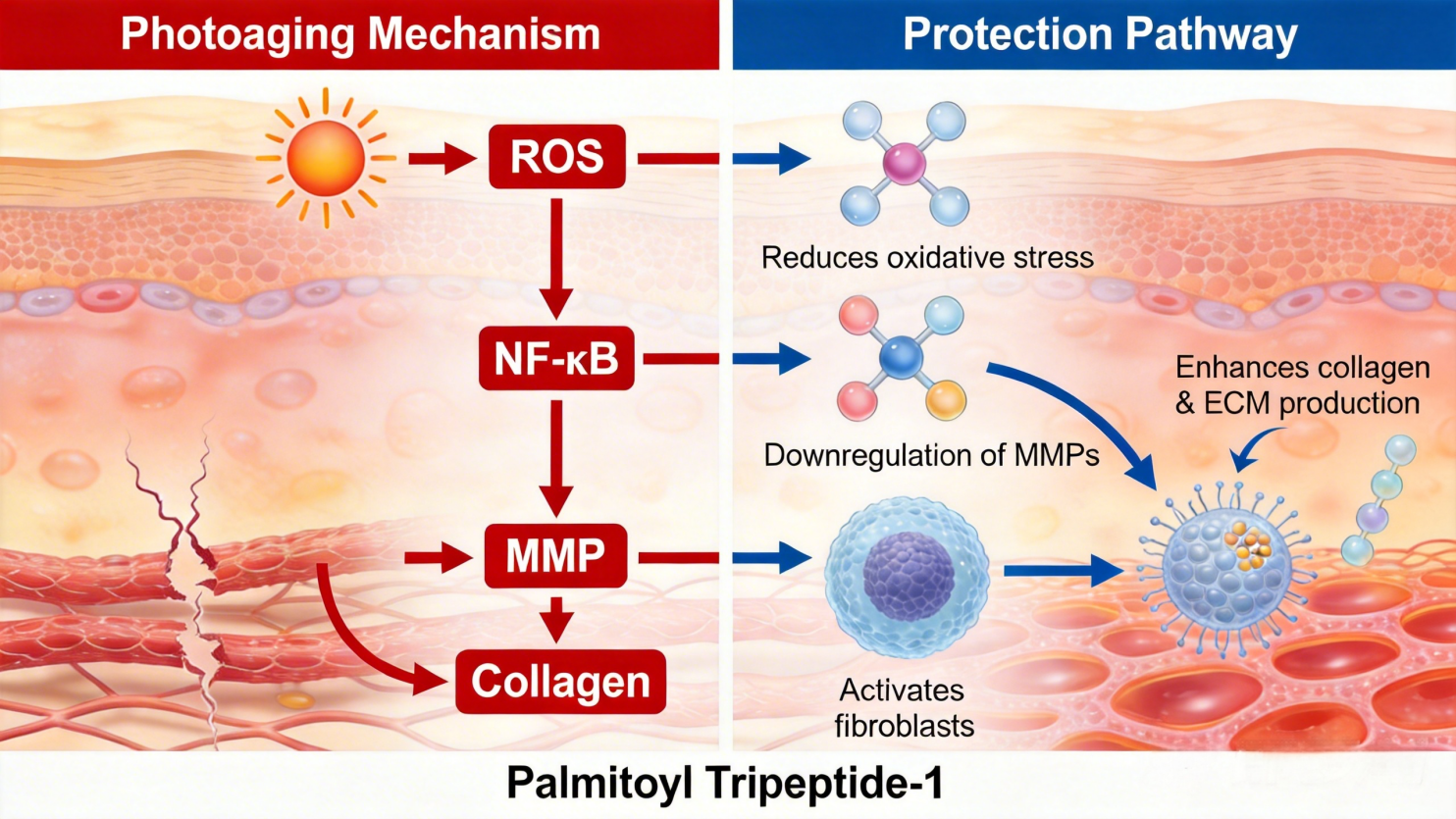
Anti-photoaging: structural support + microenvironment regulation
UV-induced photoaging drives extrinsic skin aging through oxidative stress, inflammation and increased collagen degradation. Palmitoyl Tripeptide-1 counters via two routes: it reduces UV-induced ROS and inflammation, and downregulates MMPs to slow collagen/elastin degradation while promoting ECM synthesis and metabolic balance — maintaining dermal stability and delaying photoaging-related structural deterioration.
Barrier repair and ECM improvement
It promotes ECM reconstruction, optimizes keratinocyte function and upregulates filaggrin, loricrin and other barrier proteins, reducing TEWL and strengthening the skin barrier fundamentally — suitable for damaged-skin repair.
Synergistic anti-aging with Palmitoyl Tetrapeptide-7
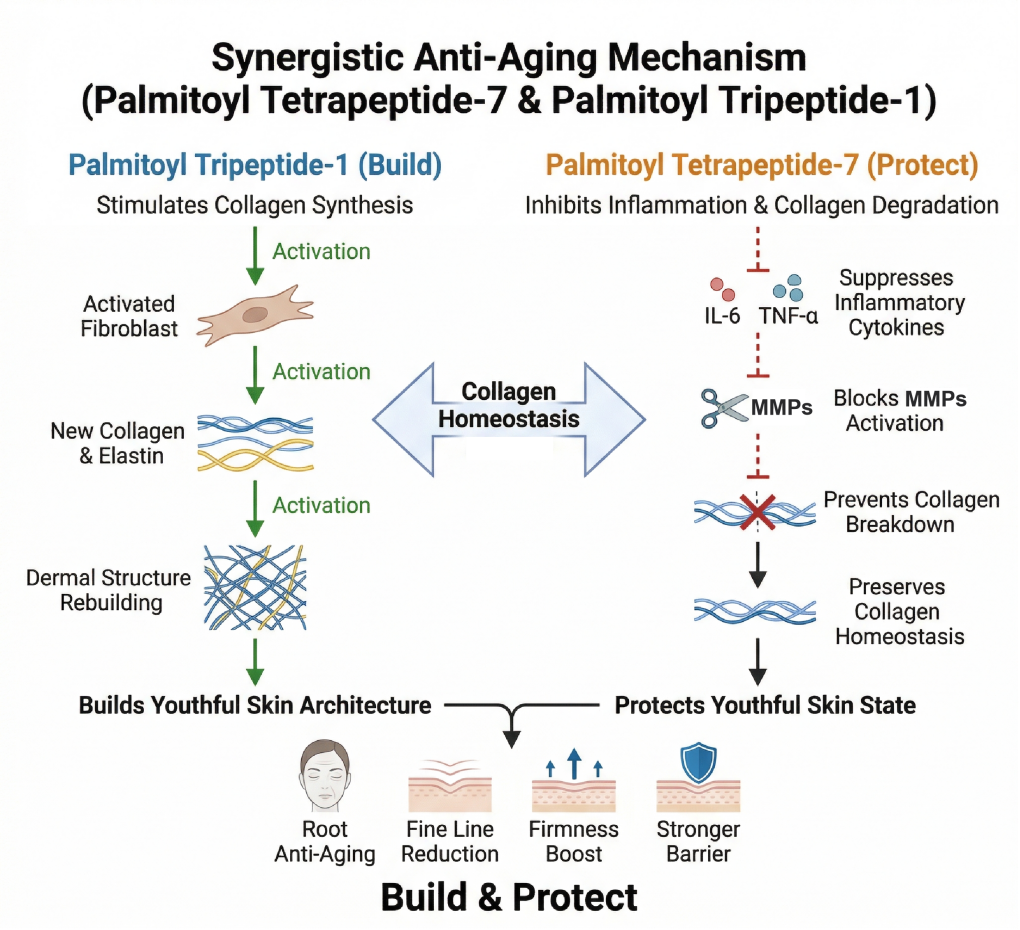
The pair forms a "build & protect" closed loop. Palmitoyl Tripeptide-1 (construction) stimulates fibroblasts to synthesize new collagen, elastin and ECM; Palmitoyl Tetrapeptide-7 (protection) regulates inflammation pathways (e.g. NF-κB), reduces pro-inflammatory factors and downregulates MMPs to block collagen degradation. Their mechanisms are highly complementary, with strong performance in wrinkle improvement, elasticity enhancement and texture optimization.
Why formulators shortlist it:
As the best-characterized collagen-building signal peptide, palmitoyl tripeptide-1 is a backbone of multi-peptide anti-aging serums and firming eye creams, and is frequently listed among proven anti-aging ingredients to look for in wrinkle, firming and barrier-repair formulas. At 0.001–0.1% use level it layers well with Palmitoyl Tetrapeptide-7, ceramides, niacinamide and hyaluronic acid.
Palmitoyl Tripeptide-1 achieves anti-aging effects at low addition levels and is widely used across skincare formats — high-end anti-wrinkle serums, firming creams, eye care, anti-photoaging products, barrier-repair emulsions and full-category skincare.
Application scenarios
Product type | Positioning with Palmitoyl Tripeptide-1 |
Anti-wrinkle serums | Matrikine backbone of multi-peptide anti-aging formulas; targets fine lines from collagen decline |
Firming creams | Builds dermal structural support; improves sagging and elasticity |
Eye care | Firms thin, wrinkle-prone eye-area skin |
Anti-photoaging products | Adjunct against UV-triggered collagen degradation (ROS/MMP pathways) |
Barrier-repair emulsions | Combines ECM support with filaggrin-mediated barrier strengthening |
Synergy formulas | Pairs with Palmitoyl Tetrapeptide-7 as the "build" half of build-and-protect anti-aging |
Reference dosage & handling notes
Product and specification | Reference dosage |
Palmitoyl Tripeptide-1 (purity ≥98.0%) | 0.001%–0.1% |
Notes:
Not compatible with strong acids, strong alkalis, strong oxidizers, acyl chlorides or acid anhydrides.
Store unopened material sealed at 2–8 °C (no −20 °C required); use promptly after opening to avoid moisture absorption and microbial contamination.
Recommended to combine with Palmitoyl Tetrapeptide-7 for synergistic anti-aging.
Add below 45 °C at the final stage of formulation.
In China, Palmitoyl Tripeptide-1 is listed in the IECIC — the List of Cosmetic Ingredients in Use in China (2021 Edition) administered by the National Medical Products Administration (NMPA).
In the United States, it is a recognized cosmetic ingredient under the Personal Care Products Council (PCPC) reference system. In the European Union, it is listed in CosIng — the European Commission's cosmetic ingredient database.
Palmitoyl Tripeptide-1 shows good skin tolerance under recommended usage: low irritation, sensitization and phototoxicity risks, with no significant adverse reactions reported at 0.001%–0.1% cosmetic concentrations.
Which ingredients combine with palmitoyl tripeptide-1?
Palmitoyl tripeptide-1 is the collagen-building half of the Matrikine pair and is almost always formulated with palmitoyl tetrapeptide-7. It also combines with palmitoyl pentapeptide-4 in longer signal cascades, and with acetyl hexapeptide-8 in serums that target both expression and static lines.
How much does palmitoyl tripeptide-1 cost, and what is the MOQ?
Supply, packaging and samples
Item | Detail |
Product | Palmitoyl Tripeptide-1 |
Product ID | PMKZ3001 |
INCI name | PALMITOYL TRIPEPTIDE-1 |
Specification | Purity ≥98.0% (HPLC, tested up to 98.9%); peptide content ≥80.0% (tested up to 85.1%); chloride ≤15.0% scientific control |
Form / solubility | Solvent-free powder; soluble in the EtOH/PDO system; add below 45 °C |
Reference dosage | 0.001%–0.1% |
Minimal package | 10 g pharmaceutical bottle, sealed with sterile aluminium foil |
MOQ | 10 g |
Samples | Complimentary samples for laboratory evaluation and pilot trials |
Lead time | 3–5 working days after payment for standard items |
Storage | Sealed, 2–8 °C; no −20 °C ultra-low-temperature cold chain; use up soon after opening |
What Palmitoyl Tripeptide-1 Offers
Scientific chloride content control — salt-forming-site-based control system referencing theoretical maximum salt-forming chloride; small batch-to-batch variation; reduced formulation adjustment cost; compatible with all dosage forms, strong ion tolerance, no impact on thickening and emulsification systems.
Solvent-free powder — supplied undiluted (no solvent carrier), flexible for formulation and cost-effective, with no solvent interference.
High purity & high activity — HPLC purity ≥98.0% (tested up to 98.9%); peptide content release specification ≥80.0% (batch tested to 85.1%). The values for your lot are stated on the COA.
Low impurities & high stability — strict impurity control, degradation-resistant, ensuring long-term stability of finished formulations.
Batch-released quality — purity, peptide content, chloride, heavy metals and microbiology released against one published specification, with a COA per lot.
Optimized active-peptide control for long-term stability — active peptide content and chloride residuals are controlled within defined ranges lot by lot, so activity and formulation behaviour stay consistent across repeat production runs.
Available Document of Palmitoyl Tripeptide-1
Certificate of Analysis (COA)
Material Safety Data Sheet (MSDS)
Composition Statement
Certificate copies: ISO 9001:2015
Halal certification
Regulatory support dossier (EU / US MoCRA / MFDS)
To request a quote or a sample, contact Plamed Green Science Group here.
Palmitoyl Tripeptide-1 Manufacturer and Wholesale Supplier
Plamed is a peptide manufacturer and cosmetic peptide supplier producing palmitoyl tripeptide-1 powder (≥98% HPLC) for anti-wrinkle, firming and multi-peptide serum formulation. For buyers looking for palmitoyl tripeptide-1 for sale or comparing palmitoyl tripeptide-1 powder price across suppliers, Plamed offers lab-evaluation samples, batch COAs with chloride data and formulation support — MOQ from 10 g for R&D trials, scalable volumes for production.
Palmitoyl Tripeptide-1 Pricing and Wholesale Supply
Palmitoyl tripeptide-1 powder price depends on order volume, purity and chloride specifications, packaging and destination-market documentation. To buy palmitoyl tripeptide-1 at low price without compromising quality, source directly from the manufacturer: request a quotation matched to your volume — trial batches and long-term wholesale supply are both supported.
Why Source Palmitoyl Tripeptide-1 from Plamed?
Plamed's Palmitoyl Tripeptide-1 features ≥98.0% purity (HPLC), peptide content tested up to 85.1%, and a scientific chloride control system that conventional indirect testing cannot match. Batch-specific COA documentation supports regulatory filing and compatibility-driven formulation work. As the manufacturer, we control SPPS synthesis, purification and release testing in-house, ensuring consistent quality from sample to bulk supply.
Q1: What is Palmitoyl Tripeptide-1?
A: Palmitoyl Tripeptide-1 (CAS 147732-56-7, INCI: PALMITOYL TRIPEPTIDE-1) is a Matrikine signal peptide — palmitic acid linked to the GHK tripeptide sequence. Also known as Palmitoyl Oligopeptide, it sends "collagen regeneration" signals to fibroblasts and is one of the best-characterized collagen-building peptides in cosmetics.
Q2: What are the benefits of Palmitoyl Tripeptide-1 for skin?
A: Its documented skin benefits: stimulating collagen synthesis (type I/III collagen, elastin, fibronectin, glycosaminoglycans) via TGF-β/Smad-related signaling; regulating MMP activity to reduce collagen degradation; supporting barrier repair via filaggrin upregulation and reduced TEWL; and protecting against photoaging by reducing UV-induced ROS and inflammation. In short: wrinkle reduction, firming and barrier support in one peptide.
Q3: Is Palmitoyl Tripeptide-1 the same as Matrixyl?
A: No. Palmitoyl Tripeptide-1 is the collagen-building component of the Sederma trademarked blends — Matrixyl® is based on Palmitoyl Pentapeptide-4, and Matrixyl 3000® is a blend of Palmitoyl Tripeptide-1 and Palmitoyl Tetrapeptide-7. Both trademarks are third-party; Plamed supplies the INCI ingredients themselves (PMKZ3001 / PMKZ2801 / PMKZ2901), giving formulators full control over purity, ratio and cost.
Q4: How does Palmitoyl Tripeptide-1 work with Palmitoyl Tetrapeptide-7?
A: They are highly complementary: Tripeptide-1 is the "build" peptide (stimulates new collagen and ECM synthesis), while Tetrapeptide-7 is the "protect" peptide (regulates NF-κB-related inflammation and downregulates MMPs to block collagen degradation). Combined, they form a build-and-protect anti-aging loop recommended at the formulation stage.
Q5: What is the recommended dosage in skin care?
A: The reference dosage is 0.001%–0.1% for Palmitoyl Tripeptide-1 with purity ≥98.0%. It is added below 45 °C at the final stage of formulation, and is not compatible with strong acids, strong alkalis, strong oxidizers, acyl chlorides or acid anhydrides.
Q6: What form does Plamed's Palmitoyl Tripeptide-1 come in, and how soluble is it?
A: A solvent-free powder with no solvent dilution, soluble in the EtOH/PDO (ethanol/1,3-propanediol) system. For solvent compatibility details, request our TDS.
Q7: What is "scientific chloride content control" and why does it matter?
A: Peptide raw materials contain chloride residues from salt formation and neutralization. Conventional free-HCl testing is an indirect conversion involving salt-form assumptions and conversion errors. Plamed analyzed this peptide's potential salt-forming sites and set a scientific control range (≤15.0%) with reference to the theoretical maximum salt-forming chloride — giving formulators accurate, unambiguous compatibility data and smaller batch-to-batch variation.
Q8: What is the MOQ? Can we buy a small quantity first?
A: Yes — the MOQ is 10 g, so you can buy palmitoyl tripeptide-1 powder for R&D trials before production volumes. Complimentary samples are available for laboratory evaluation; standard lead time is 3–5 working days after payment.
Q9: Which documents do you provide with the product?
A: Each order comes with a batch-specific COA (purity, peptide content, chloride). We also provide TDS, MSDS, Composition Statement, ISO 9001:2015 and Halal certificate copies, and a regulatory support dossier (EU / US MoCRA / MFDS).
Q10: Is Palmitoyl Tripeptide-1 safe?
A: It shows good skin tolerance at recommended usage: low irritation, sensitization and phototoxicity risks, with no significant adverse reactions reported at 0.001%–0.1% cosmetic concentrations. It is listed in China's IECIC (2021 Edition), the US PCPC reference system and the EU CosIng database.