
Honokiol: Botanical Active for Acne-Prone and Reactive Skin
Derived from Magnolia officinalis, Plamed’s Honokiol supports skincare formulations targeting visible redness, blemish-prone skin, and oxidative stress. High-quality botanical sourcing and optimized extraction help support reliable supply with reduced residual solvents.
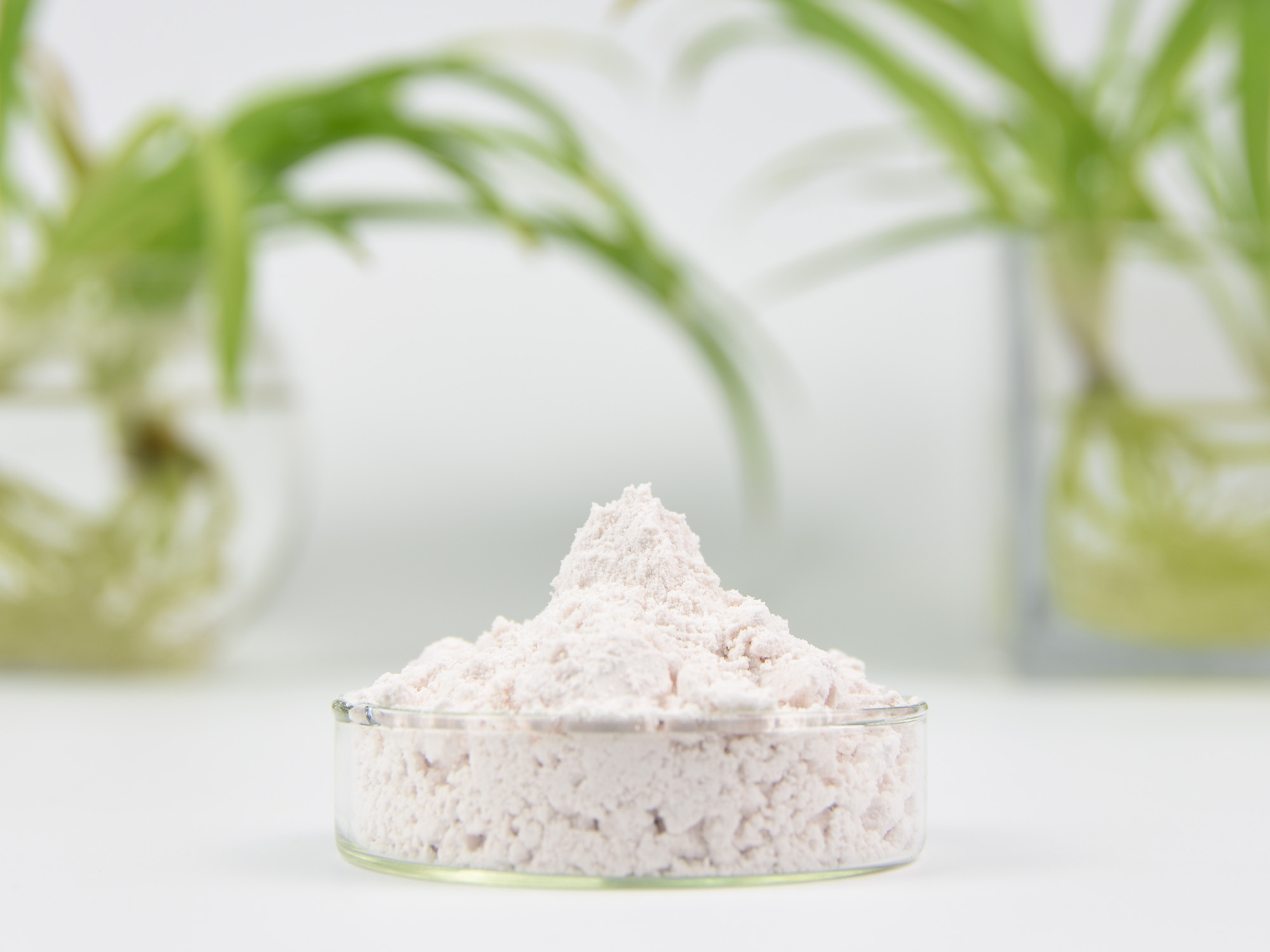
Honokiol
Honokiol is a botanical active derived from Magnolia officinalis. It helps modulate inflammatory responses, improve the appearance of blemishes and visible redness, and provide antioxidant protection. These properties make it suitable for skincare formulations designed for soothing, skin repair, and acne-prone skin.
Plamed sources high-quality Magnolia officinalis materials and combines its dedicated magnolia cultivation base with an optimized extraction process to support a stable supply and reduce residual solvents.
At a glance
Item | Data |
INCI name | HONOKIOL |
CAS number | 35354-74-6 |
Molecular formula | C18H18O2 |
Molecular weight | 266.33 g/mol |
Purity | 98% (HPLC) |
Appearance | Off-white to white fine powder |
Part used | Bark |
Extract solvent | Water & ethanol |
Product ID | PMQD0201 |
Minimal package | 1 kg |
MOQ | 1 kg |
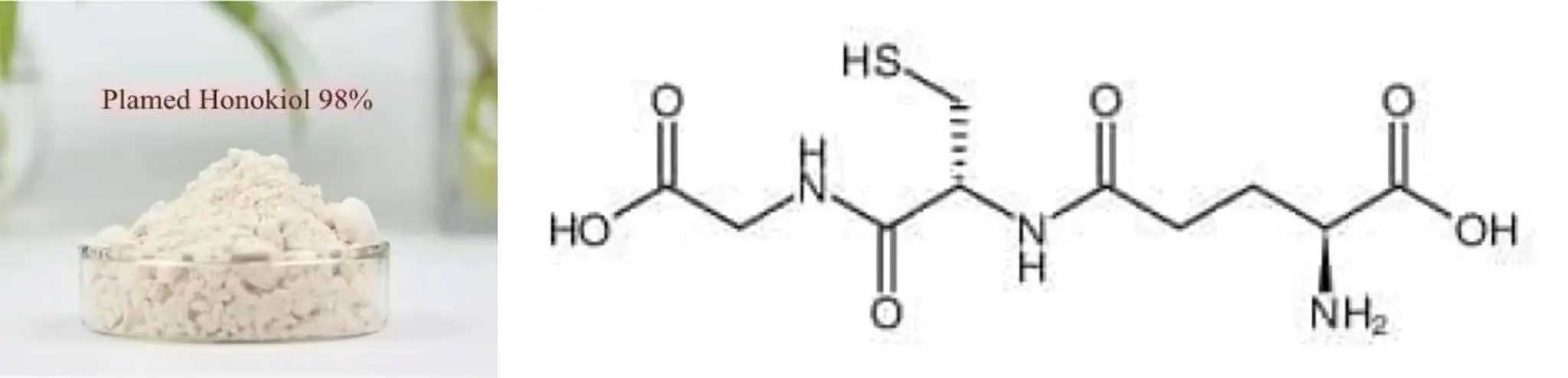
What Is Honokiol?
Honokiol is a polyphenolic compound that occurs naturally in the dried bark and root of Magnolia officinalis. Together with its positional isomer magnolol, it is one of the two signature lignans of magnolia bark. For skin care, honokiol works as a plant soothing active: it helps balance the skin's inflammatory response, supports care for acne-prone skin and the look of visible redness, and provides antioxidant protection.
Source and manufacturing process
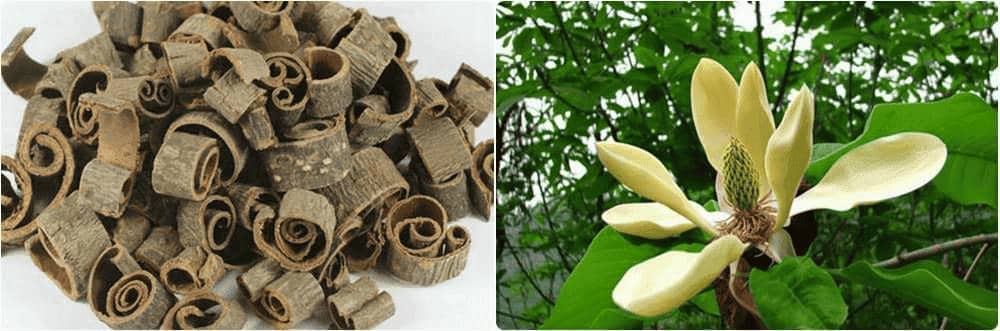
Magnolia officinalis (Magnolia officinalis Rehd. et Wils.) is a deciduous magnolia tree native to the warm, humid mountain slopes of the Yangtze basin and the Shaanxi–Gansu region of China at 300–1,500 m altitude; the medicinal material is its dried bark and root. Plamed runs its own magnolia plantation, so bark for honokiol extraction is traceable from planting to harvesting — the raw-material foundation behind stable supply.
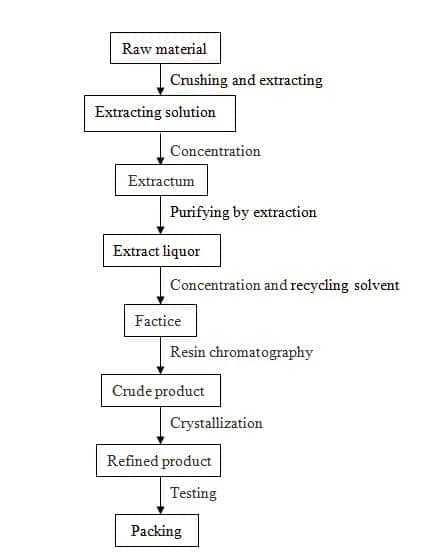
Extraction uses water and ethanol as solvents under an optimised process, followed by purification and crystallisation into the 98% off-white to white fine powder. Solvent residues are controlled to Eur. Pharm limits, which is where the lower-solvent-residue advantage comes from. The flow chart below shows the process from bark to powder.
Honokiol vs Magnolol: What Is the Difference?
Honokiol and magnolol are positional isomers: both are C18H18O2 biphenyl lignans from the same bark, differing only in where their hydroxyl and allyl groups sit on the two rings. That small structural difference shows up in formulation behaviour and care positioning.
Dimension | Honokiol | Magnolol |
CAS | 35354-74-6 | 528-43-8 |
Structure | 3,5′-diallyl-2,4′-dihydroxybiphenyl | 5,5′-diallyl-2,2′-dihydroxybiphenyl |
Symmetry | Unsymmetrical | Symmetrical |
Care positioning | Soothing-repair, acne-prone, antioxidant | Soothing, oil-control positioning |
For a deeper breakdown, read our Honokiol vs. Magnolol for Skin Benefits article, or see the Magnolol product page.
Honokiol Specifications
Plamed releases every lot of honokiol against the following manufacturer specification:
Items | Specification |
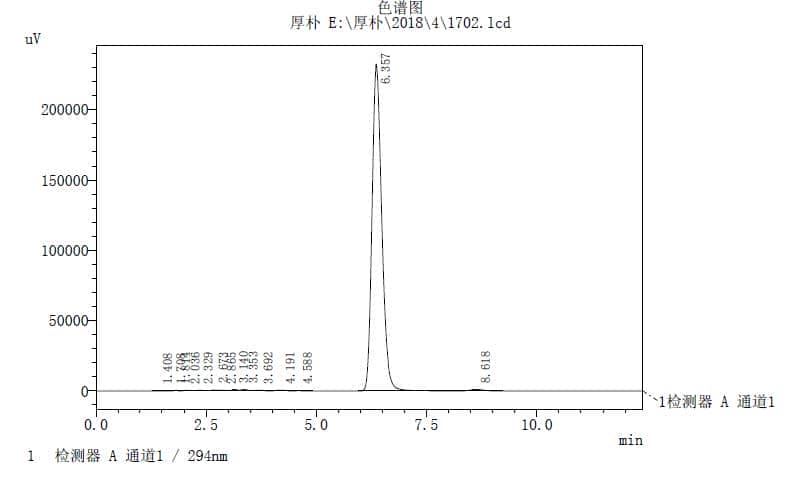
Assay | ≥98.00% (HPLC) |
Color | Off-white to white |
Odor | Characteristic |
Taste | Characteristic |
Extract solvent | Water & ethanol |
Part used | Bark |
Particle size | 95% through 80 mesh |
Moisture | ≤1.00% |
Ash content | ≤1.00% |
Bulk density | 50–60 g/100 ml |
Solvent residue | Eur. Pharm |
Heavy metals | ≤10 ppm |
Arsenic | ≤2 ppm |
Plumbum | ≤2 ppm |
Total plate count | ≤1000 cfu/g |
Yeast & mold | ≤100 cfu/g |
Escherichia coli | ≤3.0 MPN/g |
Staphylococcus | Negative |
Salmonella | Negative |
Three lines matter most for formulators. Solvent residue: Eur. Pharm is the line behind the lower-solvent-residue positioning — relevant for any brand marketing clean formulation. Particle size: 95% through 80 mesh tells you the powder disperses predictably in premixes. The microbiological block — total count, yeast and mold limits, with not-detected results for Staphylococcus aureus and Salmonella — covers the organisms most cosmetic QC teams screen first.
Honokiol Mechanism of Action and Skin Benefits
Honokiol's mechanism of action in skin care runs on three tracks — soothing, blemish-prone skin support and antioxidant defence — all rooted in the same polyphenol structure.
Soothing and the look of visible redness. Honokiol helps balance the skin's inflammatory response. In the in vitro study data, honokiol showed inhibition of NF-kB cell activity and of MMP-1 activity at low concentrations, the pathway-level results behind its soothing-repair positioning for products that target the look of visible redness and stressed skin.
Support for acne-prone skin. Honokiol shows inhibitory activity against the bacteria associated with blemishes in vitro, including Cutibacterium acnes (formerly Propionibacterium acnes). That is the mechanism level at which honokiol skincare products are positioned for blemish-prone and acne-prone skin — as care and prevention of the conditions where blemishes appear, not as a drug. The same broad antibacterial profile is also why magnolia actives are used as natural preservative support in cosmetics.
Antioxidant protection. In vitro, honokiol eliminated hydroxyl radicals and DPPH radicals and inhibited unsaturated fatty acid peroxidation at the concentrations listed in the study data — the antioxidant foundation for its use in anti-oxidation skincare and in oral care formats such as toothpaste and mouthwash.
Honokiol Solubility and How to Formulate with It
Is honokiol water soluble? Practically no. Honokiol is a lipophilic polyphenol: the honokiol water solubility question has a short answer — the free phenol barely dissolves in water, and water-based systems need a solubilizer or co-solvent. It dissolves readily in ethanol and ethanol–water blends (consistent with its water & ethanol extraction route) and disperses in oil and emulsion systems.
Practical formulating routes.
Route | How it works | Typical use |
Co-solvent / solubilizer | Dissolve in ethanol or with a solubilizer, then dose into the water phase | Toners, essences |
Emulsion systems | Pre-dissolve or pre-disperse in the oil or emulsifier phase | Creams, lotions |
Encapsulation | Liposomal or microencapsulation carriers | Premium soothing serums |
About liposomal honokiol. Much of the published honokiol work uses liposomal honokiol — the molecule encapsulated in liposomal carriers — because encapsulation handles the solubility limitation and improves delivery. In cosmetics, the same logic applies: a liposomal or encapsulated system is a legitimate way to formulate honokiol into water-rich products, and it pairs well with the soothing positioning.
Honokiol In Vitro Study Data
In vitro study data for honokiol as supplied on this page (renamed from the original pharmacological-studies framing; test conditions as listed):
Test item | Concentration | Result |
Elimination of hydroxyl radicals | 0.2 mmol/L | Elimination rate: 82.5% |
Elimination of free radical DPPH | 50 μmol/L | Elimination rate: 23.6% |
Inhibition of unsaturated fatty acid peroxidation | 0.2 mmol/L | Inhibition rate: 85.8% |
Inhibition of NF-kB cell activity | 20 μmol/L | Inhibition rate: 20.4% |
Inhibition of metalloproteinase MMP-1 activity | 10 μmol/L | Inhibition rate: 18.2% |
Read this table as pathway-level screening data: radical-scavenging and peroxidation rows describe the antioxidant track, and the NF-kB / MMP-1 rows describe the soothing track. The data describe in vitro systems, not finished-product performance on skin.
Honokiol Uses in Skin Care and Oral Care
Honokiol is used across cosmetics and daily-chemical formats. The honokiol uses list below reflects where the ingredient fits today:
Application | Product types | Reference dosage |
Soothing-repair skin care | Essence, lotion, cream, mask | / |
Blemish-prone / acne-prone care | Facial essence, lotion, cream | / |
Antioxidant care | Serum, cleanser, mask, sunscreen* | / |
Natural preservative support | Cosmetic systems | Per preservative challenge test |
Oral care | Toothpaste, mouthwash | 0.3% |
Notes. The oral-care reference dosage of 0.3% comes from the original application data. Skin-care dosages are to be confirmed against your TDS / formulation guide before publication. Honokiol skincare positioning concentrates on soothing-repair and acne-prone lines, with antioxidant protection as the supporting claim — a natural preservative role can be claimed only after your own challenge testing.
Safety & Storage
Honokiol Safety and Regulatory Status(H2)
Honokiol is used as a cosmetic raw material, and the material as supplied has no publicly documented safety restriction for topical cosmetic use at typical use levels. Work from current local inventories for your target market: IECIC (China) listing status for honokiol should be confirmed before any "listed in" statement is published, and our document package (TDS, SPEC, MSDS) describes the material as manufactured. As with any active, finished-formula safety testing and patch testing remain standard practice.
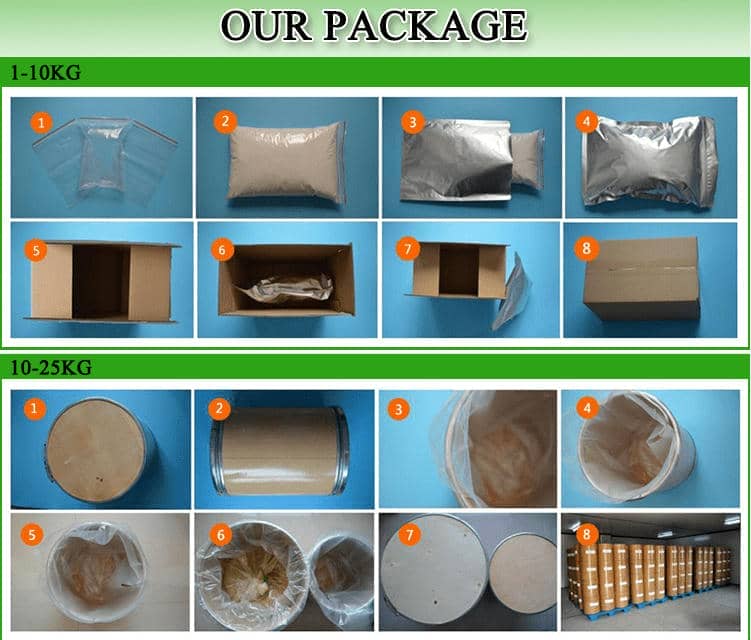
Packing and storage. Packed in 25 kg paper drums with two plastic bags inside. Store in a cool, dry place away from direct sunlight and oxidising agents.
Where to Buy Honokiol Powder
Buying from honokiol manufacturers directly — rather than through trading companies — keeps the specification, document chain and packing consistent from trial drum to bulk volumes. Plamed is a honokiol powder manufacturer with its own magnolia plantation and an optimised extraction process, supplying 98% HPLC honokiol factory-direct for wholesale honokiol enquiries.
Item | Detail |
Product ID | PMQD0201 |
Purity | 98% (HPLC) |
MOQ | 1 kg |
Minimal package | 1 kg |
Bulk packing | 25 kg paper drum, two plastic bags inside |
Price | Quoted per quantity and market (honokiol price on request) |
Available Document of Honokiol
Technical Data Sheet (TDS – Honokiol 98%)
Certificate of Analysis (COA)
Material Safety Data Sheet (MSDS)
Product Specification Sheet (SPEC)
Manufacturing Process Flowchart
Method of Analysis (MOA / HPLC Test Method)
Product Brochure & Technical Introduction
To request a quote or a sample, contact Plamed Green Science Group here.
Q1. What is honokiol?
A: Honokiol is a polyphenolic lignan from the bark and root of Magnolia officinalis, CAS 35354-74-6, molecular formula C18H18O2. A pure honokiol extract at 98% (HPLC) is a white fine powder used as a plant soothing active in skincare, positioned for soothing-repair, acne-prone and antioxidant products. Plamed supplies it as PMQD0201, MOQ 1 kg.
Q2. What is the difference between honokiol and magnolol?
A: They are positional isomers: same A: C18H18O2 formula, different placement of the hydroxyl groups on the biphenyl rings. The difference shows up in positioning — honokiol leans soothing-repair and acne-prone care, magnolol to soothing and oil-control lines — and both are extracted from the same magnolia bark.
Q3. How does honokiol work in skin care?
A: Three mechanisms: it helps balance the skin's inflammatory response (NF-kB pathway data in our in vitro table), it shows inhibitory activity against blemish-associated bacteria such as Cutibacterium acnes in vitro, and it scavenges free radicals. See the Study Data tab for the concentrations and results behind each track.
Q4. Is honokiol water soluble?
A: Practically no. The honokiol water solubility question has a short answer: the free phenol barely dissolves in water. It dissolves in ethanol and ethanol–water blends and disperses in oil and emulsion systems; water-rich formulas need a solubilizer or an encapsulated system.
Q5. What is liposomal honokiol?
A: Liposomal honokiol is honokiol encapsulated in liposomal carriers — the form used in much of the published research because encapsulation handles the molecule's solubility limitation and improves delivery. In cosmetics, a liposomal or encapsulated route is a legitimate way to bring honokiol into water-rich soothing serums.
Q6. What is the honokiol structure?
A: The honokiol structure is an unsymmetrical biphenyl: 3,5′-diallyl-2,4′-dihydroxybiphenyl, C18H18O2, 266.33 g/mol. Magnolol, its isomer, places the same groups symmetrically (5,5′-diallyl-2,2′-dihydroxybiphenyl). The two phenolic hydroxyls are what make it a polyphenol — and the aromatic backbone is what makes it lipophilic.
Q7. Is honokiol safe for skin?
A: Honokiol is used as a cosmetic raw material worldwide, and the supplied material has no publicly documented safety restriction for topical cosmetic use at typical levels. Check your target market's inventory status, request the TDS/MSDS for handling details, and patch-test finished formulas as usual.
Q8. How should honokiol powder be stored and packed?
A: Honokiol powder ships in 25 kg paper drums with two plastic bags inside (1 kg minimal package available). Store in a cool, dry place away from direct sunlight and oxidising agents — standard care for a phenolic raw material.
Q9. Where can I buy honokiol powder?
A: From Plamed factory-direct. Enquiries like "honokiol for sale", "honokiol powder for sale", "wholesale honokiol powder", "honokiol extract buy" or "honokiol buy" all end at the same place: as a honokiol powder manufacturer, Plamed supplies 98% HPLC powder with MOQ 1 kg. To buy honokiol, send quantity, destination market and required documents through the contact page.
Q10. What does honokiol cost?
A: Honokiol price is quoted per project: quantity, destination market and the document package you need determine the quote, so there is no list price. MOQ is 1 kg, bulk volumes ship in 25 kg paper drums, and samples are available for evaluation. German customers searching "honokiol kaufen" can order directly from Plamed with English-language support. Send your enquiry through the contact page.