
Paeoniflorin: Botanical Active for Skin Soothing and Anti-Aging
Plamed’s 50% water-soluble Paeoniflorin supports soothing and anti-aging skincare formulations, backed by reliable botanical sourcing.
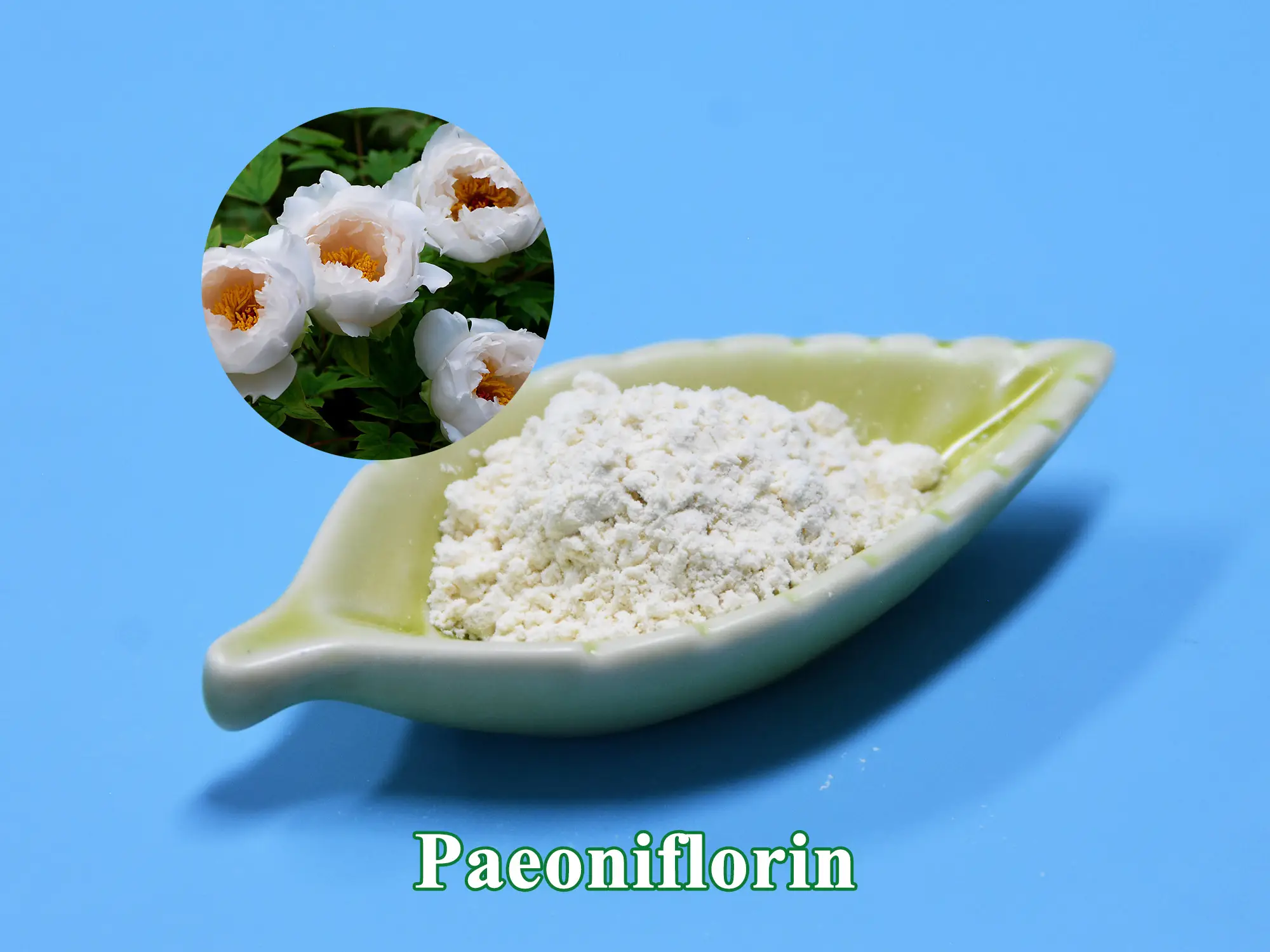
Paeoniflorin
Paeoniflorin is a botanical active derived from white peony root (*Paeonia albiflora*). It helps address visible redness, blemishes, and skin sensitivity while providing antioxidant protection, making it suitable for soothing, skin-repair, and anti-aging skincare formulations.
Plamed offers 50% water-soluble Paeoniflorin, supported by its own white peony cultivation base to ensure a stable supply for the development of high-quality botanical skincare formulations.
Paeonia Albiflora Root Extract (Paeoniflorin 50%) Overview
Paeoniflorin is a monoterpene glycoside mainly derived from the dried root of white peony (Paeonia albiflora), accounting for about 3% of the dried root. It is a principal active of total glucosides of paeonia (TPG). Plamed develops the 50% paeoniflorin extract as an off-white to light yellow, water-soluble fine powder.
Items | Details |
Product Name | Paeonia Albiflora Extract |
Marker Component | Paeoniflorin (CAS 23180-57-6, C23H28O11, 480.45 g/mol) |
INCI | PAEONIA ALBIFLORA ROOT EXTRACT |
Product ID | PMQD0601 |
Specification | 50% (HPLC) |
Solubility | Soluble in water |
Minimal Package / MOQ | 1 kg / 1 kg |
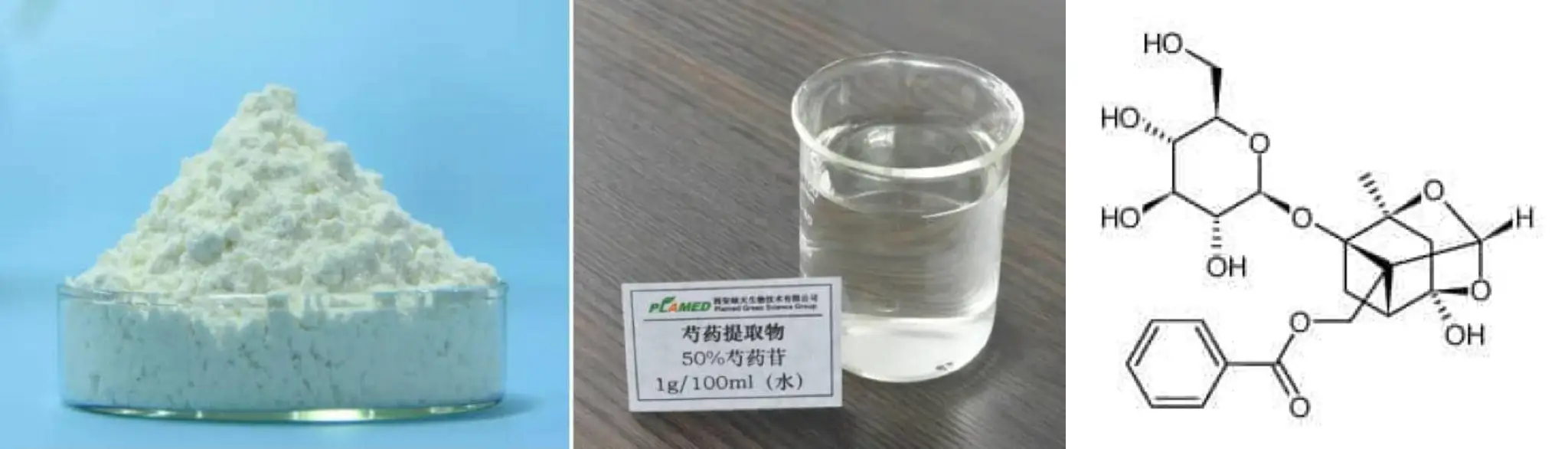
Paeoniflorin is hydrolyzed and polymerized in dilute alkali solution and degrades slowly in a slightly acidic aqueous solution; emulsions built on non-ionic surfactants can slow down this process — the formulation logic behind the Solubility & Stability tab.
White Peony Botanical Source and Manufacturing Route
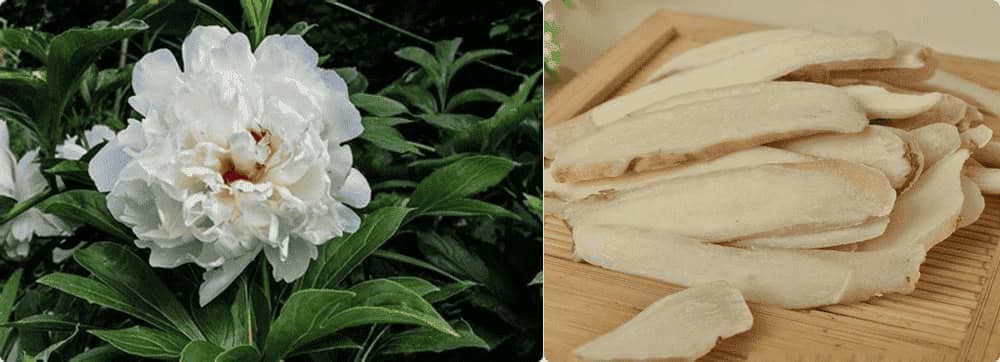
White peony (Paeonia albiflora, Latin name: Cynanchum otophyllum) is a plant of the Paeonia genus in the Paeoniaceae family. It is native to central and eastern Asia and now grows in temperate regions all over the world. In China, it is mainly distributed in Zhejiang, Anhui, Guizhou, Yunnan, Sichuan and Tibet provinces, growing in mountainous areas, valley woodlands or hillsides at an altitude of 1500–2800 meters. The dried root contains monoterpenoids, phenols, tannins, sterols, flavonoids, volatile oils, amino acids and proteins — and paeoniflorin is its principal active.
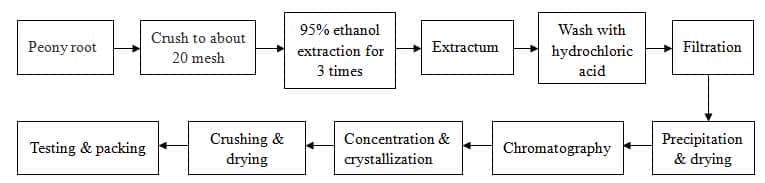
Plamed owns white peony planting bases, which secures a stable supply of paeoniflorin. The 50% paeoniflorin extract is produced through a purification route of 95% ethanol extraction, hydrochloric acid wash, chromatography and crystallization:
White Peony Root Extract vs Peony Root Extract vs Paeonol Grade
Dimension | White Peony Root Extract (PMQD0601) | Peony Root Extract (P. suffruticosa, PMM2901) | Conventional herbal peony extracts |
Botanical source | White peony, Paeonia albiflora root | Peony (moutan) root bark, Paeonia suffruticosa | Mixed or unspecified peony parts |
Marker component | Paeoniflorin ≥50% (HPLC) | Paeonol ≥4.5% (HPLC) | Not standardized |
Water solubility | Soluble in water, clear solution at 1 g/100 ml (in-house test) | Water-soluble, clear solution at 1 g/100 ml (in-house test) | Varies |
Typical positioning | Soothing-repair and anti-aging skincare | Soothing, sensitive-skin care | — |
Documentation | 10-file set incl. TDS/COA 50%·70%·98%/Stability/NMPA dossier | COA / SPEC / NMPA dossier / Brochure | — |
If your brief is "peony extract" for soothing or anti-aging, the white peony (P. albiflora) paeoniflorin grade on this page is the direct route; the moutan (P. suffruticosa) paeonol grade is the peony-root option for sensitive-skin soothing — see the related Paeonia Suffruticosa Root Extract page.
Paeoniflorin Specifications
The 50% paeoniflorin powder (PMQD0601) is released lot by lot against the specification below.
Items | Specification |
Paeoniflorin | ≥50.0% |
Appearance | Off-white to light yellow powder |
Odor | Characteristic |
Particle size | 100% through 80 mesh |
Loss on drying | ≤6.0% |
Pb | ≤10 ppm |
As | ≤2 ppm |
Hg | ≤1 ppm |
Cd | ≤5 ppm |
Total plate count | ≤1000 cfu/g |
Yeast & mold | ≤100 cfu/g |
Pseudomonas aeruginosa | Not detected |
Staphylococcus aureus | Not detected |
Heat-resistant Escherichia coli | Not detected |
Three rows matter most for formulators. Assay (≥50.0% HPLC) defines the grade against the C23H28O11 marker (CAS 23180-57-6) quantified per Chinese Pharmacopoeia 2020 methods. Particle size (100% through 80 mesh) keeps the water-soluble powder dispersing predictably in premixes. Loss on drying (≤6.0%) is tighter than the 10% registration ceiling, reflecting production-level internal control.
Paeonia Albiflora Root Extract Skin Benefits: Anti-Inflammatory, Anti-Aging, Whitening and Soothing Support
Anti-inflammatory. Paeoniflorin exerts an anti-inflammatory effect by inhibiting the production of TNF-α and IL-1β and promoting the expression of IL-10 (in-vitro and mechanistic studies); it also antagonizes chemokine formation induced by TNF-α and leukocyte migration, showing a broad anti-inflammatory spectrum. For skincare formulas, the practical takeaway is soothing support: the extract helps care for skin with visible redness and helps calm the look of blemish-prone, stressed skin.
Anti-wrinkle and anti-aging. Paeoniflorin can enhance the vitality and performance of skin cells and promote collagen fiber synthesis, increasing the toughness and elasticity of skin tissue while reducing the production of lipid peroxides (in-vitro data). On this mechanism it helps defend the look of skin against intrinsic aging and UV-induced damage — to a certain degree supporting anti-wrinkle and anti-aging day-care positioning.
Cell | Treatment (M) | Cell growth rate | Cell mortality rate | Cell aging rate |
keratinocytes | Blank | – | – | – |
Paeoniflorin 0.0005M | 55.3% | 12.3% | 24.7% | |
Vitamin E 0.0004M | 23.3% | 10.5% | 20.1% | |
Fibroblast | Blank | – | – | – |
Paeoniflorin 0.0005M | 18.4% | 11.5% | 17.2% | |
Vitamin E 0.0004M | 9.96% | 15.4% | 22.8% |
Whitening. Thanks to its anti-oxidation and anti-inflammatory activities, paeoniflorin can inhibit melanin production; study descriptions note a non-dose-dependent whitening effect. These are in-vitro and mechanistic results: they suggest that, to a certain degree, the extract has the potential to support whitening formulas targeting the look of uneven skin tone.
Paeoniflorin In-Vitro Study Data
Cell vitality vs Vitamin E (in-vitro comparative study).
Cell | Treatment | Cell growth rate | Cell mortality rate | Cell aging rate |
Keratinocytes | Blank | — | — | — |
Keratinocytes | Paeoniflorin 0.0005 M | 55.3% | 12.3% | 24.7% |
Keratinocytes | Vitamin E 0.0004 M | 23.3% | 10.5% | 20.1% |
Fibroblast | Blank | — | — | — |
Fibroblast | Paeoniflorin 0.0005 M | 18.4% | 11.5% | 17.2% |
Fibroblast | Vitamin E 0.0004 M | 9.96% | 15.4% | 22.8% |
In keratinocytes, paeoniflorin achieved a higher cell growth rate than vitamin E at comparable molarity; in fibroblasts, the growth rate was also higher with lower mortality and a lower cell-aging rate than the vitamin E group.
In-vitro activity summary.
Test item | Concentration | Result |
Elimination of hydroxyl radicals | 60.3 μg/mL | Elimination rate: 46.7% |
Inhibition of cell apoptosis induced by hydrogen peroxide | 10 μmol/L | Inhibition rate: 40% |
Inhibition of IL-2 production | 2.5 g/kg | Inhibition rate: 34.4% |
Inhibition of IL-6 production | 2.5 g/kg | Inhibition rate: 24.8% |
Inhibition of MMP-9 activity | 0.01 mmol/L | Inhibition rate: 30.0% |
Inhibition of NF-κB cell activity | 100 μg/mL | Inhibition rate: 53.2% |
Paeoniflorin Solubility: Water-Soluble and Clear
Paeoniflorin is soluble in water: the registration dossier describes it as easily soluble in water, forming a clear, translucent solution without sediment, and Plamed's own test confirms a clear solution at 1 g/100 ml in water.
Route | Evidence |
Registration physical-chemical description | Easily soluble in water; aqueous solution clear and translucent, no sediment |
In-house solubility test | Clear solution at 1 g/100 ml (photo on this page) |
Specification row | Solubility: Soluble in water |
Formulation stability notes. Paeoniflorin is hydrolyzed and polymerized in dilute alkali solution and degrades slowly in a slightly acidic aqueous solution. Use it under pH < 8, avoid high-temperature storage, and do not combine it with DMDMH or similar preservatives; emulsions built on non-ionic surfactants can slow down the degradation. Multi-batch assay stability data are available with the documentation set.
Paeoniflorin Application & Dosage
Paeoniflorin is applied in soothing-repair, blemish-prone-skin and anti-aging skincare — serums, cleansers, creams, emulsions and toners.
Application product | Recommended dosage |
Anti-wrinkle and soothing skincare | 0.001–10% (per online reference range; see the registration cap below) |
Registration cap (China, NMPA dossier) | ≤2.45% for both rinse-off and leave-on products |
Reference Formulas
Formula | Key actives (examples from the reference) |
Anti-aging cream | Paeoniflorin 0.5%, glycerin 5%, propylene glycol 3%, carbomer 0.2% |
Soothing essence | Paeoniflorin 1%, propylene glycol 10%, glycerin 10%, sodium hyaluronate solution (1%) 5%, ethanol 5% |
Paeoniflorin Safety & Storage(H2)
Registration and safety. The raw material is registered in China with an NMPA raw-material safety dossier (Attachment 14 / submission code), and its quality-safety information sheet documents: rinse-off and leave-on; use under pH < 8; avoid high-temperature storage; do not use together with DMDMH or similar preservatives; no pesticide-residue risk identified.
Storage. Stored in a cool dry place away from direct sunlight and oxidizing agents, with no exposure to high temperature (per the registration condition above).
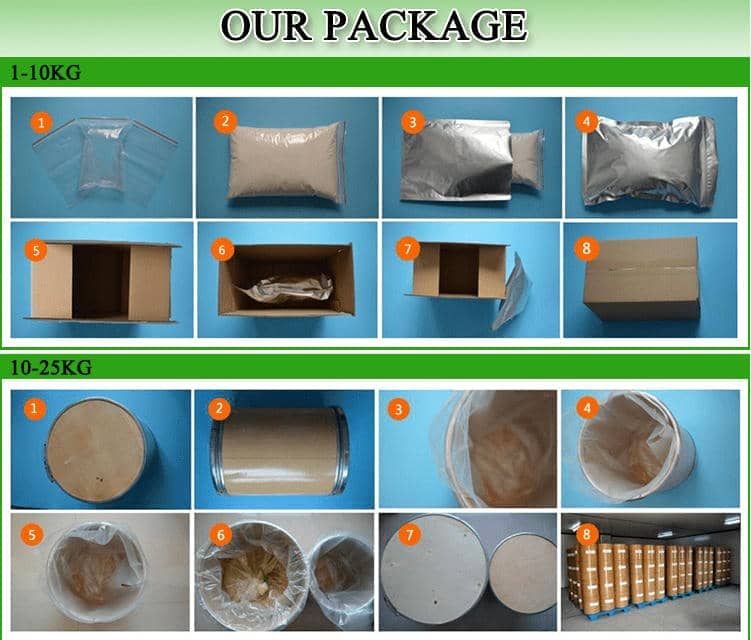
Packed in 1–10 kg foil bags or 10–25 kg paper drums with two plastic bags inside.
Paeoniflorin Documentation & Ordering
Available Document of Paeoniflorin
Technical Data Sheet (TDS - Paeonia Albiflora Root Extract 50% Paeoniflorin)
Certificate of Analysis (COA - 50%, 70%, 98% Paeoniflorin Grades)
Material Safety Data Sheet (MSDS)
Product Specification Sheet (SPEC)
Composition Statement / Compositional Breakdown
Manufacturing Process Flowchart
Stability Test Report (Multi-Batch Assay Stability)
Third-Party Test Reports (Assay, Pesticide Residue, Microbial / Total Plate Count)
NMPA Raw Material Safety Dossier (Attachment 14 / Submission Code)
Product Brochure & Technical Introduction
For samples, lead time, MOQ and the full document set, contact Plamed Green Science Group here.
Supply capability
Plamed owns white peony planting bases and supplies 50% water-soluble paeoniflorin powder stably; 70% and 98% grades are available with their own COAs on request. MOQ is 1 kg, packed in 1–10 kg foil bags. For peony extract for sale, wholesale white peony extract powder or wholesale white peony root extract powder inquiries — whether you are comparing white peony extract powder manufacturers or white peony root extract powder manufacturers, or looking to buy peony root extract, buy white peony extract, buy white peony extract powder or buy white peony root extract — contact Plamed for the quote, samples and the full documentation set.
Paeoniflorin: Frequently Asked Questions
Q1. What is paeoniflorin?
A: A monoterpene glycoside (C23H28O11, CAS 23180-57-6) mainly derived from the dried root of white peony (Paeonia albiflora), where it accounts for about 3% of the dried root; it is a principal active of total glucosides of paeonia (TPG). Plamed supplies it as a 50% water-soluble powder (PMQD0601).
Q2. What are the paeonia albiflora root extract skin benefits?
A: Mechanistic and in-vitro studies describe anti-inflammatory activity (inhibition of TNF-α and IL-1β, promotion of IL-10, inhibition of NF-κB cell activity by 53.2%), anti-aging activity (collagen fiber synthesis support, higher cell growth rate than vitamin E in keratinocytes and fibroblasts) and, to a certain degree, whitening potential via melanin-production inhibition — supporting soothing-repair, blemish-prone-skin and anti-aging positioning.
Q3. What is paeoniflorin solubility?
A: It is soluble in water. The registration dossier describes the material as easily soluble in water with a clear, translucent solution and no sediment, and Plamed's in-house test shows a clear solution at 1 g/100 ml in water. Formulate under pH < 8 and avoid high-temperature storage to limit hydrolysis and degradation.
Q4. Is white peony root extract the same as peony root extract?
A: They are different plants in the same genus. White peony root extract comes from Paeonia albiflora root (marker: paeoniflorin ≥50%); peony (moutan) root extract comes from Paeonia suffruticosa root bark (marker: paeonol ≥4.5%) — see the related Paeonia Suffruticosa Root Extract page. Botanically, Paeonia albiflora and Paeonia lactiflora are the same species under different names; the cosmetic INCI here is PAEONIA ALBIFLORA ROOT EXTRACT.
Q5. How stable is paeoniflorin in a formula?
A: It is hydrolyzed and polymerized in dilute alkali and degrades slowly in slightly acidic aqueous solution. Practical controls: keep pH below 8, avoid high-temperature storage, do not combine with DMDMH or similar preservatives, and build emulsions on non-ionic surfactants to slow the process. Multi-batch assay stability data come with the documentation set.
Q6. What dosage is recommended?
A: The China registration sheet caps historical use at 2.45% for both rinse-off and leave-on cosmetics; the online reference range lists 0.001–10% by product type. For China-market formulas, stay within the registration cap and confirm the final dosage with the COA and supplier recommendation.
Q7. Where can I buy white peony extract or wholesale white peony extract powder?
A: Directly from Plamed: the company owns white peony planting bases, holds COAs for 50%, 70% and 98% paeoniflorin grades, and packs 1–10 kg foil bags with a 1 kg MOQ. Send an inquiry through the contact page for peony extract for sale, to buy peony root extract or buy white peony extract powder, and for wholesale white peony root extract powder cooperation.
Q8. What documents come with an order?
A: A 10-item set: TDS, COA (50%/70%/98% grades), MSDS, SPEC, composition statement, manufacturing process flowchart, multi-batch stability test report, third-party test reports (assay, pesticide residue, microbial), NMPA raw-material safety dossier and the product brochure. Samples and lead time are arranged through the contact page.