
Acetyl Hexapeptide-8 | Firming Peptide for Skin
Plamed’s Acetyl Hexapeptide-8 is a high-purity anti-wrinkle peptide with ≥99.0% purity, designed to support formulations targeting dynamic wrinkles, smoother skin, and improved firmness.
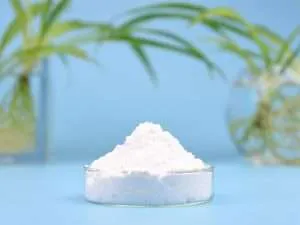
Acetyl Hexapeptide-8
Acetyl Hexapeptide-8 is a classic neuromodulating peptide that helps reduce the appearance of dynamic wrinkles and improve skin smoothness and firmness.
Produced by Plamed using solid-phase peptide synthesis (SPPS), the anti wrinkle skincare ingredient offers a powder-grade raw material with a purity of ≥99.0%, supporting higher active content and greater flexibility in cosmetic formulation development.
At a glance
Item | Detail |
INCI name | Acetyl Hexapeptide-8 |
Other names | Acetyl Hexapeptide-3 (earlier INCI listing) |
CAS number | 616204-22-9 |
Molecular formula | C34H60N14O12S |
Molecular weight | 888.99 g/mol |
Product ID | PMKZ2701 |
Purity | ≥99.0% (HPLC) |
Peptide content | ≥85.0% (HPLC) |
Appearance | White to off-white powder |
Solubility | ≥100 mg/mL in water |
Reference dosage | 0.005%–0.1% |
Production method | Solid-phase peptide synthesis (SPPS); no animal-derived components |
Packaging | 10 g bottle with sterile aluminium-foil seal |
Storage | 2–8 °C, sealed, protected from strong light |
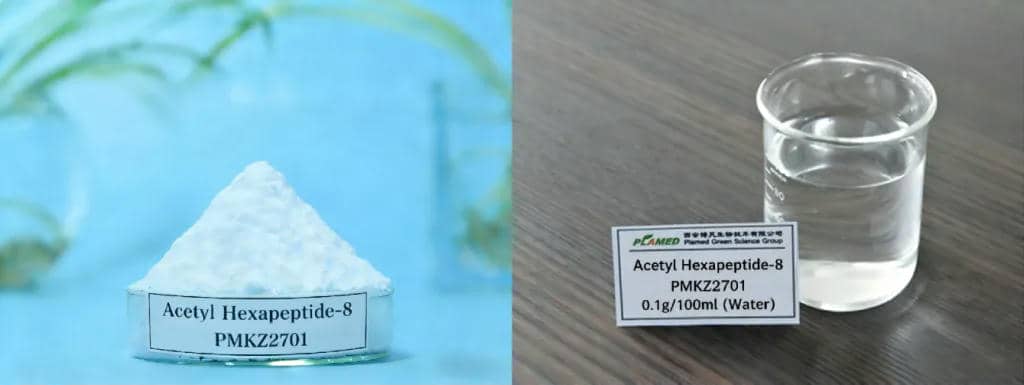
Acetyl hexapeptide-8 (INCI: Acetyl Hexapeptide-8; CAS 616204-22-9) is a synthetic neuro-modulating hexapeptide and one of the most widely formulated cosmetic peptide actives for expression-line care. Plamed supplies it as a water-soluble powder, produced by solid-phase peptide synthesis, with ≥99.0% HPLC purity and peptide content ≥85.0%. Used at 0.005%–0.1%, it reduces the appearance of expression lines and supports skin firmness.
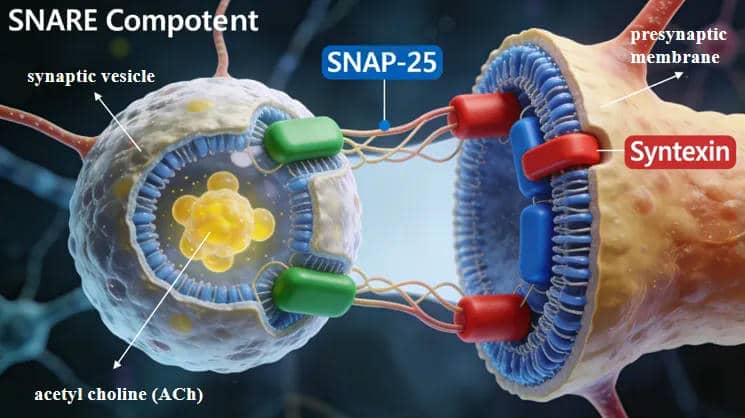
Where it sits in a formula: acetyl hexapeptide-8 peptide acts on the neuro-modulating side of anti-aging skincare. It competes with the SNAP-25 protein at the presynaptic membrane, moderating acetylcholine release and the muscle contraction behind dynamic expression lines, forehead lines, crow's feet and glabellar lines. It also supports fibroblast activity associated with collagen and elastin synthesis, the pathway behind firmness and elasticity.
Name note. Acetyl hexapeptide-8 was earlier listed in the INCI dictionary as Acetyl Hexapeptide-3; the two names describe the same molecule. The short form "hexapeptide" alone is a peptide class, not this ingredient, and Hexapeptide-8 is a separate INCI entry.
Why formulators choose this specification. A purity of ≥99.0% means more active per gram, fewer impurity-related formulation risks and greater design headroom in the finished product. The SPPS route is free of animal-derived components and gives strong batch-to-batch consistency, which matters when a formula scales from pilot to production.
Acetyl hexapeptide-8 for skin is used at low inclusion levels, typically 0.005%–0.1%, and is compatible with the aqueous phase of serums, creams, eye products, masks and neck products.
Related products. For peptide combinations, see Copper Tripeptide-1, Palmitoyl Pentapeptide-4 and Palmitoyl Tetrapeptide-7.
Peptide Manufacturing: Solid-Phase Peptide Synthesis (SPPS) and Quality Control
Acetyl hexapeptide-8 is produced by chemical synthesis. Commercial peptide manufacturing for this molecule follows one of two routes.
| Solid-phase peptide synthesis (SPPS) | Liquid-phase peptide synthesis (LPPS) |
Flow | Amino-acid raw materials → synthesis → purification → drying → packaging | Multi-step amino-acid coupling, deprotection, stepwise extraction and purification, and freeze-drying in a liquid-phase reaction environment |
Advantages | High purity (≥99.0%), free of animal-derived components, good batch consistency, straightforward quality control | Lower raw-material cost; flexible for small-batch customisation; suits short peptides and small-molecule fragments |
Our route.
Plamed manufactures this raw material by solid-phase peptide synthesis (SPPS), the industry-standard SPPS peptide synthesis route for cosmetic peptide synthesis. Choosing the SPPS peptide route here is a deliberate trade-off: it costs more than LPPS, but it is what makes a purity of ≥99.0% with ≤5.0% acetic acid and ≤5.0% water content repeatable batch after batch.
Synthesis flow (SPPS)
Amino-acid raw materials → stepwise coupling on resin → cleavage and deprotection → purification (HPLC) → drying → packing → QC release
Quality control at release.
Each batch is released against the specification in the Specifications tab: purity by HPLC, peptide content, acetic acid and water content, heavy metals (Pb / As / Hg / Cd) and microbiological limits. A Certificate of Analysis accompanies each lot.
Specifications: Purity ≥99.0% (HPLC) and Peptide Powder Quality Control
Test item | Specification |
Purity | ≥99.0% (HPLC) |
Peptide content | ≥85.0% (HPLC) |
Acetic acid content | ≤5.0% |
Appearance | Powder |
Colour | White to off-white |
Odour | Characteristic |
Water content | ≤5.0% |
Solubility | ≥100 mg/mL (H₂O) |
Heavy metals, Pb | ≤10 ppm |
Heavy metals, As | ≤2 ppm |
Heavy metals, Hg | ≤1 ppm |
Heavy metals, Cd | ≤5 ppm |
Total plate count | ≤1000 cfu/g |
Yeast & mould count | ≤100 cfu/g |
What These Specifications Mean for Your Formulation
High purity (≥99.0%) with high peptide content (≥85.0%), a peptide powder where most of the weight is actual peptide, not counter-ions or residual salts.
Strong batch consistency, the same specification from pilot batch to production scale, which is what makes a formula reproducible.
Excellent water solubility (≥100 mg/mL), dissolves readily in the aqueous phase and fits a broad range of formulation systems.
Free from animal-derived ingredients, supports vegan and green skincare positioning.
How does acetyl hexapeptide-8 work on dynamic lines?
Acetyl hexapeptide-8 acts on two pathways that are usually addressed by two different ingredients.
1. The contraction pathway (dynamic lines). At the presynaptic membrane, the peptide competes with SNAP-25 for binding to synaptic-vesicle proteins. That competition reduces the fusion of synaptic vesicles with the cell membrane, lowers acetylcholine release and moderates excessive contraction of the facial muscles, the mechanism behind dynamic expression lines such as forehead lines, crow's feet and glabellar lines. Because it acts upstream of the contraction itself, the effect is described as acting at the source rather than on the surface.
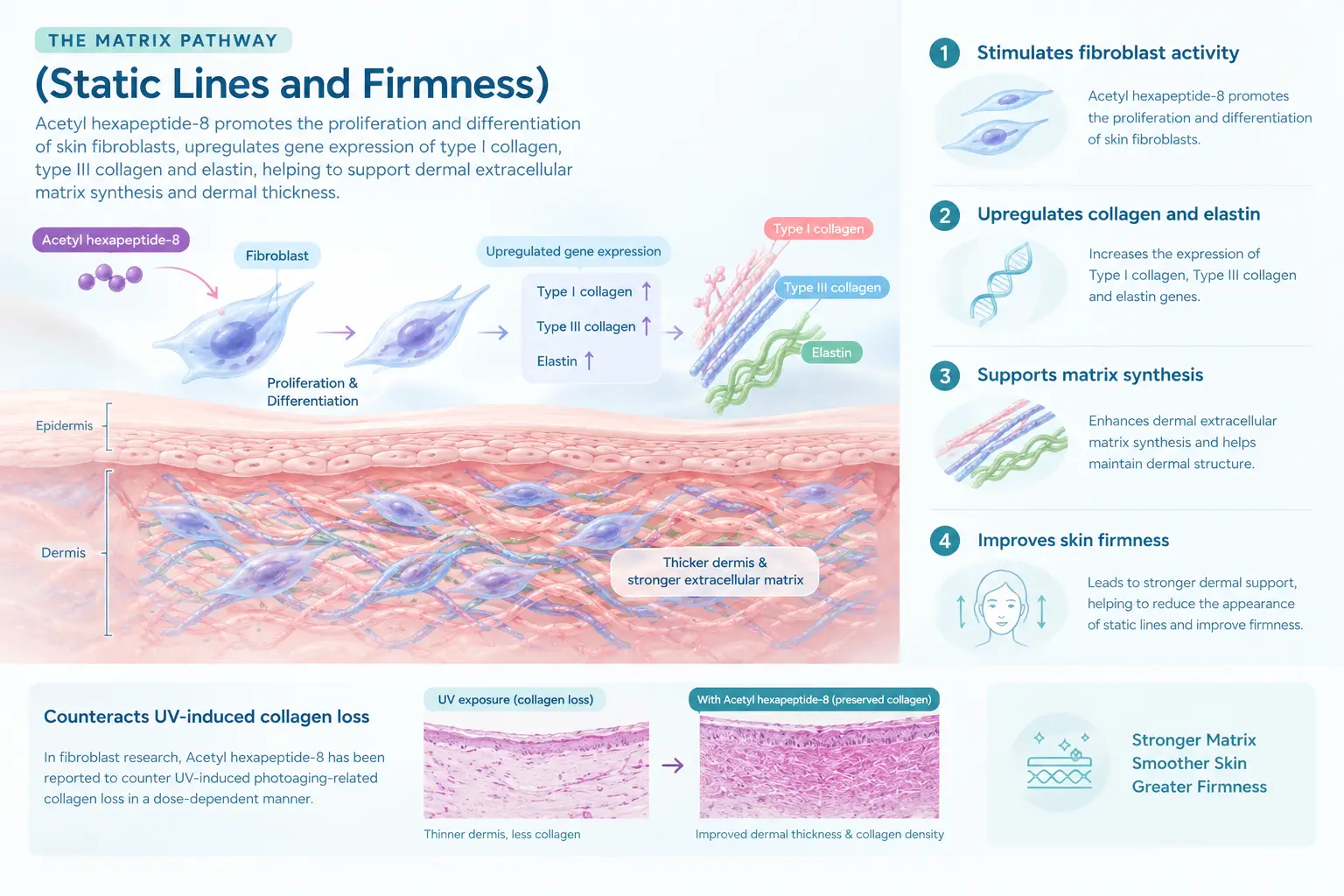
2. The matrix pathway (static lines and firmness). Acetyl hexapeptide-8 also promotes the proliferation and differentiation of skin fibroblasts, upregulating gene expression of type I collagen, type III collagen and elastin. In fibroblast research it has been reported to counter UV-induced photoaging-related collagen loss in a dose-dependent manner, supporting dermal extracellular matrix synthesis and dermal thickness.
3. The comfort pathway. The peptide reduces the release of the inflammatory mediators IL-6 and TNF-α, and promotes keratinocyte proliferation associated with stratum corneum barrier repair. This is the pathway most often considered when the ingredient is used in formulas for sensitive or reactive skin.
What are acetyl hexapeptide-8's benefits for skin?
1. Dynamic expression lines
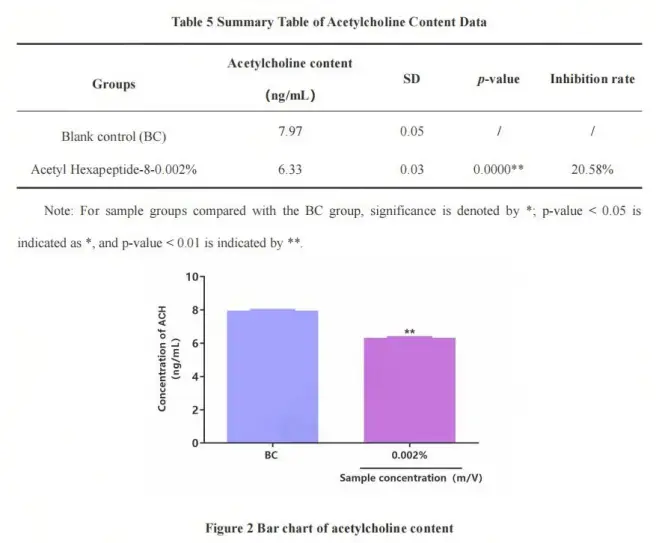
Where a formula targets the muscle-contraction pathway, this is the benefit it is buying: a reduction in the appearance of dynamic expression lines, forehead lines, crow's feet and glabellar lines. At 0.002%, the peptide showed an acetylcholine-inhibition rate of 20.58% in an independent laboratory test on neuronal cells.
2. Static fine lines, firmness and elasticity
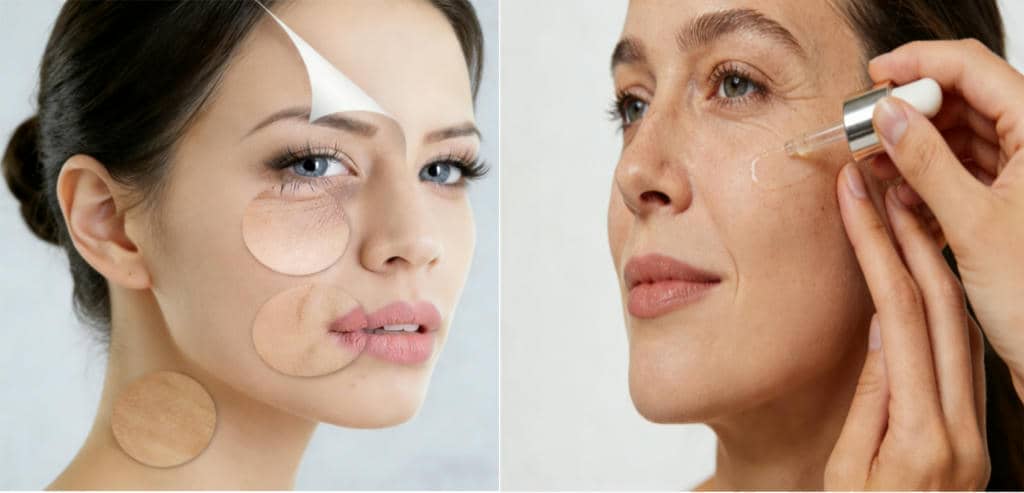
This is the firming side of the formula: what fills static wrinkle depressions and restores smoothness and elasticity, via dermal extracellular-matrix synthesis and increased dermal thickness.
3. Comfort and skin compatibility(H3)
As a small-molecule peptide supplied at ≥99.0% purity, it adds no irritating impurities to the formula, which is why it suits anti-aging products intended for sensitive or reactive skin.
4. Where it sits in an anti-aging formula(H3)
Acetyl hexapeptide-8 skincare benefits include reducing the appearance of dynamic lines and supporting skin firmness and elasticity. As a water-soluble cosmetic peptide, it is suitable for anti-aging serums, eye creams, and body care formulations.
Why Formulators Choose Acetyl Hexapeptide-8
Targeted anti-aging action: Complements hydration-focused and antioxidant-based anti aging skincare ingredients by targeting the appearance of expression lines.
Formulation flexibility: Suitable for mature skin and oily skin formulations, with a low use level that helps manage raw material costs.
Compatibility: Works alongside humectants and antioxidants in anti aging serum ingredients and anti-aging eye cream ingredients.
What to Check When Sourcing
When evaluating anti aging cosmetic ingredients, prioritize documentation over marketing claims. Request the COA, purity specifications, and safety documentation to verify quality and suitability. For sensitive-skin formulations, a high-purity synthetic peptide may offer a more consistent specification, though overall tolerability depends on the finished formula.
Acetyl hexapeptide-8 can also support skin longevity formulations when its documented mechanism, stable specifications, and compatibility with other actives align with the product's goals.
Which products is acetyl hexapeptide-8 used in?
Acetyl hexapeptide-8 is formulated at low concentrations and appears across the anti-aging product range, it is a common active in anti-aging serums, anti-wrinkle and firming creams, firming lotions, eye serums and eye creams, neck creams and masks. It is one of the standard actives in premium anti-aging lines and also works in mass-market anti-aging ranges where a peptide story is needed at a controlled cost.
Application area | Typical products | Why the ingredient fits |
Anti-aging serums | Multi-peptide serums, firming concentrates | Water-soluble; drops into the aqueous phase; no heating needed |
Anti-wrinkle creams | Day and night creams, neck creams | Targets dynamic lines; pairs with humectants |
Eye care | Eye serums, eye creams, eye masks | Low use level; suitable for the thin periorbital area |
Masks and leave-on gels | Sheet masks, gel creams | Highly water-soluble; no residue |
Body and neck care | Neck and décolleté firming products | Extends the anti-aging claim beyond the face |
Is acetyl hexapeptide-8 safe? Regulatory status and testing
China (NMPA): Acetyl Hexapeptide-8 is listed in the Inventory of Existing Cosmetic Ingredients in China (IECIC 2021), published by the National Medical Products Administration.
United States: listed by the Personal Care Products Council (PCPC, formerly CTFA) as a cosmetic ingredient in use.
European Union: the ingredient is included in the EU's cosmetic ingredient inventory (CosIng). Note that the CPNP is the EU portal for finished-product notification, not an ingredient listing.
Japan and South Korea: recognised by the Japan Cosmetic Industry Association (JCIA) and the Ministry of Food and Drug Safety (MFDS) of South Korea in their ingredient directories, and a mainstream peptide in these markets.
Acetyl hexapeptide-8 is a long-established cosmetic peptide, and its safety position rests on things a buyer can check rather than on claims:
Acetyl hexapeptide-8 safety in practice
Dose: used at 0.005%–0.1%, far below levels associated with irritation in published testing.
Purity: the ≥99.0% specification limits residual impurities and solvents from the synthesis route, which is where most peptide-related irritation risk originates.
Sensitisation: no sensitisation has been documented; this is why the ingredient is used in products positioned for sensitive skin.
Question of systemic exposure: as a topical small-molecule peptide used at very low concentrations, systemic exposure is not a practical concern in cosmetic use.
Which ingredients combine with acetyl hexapeptide-8?(H3)
For expression-line products, acetyl hexapeptide-8 is usually combined with collagen-signalling peptides for firmness, barrier lipids for tolerance, or hydroxypropyl tetrahydropyrantriol for GAG support.
How do you formulate with acetyl hexapeptide-8? pH, temperature and compatibility
Product | Reference dosage |
Acetyl Hexapeptide-8 (99% purity) | 0.005%–0.1% |
pH: the peptide shows optimal stability in systems at pH 0–7.0, that is, the acidic-to-neutral range. It is not recommended with strong acids, strong bases, strong oxidizing agents, acyl chlorides or acid anhydrides.
Temperature: acid-sensitive and heat-sensitive. Add it to the cooled phase, below 45 °C, as the last step of the process.
Light and oxidation: it oxidises readily on exposure to light; keep the container sealed and away from light.
Storage: store sealed at 2–8 °C, in a cool, dry place, away from strong light.
After opening: use as soon as possible after unpacking.
Synergy. It is commonly combined with sodium hyaluronate, collagen and hydroxypropyl tetrahydropyrantriol for a combined firming-and-hydration story, and with other peptides such as copper tripeptide-1 and palmitoyl pentapeptide-4 in multi-peptide systems.
Acetyl Hexapeptide-8 Wholesale: Price, MOQ, Lead Time and Documents
Supply, packaging and samples
Item | Detail |
Product | Acetyl Hexapeptide-8 |
Product ID | PMKZ2701 |
Specification | Purity ≥99.0% (HPLC) |
Minimal package | 10 g bottle with sterile aluminium-foil seal |
MOQ | 10 g (0.01 kg) |
Samples | Complimentary samples for laboratory evaluation and pilot trials |
Lead time | 3–5 working days after payment for standard items |
Available Document of Acetyl Hexapeptide-8
Certificate of Analysis (COA)
Material Safety Data Sheet (MSDS)
Composition Statement
Certificate copies: ISO 9001:2015
Halal certification
Regulatory support dossier (EU / US MoCRA / MFDS)
To request a quote or a sample, contact Plamed Green Science Group here.
Q1. What is acetyl hexapeptide-8?
Acetyl hexapeptide-8 is a synthetic six-amino-acid peptide used as a cosmetic active. Its INCI name is Acetyl Hexapeptide-8 and its CAS number is 616204-22-9; it was earlier listed as Acetyl Hexapeptide-3. Plamed supplies it as a powder with ≥99.0% purity and ≥85.0% peptide content. Note that "hexapeptide" alone is a peptide class, and Hexapeptide-8 is a separate INCI entry.
Q2. What does acetyl hexapeptide-8 in skin care actually do, and which products use it?
Acetyl hexapeptide-8 in skin care works as a neuro-modulating active, it moderates the muscle contraction behind expression lines, rather than acting as a humectant or exfoliant. It is used at 0.005%–0.1% in the aqueous phase of serums, creams, eye products and masks. Typical Acetyl Hexapeptide-8 products are anti-aging serums, firming and anti-wrinkle creams, eye serums, neck creams and masks.
Q3. What are the acetyl hexapeptide-8 benefits for skin?
Acetyl hexapeptide-8 benefits for skin fall into three groups: reducing the appearance of dynamic expression lines such as forehead lines and crow's feet; supporting firmness and elasticity through fibroblast and collagen-related pathways; and improving comfort in reactive skin. It is a firming and anti-wrinkle active, not a whitening or exfoliating ingredient.
Q4. Is acetyl hexapeptide-8 safe, and does it suit sensitive, oily or mature skin?
Yes, at normal cosmetic use levels. Published in vitro and in vivo testing reports no skin irritation, eye irritation, sensitisation or phototoxicity, and no topical safety concerns have been documented since market introduction. The ≥99.0% purity specification also limits residual impurities from synthesis. It suits oily skin in gel and light-emulsion systems, mature skin through the collagen pathways, and sensitive skin, where the absence of documented sensitisation matters most.
Q5. What is the difference between HPLC purity and peptide content?
Two different measures of the same powder. HPLC purity is the share of all peptide material present that is the correct acetyl hexapeptide-8 sequence, at 98% purity, 2% is by-product peptide (mismatched, truncated or degraded). Peptide content is the share of total powder mass that is that active peptide. Plamed's internal limits are purity ≥99.0% and peptide content ≥85.0%.
Q6. Why is peptide content lower than HPLC purity, and which matters more when buying?
Because the two use different denominators. HPLC purity counts peptide material only, so essential non-peptide components, acetate counter-ion and residual moisture, do not affect it. Peptide content is measured against total mass, so they always pull it down. Purity is the quality gate; peptide content tells you how much active peptide each kilogram actually delivers.
Q7. How is acetyl hexapeptide-8 manufactured?
By chemical synthesis. Plamed uses solid-phase peptide synthesis (SPPS), the industry-standard route for cosmetic peptide synthesis, rather than liquid-phase synthesis. SPPS costs more but is what delivers ≥99.0% purity, no animal-derived components and repeatable batch-to-batch consistency, which matters when a formula scales to production.
Q8. Which anti-aging ingredients should formulators look for, and how do you judge one?
The anti-aging ingredients to know are fewer than the marketing suggests. Common ingredients in anti-aging serums fall into three roles: a neural modulating peptide for dynamic lines, a collagen-pathway active, and humectants plus antioxidants. Among anti-aging ingredients to look for in skincare, check four things: whether the mechanism is documented, whether the purity and peptide-content specification is published, whether safety testing covers irritation and sensitisation, and whether a COA and TDS are issued per lot. Claims such as "the most powerful" are marketing language.
Q9. Acetyl hexapeptide-8: where to buy the powder, and what about price, MOQ and samples?
Directly from Plamed, as a raw material to formulators and brands, where to buy acetyl hexapeptide-8 is not through retail channels. If you want to buy acetyl hexapeptide 8, send your target quantity, destination market and required documents. Price is quoted per project: a factory price against your volume, with wholesale pricing at volume. Standard MOQ is 10 g (0.01 kg), lead time 3–5 working days after payment. Samples and formulation support are free.
Q10. What documentation is available, and can we become a distributor?
We issue a Technical Data Sheet, Certificate of Analysis, Material Safety Data Sheet and Composition Statement per lot, plus certificate copies for ISO 9001:2015 and Halal, and regulatory support dossiers for the EU, US and South Korea. For distribution, we evaluate local channels, annual purchase projections and market-expansion plans; enquiries from an authorised region go to the local distributor, and we supply a marketing kit.