
Ethyl Ascorbic Acid | Stable Vitamin C Derivative 99%
Plamed supplies ethyl ascorbic acid (INCI: 3-O-ETHYL ASCORBIC ACID, CAS 86404-04-8, C8H12O6, 204.18 g/mol) at ≥99% assay — a water-soluble white crystalline powder carrying 86.3% vitamin C content.
Ethyl Ascorbic Acid
Ethyl ascorbic acid is a vitamin C derivative in which the 3-hydroxyl group of ascorbic acid is ethylated. That single change closes the site where the ascorbic acid molecule oxidises first, so the ingredient keeps vitamin C activity while resisting the light, heat and air degradation that limits plain vitamin C. On a molar basis it still carries 86.3% vitamin C content — the highest of the four vitamin C derivatives most commonly used in cosmetics.
Plamed controls the four variables that decide whether a vitamin C derivative behaves predictably in a finished formula: assay purity, moisture, crystal form and dissolution behaviour. Holding all four narrows oxidation and degradation during storage and reduces batch-to-batch drift, so the same formulation performs the same way from the first production batch to the fiftieth — the practical reason formulators specify ethyl ascorbic acid on a controlled spec rather than on name alone.
What is ethyl ascorbic acid?
Attribute | Value |
Product name | Ethyl Ascorbic Acid (vitamin C ethyl ether) |
INCI name | 3-O-ETHYL ASCORBIC ACID |
CAS number | 86404-04-8 |
Molecular formula / weight | C8H12O6 / 204.18 g/mol |
Vitamin C content | 86.3% (of molecular weight) |
Appearance | White crystalline powder |
Assay | ≥99% |
Solubility | Water-soluble |
pH (3% water solution) | 3.5–5.5 |
Stable pH range | 4.0–6.0 |
Recommended dosage | 0.5%–3% |
Product ID | PMB2201 |
Minimal package / MOQ | 1 kg |
Ethyl ascorbic acid (INCI: 3-O-ETHYL ASCORBIC ACID, CAS 86404-04-8) is a vitamin C derivative supplied by Plamed Green Science Group as a ≥99% water-soluble white crystalline powder. The ethyl group sits on the 3-hydroxyl position of ascorbic acid, which is the site where the unmodified molecule oxidises first — that is why the derivative keeps vitamin C activity while resisting the light, heat, acid, alkali and air exposure that discolour plain vitamin C.
In short: ethyl ascorbic acid is the vitamin C derivative with the highest vitamin C content (86.3%) and the smallest molecule (204.18 g/mol) among the four derivatives most used in cosmetics — water-soluble, and stable at pH 4.0–6.0 rather than at the strongly acidic pH plain ascorbic acid requires.
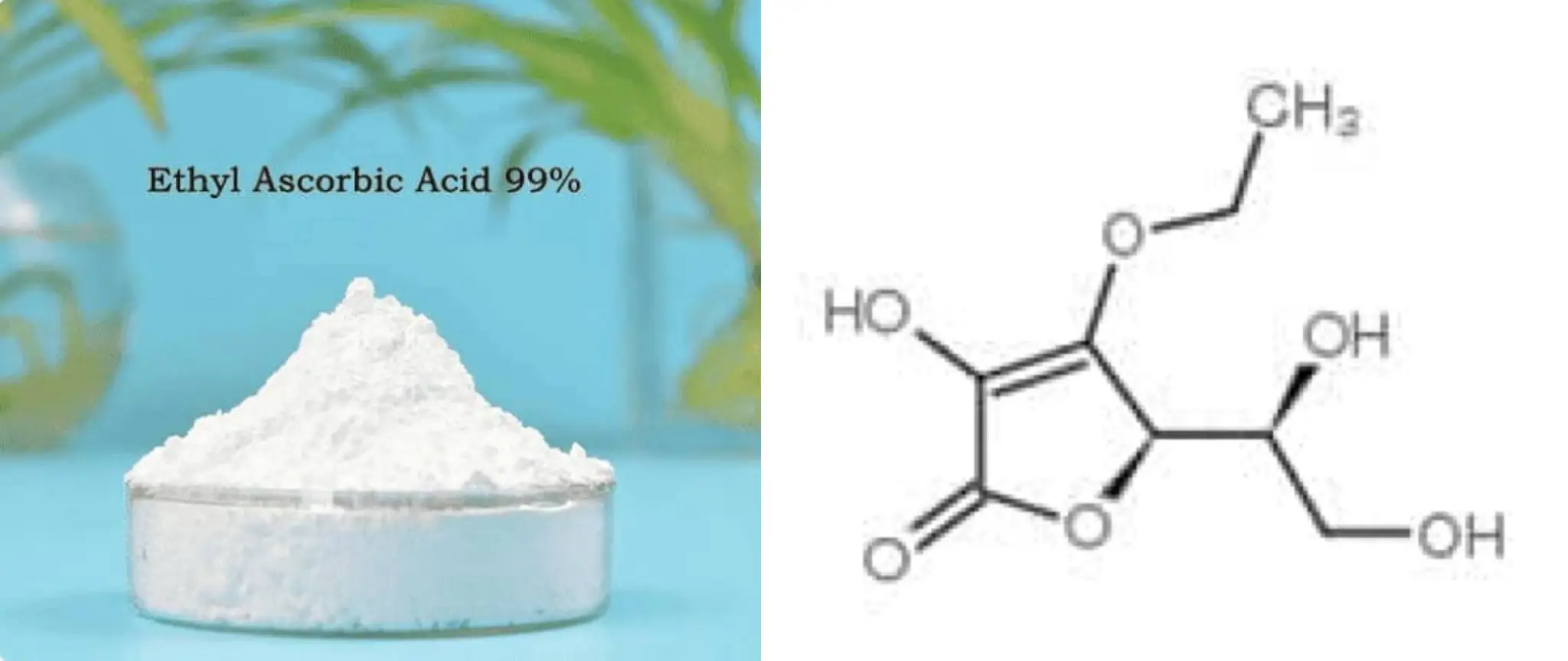
What ethyl ascorbic acid is:
Ethyl ascorbic acid is ascorbic acid with an ethyl group on its 3-hydroxyl position (C8H12O6, 204.18 g/mol). It is synthesised from vitamin C rather than extracted from a plant, and it is supplied as a white crystalline powder standardised to ≥99% assay. In cosmetics it is used as a brightening and antioxidant active in leave-on formats.
How ethyl ascorbic acid works:
Two things happen. First, the ethyl group blocks the oxidation site, so the molecule survives formulation and shelf life as intact ethyl ascorbic acid. Second, once absorbed it is broken down by enzymes in the skin, releasing the activity associated with vitamin C itself. The ingredient therefore works as a delivery form of vitamin C rather than as a separate active.
Where ethyl ascorbic acid fits:
Ethyl ascorbic acid fits brightening serums and essences, whitening creams and lotions, toners and masks — any water-based leave-on format where formulators want vitamin C activity without the pH and colour-stability problems of plain ascorbic acid.
Where ethyl ascorbic acid comes from
Ethyl ascorbic acid is synthesised from vitamin C. Two routes are described in the literature. The one-step route ethylates the 3-hydroxyl group of vitamin C directly: fewer steps and simpler operation, but substitution occurs at several positions, the product is difficult to separate, and purification requires column chromatography — so it is not suitable for industrial production. The three-step route runs vitamin C through a series of reactions to reach the same molecule: raw materials are easy to source, cost is lower, yield is stable, purity is high, and the route scales to industrial production. Plamed's process and analysis platforms cover the multi-step route and the purification work that follows it.
What are the ethyl ascorbic acid specifications?
Group | Item | Specification |
A · Identity & assay | Appearance | White crystalline powder |
| Assay | ≥99% |
B · Physical & chemical | pH value (3% water solution) | 3.5–5.5 |
| Loss on drying | ≤0.5% |
| Ignition residue | ≤0.2% |
C · Purity & safety limits | Free ascorbic acid (residual VC) | ≤10 ppm |
| Heavy metals | ≤10 ppm |
| Arsenic (As) | ≤2 ppm |
How to read the specification sheet
Assay & identity (A) — The grade is standardised to ≥99% ethyl ascorbic acid, supplied as a white crystalline powder. Combined with the pH window in group B, this is the first check that separates a properly controlled grade from a discoloured, partially oxidised one.
Physical & chemical (B) — pH 3.5–5.5 measured on a 3% water solution, loss on drying ≤0.5%, ignition residue ≤0.2%. Loss on drying is the moisture number that matters most for a vitamin C derivative: residual moisture accelerates degradation in the drum and shortens shelf life.
Purity & safety limits (C) — Free ascorbic acid ≤10 ppm, heavy metals ≤10 ppm, arsenic ≤2 ppm. Free (unreacted) ascorbic acid is the marker of an incomplete reaction and a predictor of in-formula discolouration, which is why it is held at ppm level rather than percent level.
How does ethyl ascorbic acid compare with other vitamin C derivatives?
Comparison of vitamin C content and solubility:
Name | Molecular weight | Vitamin C content (%) | Solubility |
Ethyl Ascorbic Acid | 204.18 g/mol | 86.3 | Water-soluble |
Ascorbic Acid 2-Glucoside | 338.27 g/mol | 52.0 | Water-soluble |
Magnesium Ascorbyl Phosphate | 303.5 g/mol | 49.3 | Water-soluble |
Sodium Ascorbyl Phosphate | 358.08 g/mol | 46.55 | Water-soluble |
Comparison of pH stability:(H3)
Name | Stable pH |
Ethyl Ascorbic Acid | 4.0–6.0 |
Ascorbic Acid 2-Glucoside | 6.0–7.0 |
Magnesium Ascorbyl Phosphate | 7.0–9.0 |
Sodium Ascorbyl Phosphate | 8.0–10.0 |
Read the two tables this way. Among these four derivatives, ethyl ascorbic acid carries the highest vitamin C content (86.3%) and has the smallest molecule (204.18 g/mol). Its stable pH window is also the most acidic of the four at 4.0–6.0 — closer to the pH of skin than the 7.0–10.0 window the phosphate derivatives need. If your formula is already running at a mildly acidic pH, ethyl ascorbic acid fits without a pH rebuild; if it is a neutral-to-alkaline system, ascorbic acid 2-glucoside and the phosphate esters are the natural fit.
What does ethyl ascorbic acid do for skin?
Ethyl ascorbic acid is used for three things in cosmetics: a more even-looking skin tone, antioxidant support, and support of the skin's own collagen. All three trace back to the same property — the molecule delivers vitamin C activity without the stability problems of ascorbic acid itself.
Ethyl ascorbic acid for brighter, more even-looking skin:
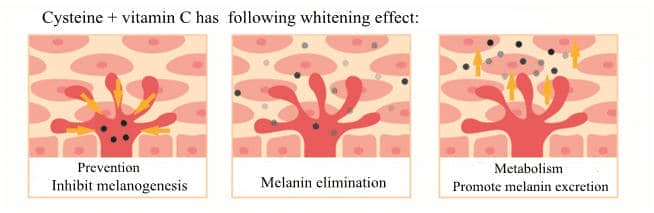
Ethyl ascorbic acid is described as reducing melanin to its colourless reduced form, and its own antioxidant activity reduces o-quinone intermediates in the melanin pathway. In practice that shows up as a more even-looking tone over successive use cycles rather than as an overnight change.
Antioxidant support and everyday exposure:
Ethyl ascorbic acid is active against free radicals, including those generated by UVA and UVB exposure and by normal metabolism. Antioxidant activity is the reason it appears in anti-aging formats alongside its brightening use.
Collagen synthesis support:
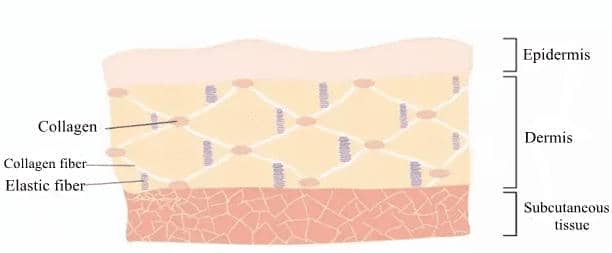
Ethyl ascorbic acid supports collagen synthesis — both the formation of collagen and its composition — which is why it is specified in anti-aging as well as brightening formulations.
Is ethyl ascorbic acid suitable for sensitive skin?
Ethyl ascorbic acid is stable and active at pH 4.0–6.0, while plain ascorbic acid needs a strongly acidic formula (typically below pH 3.5) to stay intact and active. Working at the milder pH is why ethyl ascorbic acid is the vitamin C form most often chosen for everyday leave-on products and for formulas positioned toward sensitive skin, at the 0.5%–3% dosage range used in cosmetics.
How stable is ethyl ascorbic acid?
1. It is stable to light, heat, acid and alkali. Ethyl ascorbic acid does not break down under the light and heat exposure that degrades plain ascorbic acid, and it holds across acidic and alkaline conditions.
2. It is not easily oxidised by air. Ethylating the 3-hydroxyl group closes the site where the ascorbic acid molecule oxidises first, so the powder resists air oxidation in storage and in the formula.
3. It does not discolour. Ethyl ascorbic acid is a vitamin C derivative that does not change colour and does not lose biological activity in doing so — the practical difference against ascorbic acid, which browns and loses activity.
4. Keep the finished pH in the 3.0–6.0 window. Plamed's reference data puts the best brightening performance at a finished pH of 3.0–6.0, consistent with the ingredient's 4.0–6.0 stable range.
Formulation takeaway: ethyl ascorbic acid removes the two constraints that make plain vitamin C hard to formulate — it survives light, heat and air without discolouring, and it works at pH 4.0–6.0 instead of below 3.5. Formulators still need to set the finished pH deliberately; that is the one variable left to control.
Which quality variables decide batch consistency?
Four variables decide whether a vitamin C derivative behaves the same way batch after batch: assay purity, moisture, crystal form and dissolution behaviour. Plamed controls all four on ethyl ascorbic acid. Purity sets how much active is actually delivered; moisture (loss on drying ≤0.5%) drives degradation rate in the drum; crystal form and dissolution behaviour determine how fast and how completely the powder goes into solution, which in turn decides whether the assay on the COA matches what ends up in the batch. Controlling all four narrows oxidation and degradation in storage and reduces batch-to-batch drift.
Where is ethyl ascorbic acid used in skin care?
Ethyl ascorbic acid is a water-soluble vitamin C active used across leave-on skin brightening formats, at a reference dosage of 0.5%–3%:
Product format | Reference dosage |
Brightening serum / essence | 1.0%–3.0% |
Whitening cream / lotion | 0.5%–2.0% |
Toner | 0.5%–2.0% |
Mask / essence pads | 0.5%–2.0% |
Anti-aging cream / emulsion | 0.5%–2.0% |
On pH: Plamed's reference data puts the best brightening performance of ethyl ascorbic acid at a finished pH of 3.0–6.0. Set the pH deliberately — it is the single biggest variable in how the active performs.
Compounding partners
With other vitamin C derivatives — pairing ethyl ascorbic acid with ascorbic acid 2-glucoside covers two release profiles in one formula: a small, fast-acting molecule and an enzymatically released one.
With arbutin — combining a vitamin C derivative with alpha or beta arbutin addresses tone at two different points: the enzyme step and the pigment intermediates.
With glutathione — glutathione is paired with vitamin C derivatives in brightening systems for antioxidant support.
What reference formulas show how to use ethyl ascorbic acid?
Formula 1 · Brightening mask fluid
Ingredient | Content (%) |
Ethyl Ascorbic Acid | 0.50 |
Hydrolyzed Sodium Hyaluronate (hyaluronic acid oligomer) | 0.20 |
Butylene Glycol | 3.00 |
Synthetic Egg White Powder | 2.00 |
Aloe Barbadensis Leaf Extract | 0.80 |
Scutellaria Baicalensis Root Extract | 5.00 |
Propylene Glycol | 0.50 |
Raspberry Ketone Glucoside | 0.30 |
Glycerin | 2.00 |
Sodium Hyaluronate (high molecular weight) | 0.30 |
Panax Ginseng Root Extract | 3.00 |
Glycyrrhiza Glabra (Licorice) Root Extract | 3.00 |
Kojic Acid | 0.80 |
Titanium Dioxide (nano) | 1.50 |
Water | Add to 100 (77.10) |
Preparation: Mix and dissolve the ginseng, scutellaria and licorice extracts for 10–24 hours to obtain solution A. Mix propylene glycol with butylene glycol to obtain solution B. Add the hydrolyzed sodium hyaluronate, sodium hyaluronate, synthetic egg white powder, aloe extract and ethyl ascorbic acid to solution B; disperse in a homogenizer at 10,000 rpm, three times for 5 seconds each, to obtain solution C. Dissolve kojic acid, titanium dioxide and raspberry ketone glucoside in one-third of the water to obtain solution D. Add solution A to solution C, then solution D, then glycerin and the remaining water; stir to dissolve. Homogenize at 10,000 rpm, three times for 3 seconds each.
Formula 2 · Anti-aging emulsion
Phase | Ingredient | Content (%) |
Oil phase | Tocopherol Acetate | 0.20 |
Oil phase | Methyl Glucose Sesquistearate | 1.50 |
Oil phase | Actinidia Chinensis (Kiwi) Seed Oil | 3.00 |
Oil phase | Linum Usitatissimum (Linseed) Seed Oil | 3.00 |
Water phase | Ethyl Ascorbic Acid | 0.20 |
Water phase | Troxerutin | 0.20 |
Water phase | Butanediol | 10.00 |
Water phase | Carbomer | 0.15 |
Water phase | Arginine | 0.15 |
Water phase | Polygonatum Officinale Rhizome/Root Extract | 0.50 |
Water phase | Benincasa Hispida Seed Extract | 0.50 |
Water phase | Water | Add to 100 (80.60) |
Preparation: Heat the oil phase to 70–90 °C, stir to dissolve. Heat the water phase to 70–90 °C, stir to dissolve. Add the water phase to the oil phase, homogenize 3–5 minutes, then stir 15–45 minutes. Cool to 45 °C, then add arginine and the two plant extracts; stir until uniform.
Formula 3 · Brightening essence
Phase | Ingredient | Content (%) |
A | Sodium Hyaluronate | 0.03 |
A | 1,3-Butanediol | 4.00 |
A | Propylene Glycol | 3.00 |
A | Glycerin | 3.00 |
A | Deionized Water | Add to 100 (89.97) |
B | Ethyl Ascorbic Acid | 2.00 |
B | Fragrance | q.s. |
B | Preservative | q.s. |
Preparation: Heat phase A to 85 °C and stir until completely dissolved. Cool to below 45 °C, then add phase B. Once dissolved, stop stirring.
Is ethyl ascorbic acid safe for skin?
Ethyl ascorbic acid is used as a cosmetic ingredient in China, the EU and the United States. Three points cover what a formulator needs to check:
China — 3-O-ethyl ascorbic acid is listed in the Inventory of Existing Cosmetic Ingredients in China (IECIC 2021), so it can be used in cosmetics placed on the Chinese market without a new-ingredient registration.
International — the ingredient is recognised in cosmetic ingredient inventories including the Personal Care Products Council (PCPC) listing; the Cosmetic Ingredient Review (CIR) Expert Panel has assessed vitamin C derivatives for use in cosmetics
Dosage — cosmetics typically use ethyl ascorbic acid at 0.5%–3%. No single global concentration limit applies; the applicable limit is the one set by the regulation of the market where the finished product is sold.
Where can I buy ethyl ascorbic acid powder wholesale?
Product supply information:
Item | Value |
Product | Ethyl Ascorbic Acid (3-O-ethyl ascorbic acid) |
Product ID | PMB2201 |
INCI | 3-O-ETHYL ASCORBIC ACID |
CAS | 86404-04-8 |
Specification | ≥99% (white crystalline powder) |
Form & solubility | Powder, water-soluble |
Reference dosage | 0.5%–3% |
Minimal package | 1 kg |
MOQ | 1 kg |
Samples | Available on request |
Storage | Cool, dry place; away from direct sunlight and oxidising agents |
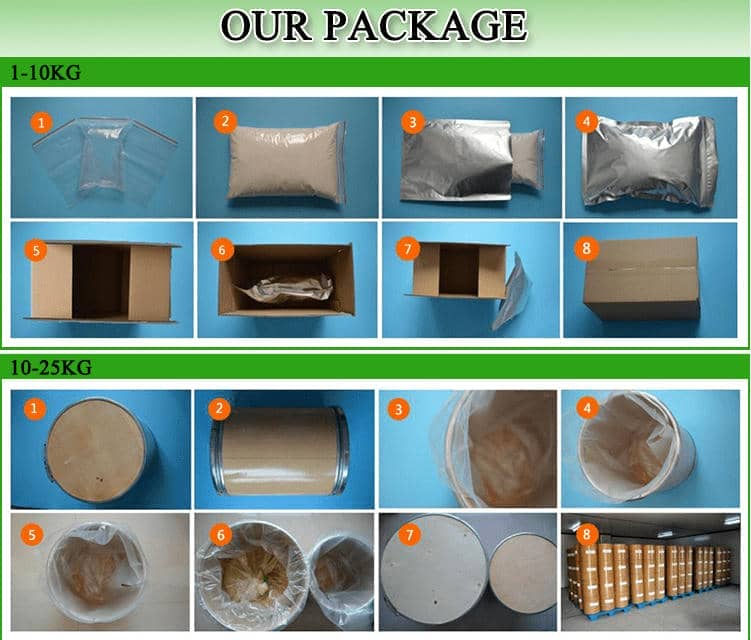
Package | 25 kg paper drums with two plastic bags inside |
What Plamed offers:
Plamed supplies ethyl ascorbic acid at ≥99% assay with the four quality variables that drive batch consistency controlled — assay purity, moisture, crystal form and dissolution behaviour — from 1 kg upward, packed in 25 kg paper drums.
Available Document of Ethyl Ascorbic Acid
Certificate of Analysis (COA)
Material Safety Data Sheet (MSDS)
Composition Statement / Compositional Breakdown
Manufacturing Process Flowchart
Analytical / HPLC Test Method
Third-Party Test Report (Bureau Veritas - Methanol Residual Solvent)
Regulatory & Quality Statements (Vegan, Non-Animal Testing, Halal, ISO 16128 Natural Origin Index, TSE/BSE Free, Non-Nano, CMR-Free, Microplastics-Free, Heavy Metals, CITES)
NMPA Raw Material Safety Dossier (Attachment 14 / Submission Code)
Product Brochure & Technical Introduction
To request a quote or a sample, contact Plamed Green Science Group here.
Ethyl ascorbic acid manufacturer and wholesale supplier:
Plamed is an ethyl ascorbic acid manufacturer and wholesale supplier based in Xi'an, China, supplying the ≥99% water-soluble grade under Product ID PMB2201 from 1 kg MOQ, with TDS, COA and MSDS attached per shipment.
Ethyl ascorbic acid pricing and wholesale supply:
Ethyl ascorbic acid price depends on order volume and packaging. Wholesale ethyl ascorbic acid is available from 1 kg, in 25 kg paper drums; request a quote for current pricing and lead time.
3-O-Ethyl ascorbic acid for sale — where to buy:
3-O-ethyl ascorbic acid for sale from Plamed is supplied to personal care manufacturers and cosmetic brands at ≥99% assay. Where to buy ethyl ascorbic acid: direct from the manufacturer, contact Plamed for a quote and samples, or reach a local distributor.
Why source ethyl ascorbic acid from Plamed?
Because the failure mode of a vitamin C derivative is not potency — it is drift. Plamed controls the four variables that decide whether the powder behaves the same way in batch fifty as in batch one: assay purity, moisture, crystal form and dissolution behaviour. That is what makes the performance predictable rather than merely specified.
Q1: What is ethyl ascorbic acid?
A:Ethyl ascorbic acid (INCI: 3-O-ETHYL ASCORBIC ACID, CAS 86404-04-8) is a vitamin C derivative in which the 3-hydroxyl group of ascorbic acid is ethylated. It is a water-soluble white crystalline powder supplied at ≥99% assay, used in cosmetics as a brightening and antioxidant active. It carries 86.3% vitamin C content by molecular weight — the highest of the four most common vitamin C derivatives.
Q2: What is the difference between ethyl ascorbic acid and pure vitamin C (ascorbic acid)?
A:Ascorbic acid has four free hydroxyl groups, is poorly absorbed in its intact form, and oxidises readily — which discolours the formula and limits its use as a cosmetic brightening agent. Ethyl ascorbic acid is ethylated at the 3-position, which closes the primary oxidation site: it does not discolour and does not lose biological activity. It is also stable at pH 4.0–6.0, whereas plain ascorbic acid needs a strongly acidic formula.
Q3: How does ethyl ascorbic acid compare with ascorbic acid 2-glucoside (AA2G)?
A:Ethyl ascorbic acid has the higher vitamin C content (86.3% vs 52.0%) and the smaller molecule (204.18 vs 338.27 g/mol), and it is stable at a more acidic pH (4.0–6.0 vs 6.0–7.0). Both are water-soluble. Choose by the pH your formula already runs at.
Q4: Is ethyl ascorbic acid safe for skin?
A:Ethyl ascorbic acid is an established cosmetic ingredient, listed in IECIC 2021 for the Chinese market and recognised in international cosmetic ingredient inventories. It is typically used at 0.5%–3%. The applicable concentration limit is the one set by the regulation of the market where the finished product is sold.
Q5: What pH does ethyl ascorbic acid need in a formula?
A:The ingredient is stable at pH 4.0–6.0, and Plamed's reference data puts its best brightening performance at a finished pH of 3.0–6.0. This is the main advantage over plain ascorbic acid, which requires a pH below about 3.5 to stay intact.
Q6: Is ethyl ascorbic acid suitable for sensitive skin?
A:Ethyl ascorbic acid is the vitamin C form most often chosen for formulas positioned toward sensitive skin, because it works at pH 4.0–6.0 rather than the strongly acidic pH plain ascorbic acid requires. Use it within the 0.5%–3% cosmetic dosage range and set the finished pH deliberately.
Q7: What dosage of ethyl ascorbic acid is used in cosmetics?
A:The recommended dosage is 0.5%–3%. In practice: 1%–3% in serums and essences, 0.5%–2% in creams, lotions, toners and masks.
Q8: Is ethyl ascorbic acid water-soluble?
A:Yes. Ethyl ascorbic acid is water-soluble, like the other three common vitamin C derivatives (ascorbic acid 2-glucoside, magnesium ascorbyl phosphate and sodium ascorbyl phosphate). It is insoluble in the non-polar solvents used for oil-phase systems.
Q9: What is the MOQ and how is ethyl ascorbic acid packed?
A:The MOQ is 1 kg, with a minimal package of 1 kg. Standard packing is 25 kg paper drums with two plastic bags inside. Store in a cool, dry place away from direct sunlight and oxidising agents.
Q10: Where can I buy ethyl ascorbic acid wholesale?
A:Ethyl ascorbic acid is available wholesale direct from Plamed at ≥99% assay from 1 kg, Product ID PMB2201, with TDS, COA and MSDS attached per shipment. Contact Plamed for a quote and samples.