
Magnolia Officinalis Bark Extract: Botanical Active for Skin Soothing
Plamed’s Magnolia Officinalis Bark Extract supports soothing, oil-control, and anti-acne skincare formulations. Standardized control of key bioactive compounds, including Magnolol and Honokiol, helps ensure consistent ingredient quality for cosmetic applications.
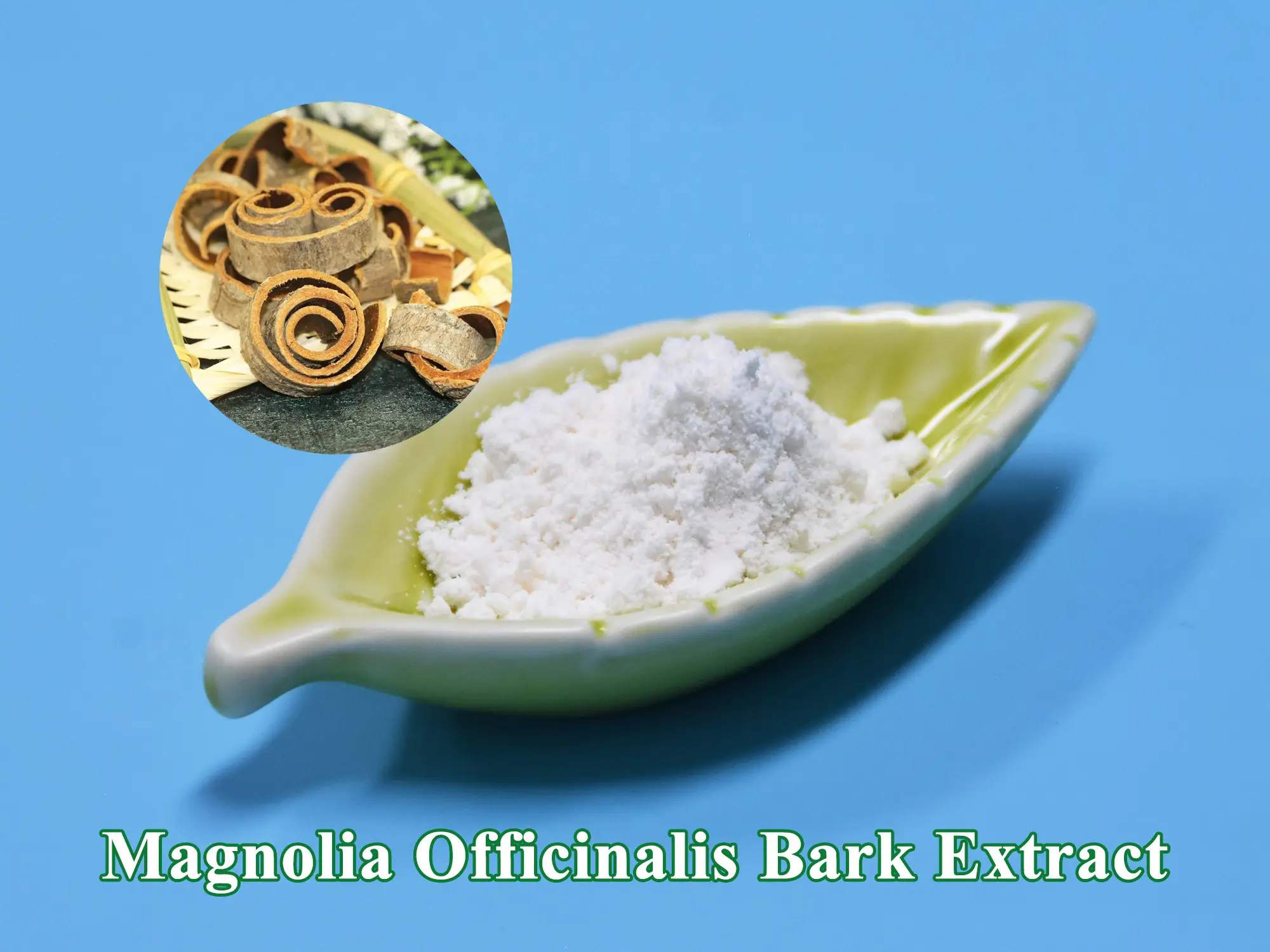
Magnolia Officinalis Bark Extract
Magnolia Officinalis Bark Extract is a botanical active derived from magnolia bark. It helps address visible redness, excess sebum, and acne-prone skin, making it suitable for soothing, skin-repair, and oil-control skincare formulations.
Plamed applies standardized controls to key bioactive compounds, including Magnolol and Honokiol, supported by a consistent quality control system to help ensure reliable ingredient quality.
Magnolia Officinalis Bark Extract at a Glance
Product ID | Specification | Minimal package | MOQ |
PMQD0201 | 1 kg | 1 kg | |
PMQD0202 | 1 kg | 1 kg | |
PMQD0203 | 5% honokiol + magnolol | 1 kg | 1 kg |
PMQD0204 | 98% honokiol + magnolol | 1 kg | 1 kg |
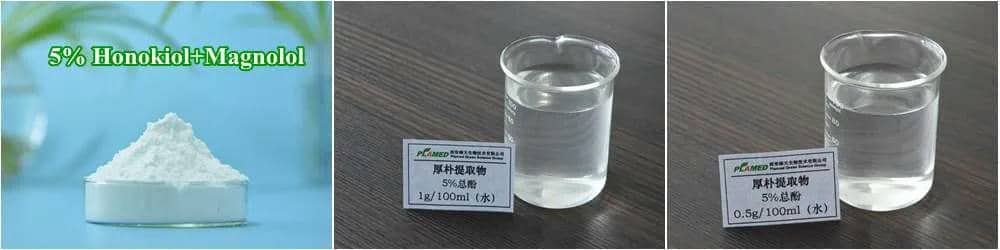
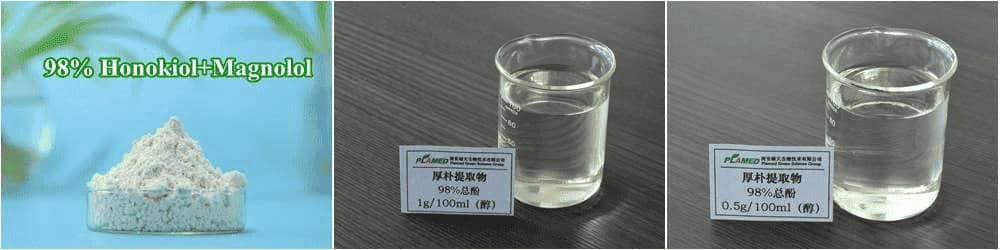
Magnolia Officinalis Bark Extract is the standardized extract of dried Magnolia officinalis bark, supplied as a four-SKU family: standalone 98% honokiol and 98% magnolol, plus combined grades at 5% and 98% (HPLC). Across both grades the actives are the same pair — magnolol and its isomer honokiol — which is why formulators often treat the standardized magnolia extract (honokiol + magnolol) as a single, well-defined soothing active.
Honokiol, magnolia bark extract's co-active alongside magnolol, is also supplied as a standalone 98% product — see the Honokiol page. For magnolia officinalis bark extract skin care projects, the combined extract on this page is the usual starting point; the standalone actives suit concentrated serums and targeted treatments.
Source and manufacturing process
Magnolia officinalis (Magnolia officinalis Rehd. et Wils.) is a deciduous magnolia tree, and its dried bark is the medicinal material behind the extract. The natural magnolol content differs sharply by plant part: bark and branch bark carry about 2.30% total magnolol, while root bark reaches 8.22% — one reason raw-material selection and batch standardization matter so much for this botanical.
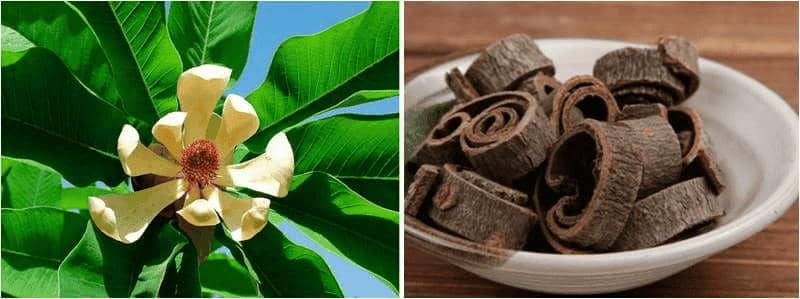
Plamed runs its own magnolia plantation and standardizes every batch to its core actives, magnolol and honokiol, under a stable quality-control system: HPLC-based release testing, batch COA and enterprise specification standards. This is the raw-material foundation behind stable supply.
5% vs 98% Magnolia Bark Extract: Which Grade Do You Need?
Buyers comparing a magnolia bark extract high-purity grade against a standardised total-phenol grade are really choosing between two different formulation roles:
Dimension | 5% grade (PMQD0203) | 98% grade (PMQD0204) |
Assay | ≥5.0% honokiol + magnolol | ≥98% (HPLC) |
Color | White fine powder | White to off-white powder |
Solubility behaviour | Water-dispersible (Plamed's own test: 1 g/100 ml in water) | Ethanol-soluble (Plamed's own test: 1 g/100 ml in ethanol) |
Typical use | Water-rich toners and essences, cost-effective daily care | Premium soothing serums and concentrated treatments |
Positioning | Daily soothing-repair, oil-balance maintenance | High-potency soothing, blemish-prone and antioxidant care |
Both grades are standardized to the same magnolol + honokiol pair, so the choice is mainly about solubility route, dosage economics and product positioning — not about a different active.
Magnolia Officinalis Bark Extract Specifications
The magnolia officinalis extract is supplied in two standardized grades. The magnolia bark extract powder is released lot by lot against the specifications below.
5% Honokiol + Magnolol(PMQD0203)
Items | Specification |
Assay | ≥5.0% |
Color | White fine powder |
Odor | Characteristic |
Taste | Characteristic |
Extract solvent | Water |
Part used | Bark |
Particle size | 98% through 80 mesh |
Moisture | ≤7.0% |
Ash content | ≤10.0% |
Pb | ≤10 mg/kg |
As | ≤2 mg/kg |
Hg | ≤1 mg/kg |
Cd | ≤5 mg/kg |
Total bacteria | ≤100 cfu/g |
Yeast & mold | ≤20 cfu/g |
Thermotolerant coliforms | Negative |
P. aeruginosa | Negative |
Staphylococcus aureus | Negative |
98% Honokiol + Magnolol(PMQD0204,TDS)
Items | Specification |
Magnolol + Honokiol | ≥98% (HPLC) |
Appearance | Powder |
Color | White to off-white |
Odor | Characteristic |
Moisture | ≤10.0% |
Ash | ≤7.0% |
Particle size | 95% through 80 mesh |
Total heavy metal | ≤10 ppm |
As | ≤2 ppm |
Hg | ≤1 ppm |
Cd | ≤5 ppm |
Total plate count | ≤1000 CFU/g |
Yeast & mould | ≤100 CFU/g |
Pseudomonas aeruginosa | <3.0 MPN/g |
Staphylococcus aureus | Not detected |
Heat-resistant Escherichia coli | Not detected |
Two rows matter most for formulators. Assay defines the grade: the 5% grade doses by total phenol content in water-based systems, while the 98% grade is a high-purity concentrate for low-inclusion, high-claim formulations. Particle size (95% through 80 mesh on the 98% grade) keeps the powder dispersing predictably in premixes. Note the 5% grade carries stricter microbial limits (≤100 cfu/g total bacteria) because water-extracted botanicals need tighter control.
Magnolia Extract Benefits: Soothing, Oil Balance and Antioxidant Protection
Soothing support for redness-prone skin. The total phenols in the extract — magnolol plus honokiol — show an inhibitory effect on Cutibacterium acnes (formerly P. acnes) in vitro and modulate inflammatory enzymes and cytokines, including the NF-κB and MAPK pathways, in laboratory models. For skincare, this is the mechanism behind the extract's soothing positioning: it supports care for skin with visible redness and helps calm the look of stressed skin.
Oil balance and blemish-prone care. The same phenol pair shows broad-spectrum antibacterial activity in vitro, including against gram-negative bacteria. In formulation terms, that supports cleansers, toners and essences aimed at oil imbalance and the look of blemishes — helping skin stay visually clear without drying it out.
Antioxidant protection. In vitro tests show the extract scavenges free radicals, including hydroxyl radicals and hydrogen peroxide, which supports its use in antioxidant day care and anti-pollution positioning.
Is Magnolia Bark Extract Water Soluble?
It depends on the grade — and Plamed's own test photos show both routes.
5% grade (PMQD0203): water-dispersible. Plamed's dispersion test shows 1 g/100 ml dispersing in water to a clear-to-slightly-hazy solution — the practical route for toners and essences without extra solubilizers.
98% grade (PMQD0204): ethanol-soluble. The same test series shows 1 g/100 ml and 0.5 g/100 ml dissolving in ethanol. For water-rich systems, pre-dissolve in ethanol or a solubilizer first.
Route | How it works | Typical use |
Direct dispersion (5% grade) | Disperse the magnolia extract powder in the water phase | Toners, essences |
Co-solvent (98% grade) | Pre-dissolve in ethanol or with a solubilizer, then dose into the water phase | Serums, lotions |
Emulsion systems | Pre-disperse or pre-dissolve in the oil/emulsifier phase | Creams, lotions |
Unlike fragrance-oriented magnolia extracts, this material is standardized to magnolol + honokiol by HPLC, so solubility behaviour is consistent batch to batch — one more reason to request the latest COA with your sample.
How to Use Magnolia Officinalis Bark Extract in Formulas
Magnolia officinalis bark extract skin care applications concentrate on three scenarios:
Application scenario | Product types |
Soothing-repair (redness-prone skin) | Toner, essence, cream, mask |
Oil-control & blemish-prone care | Cleanser, toner, essence |
Antioxidant care | Serum, cream, mask |
Oral care line. The extract is also used in toothpaste and mouthwash at a recommended 0.4% in dental products, where its in-vitro antibacterial profile is the relevant property.
A note on preservation. The extract's in-vitro antibacterial activity can support a formula's preservation system, but whether it can be counted as a preservative depends on your target market's regulation — verify the claim route before labelling.
Safety and Regulatory Notes
MAGNOLIA OFFICINALIS BARK EXTRACT is listed as a cosmetic ingredient in Chinese cosmetic raw-material catalogues, and Plamed maintains an NMPA raw-material safety dossier (Attachment 14, with submission code) for this material — available to customers on request.
Quality is released against Plamed's enterprise product specification standard, with HPLC chromatograms attached per batch.
Package and Storage
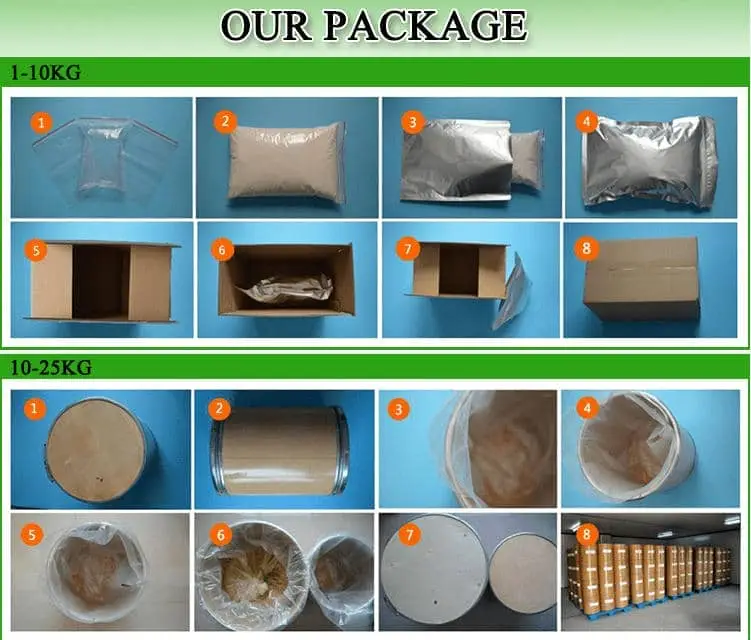
Package: 1 kg foil bag with two inner plastic bags, sealed and packed into fibre drums.
Storage: Store in a cool, dry place away from direct sunlight and oxidizing agents.
Buy Magnolia Officinalis Bark Extract from Plamed
Plamed is a magnolia & honokiol supplier and a magnolol extract supplier with its own magnolia plantation: the combined extract ships from this page, while standalone 98% magnolol powder and 98% honokiol powder have their own product pages. So magnolol powder for sale enquiries from cosmetic brands and formulators are B2B supply on this page family — magnolol powder wholesale is quoted per quantity and destination market, never retail.
Available Document of Magnolia Officinalis Bark Extract
Certificate of Analysis (COA)
Material Safety Data Sheet (MSDS)
Supercritical CO2 Manufacturing Process Flowchart
Analytical / HPLC Test Method & HPLC Chromatograms
Enterprise Product Specification Standard
NMPA Raw Material Safety Dossier (Attachment 14 / Submission Code)
Product Brochure & Technical Introduction
The magnolia extract powder ships in 1 kg minimal packages with 1 kg MOQ. As a magnolol powder manufacturer, Plamed quotes wholesale magnolol powder and combined-extract orders per quantity, grade and market. For samples, lead time and the full document set, contact Plamed Green Science Group here.
Magnolia Bark Extract: Frequently Asked Questions
Q1. What is Magnolia Officinalis Bark Extract?
A standardized extract of dried Magnolia officinalis bark, with magnolol and honokiol as its core actives. It is supplied in two grades — 5% total phenol and 98% HPLC — as a white to off-white powder, positioned as a plant soothing active for skincare.
Q2. What are the magnolia bark extract skin benefits?
Most searches for magnolia bark extract for skin want exactly this answer. The documented magnolia bark extract skin benefits are mechanism-level: in-vitro soothing activity via inflammatory-enzyme and cytokine modulation (NF-κB/MAPK pathways), in-vitro antibacterial activity that supports oil-balance and blemish-prone care, and free-radical scavenging for antioxidant protection.
Q3. Is magnolia bark extract water soluble?
Grade-dependent. The 5% grade disperses in water at 1 g/100 ml (Plamed's own test), while the 98% grade dissolves in ethanol at 1 g/100 ml and needs a co-solvent or solubilizer for water-rich systems.
Q4. Should I choose the 5% or the 98% grade?
If you are comparing a magnolia bark extract high-purity grade with a standard total-phenol grade: choose 98% for premium serums and concentrated treatments, 5% for water-rich daily care where cost and direct water dispersion matter more.
Q5. Which magnolia species is the right source?
The pharmacopeial source is Magnolia officinalis bark. Other botanicals exist — magnolia acuminata bark extract, magnolia grandiflora bark extract and magnolia kobus bark extract come from different trees, and magnolia liliflora flower extract is a flower-derived material — so a magnolia flower extract is not the same raw material as standardized M. officinalis bark extract. Plamed uses M. officinalis bark from its own plantation.
Q6. Is magnolia vanilla extract the same thing?
No. Magnolia vanilla extract queries usually point to fragrance or flavour contexts. The skincare raw material is standardized magnolia bark extract with defined magnolol + honokiol content — a different product with different documentation.
Q7. Do you offer organic magnolia bark extract?
The bark comes from Plamed's own magnolia plantation with traceable planting-to-harvest records and a stable quality-control system. For the current organic certification status and supporting documents, please enquire before claiming "organic" on your label.
Q8. What dosage is recommended?
For dental products, 0.4% is the reference level. For skincare, dosage depends on grade, product type and positioning — exact values are provided with the TDS and supplier recommendation for your specific formula.
Q9. How is every batch quality-controlled?
Release testing is HPLC-based against the enterprise product specification standard, with batch COA and HPLC chromatograms; the magnolol + honokiol standardization is what keeps each batch of the magnolia extract (honokiol + magnolol) consistent.
Q10. Busca extracto de corteza de magnolia?
Plamed suministra extracto de corteza de magnolia estandarizado en grados de 5% y 98% directamente de fábrica — contacte con nosotros en inglés para precios, muestras y documentación completa.
Related Reading
Honokiol VS. Magnolol for Skin Benefits