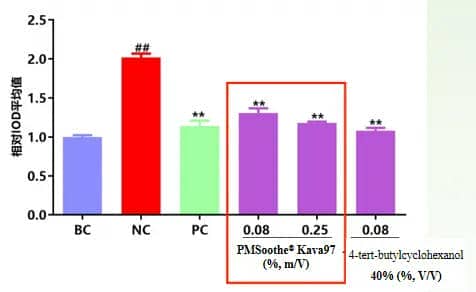
Q:PMSoothe® Kava97 performs similarly to synthetic “4-tert-Butylcyclohexanol” in TRPV1 inhibition. What’s the differentiation advantage?
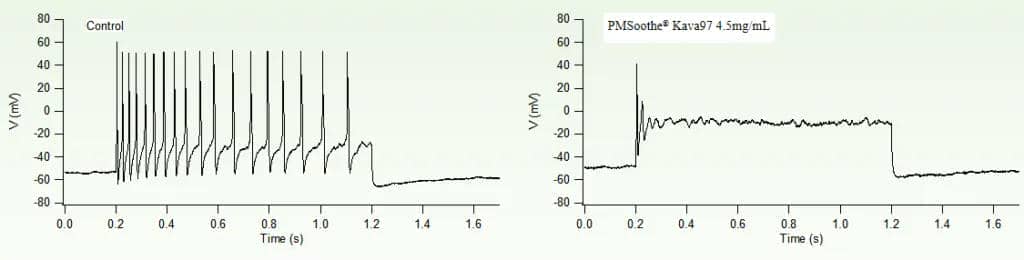
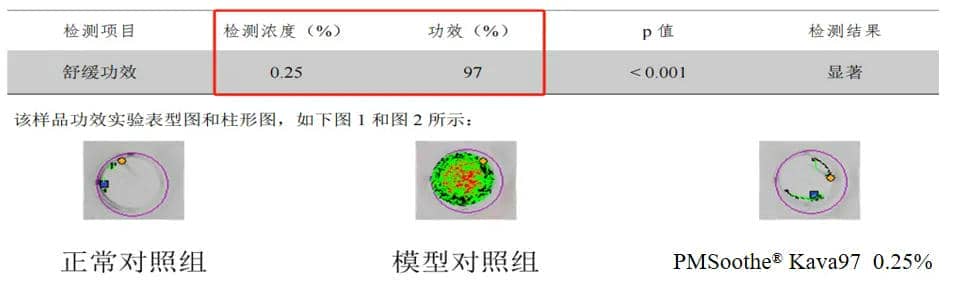
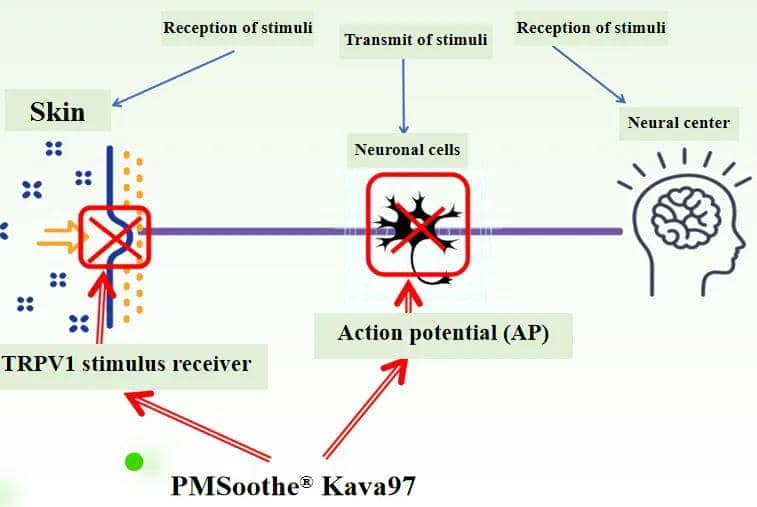
A: Traditional 4-tert-butylcyclohexanol targets only a single TRPV1 receptor. Beyond TRPV1 inhibition, PMSoothe® Kava97’s ultimate advantage lies in its ability to block Action Potentials (AP). No matter which peripheral receptor mediates the irritation, the signals must convert into AP to reach the brain, giving PMSoothe® Kava97 a much broader and more comprehensive anti-irritant and soothing effect.
Q:Why is your anti-wrinkle mechanism focused on dynamic lines, but the in vivo test report tests static wrinkles?
A: In human clinical trials, the inclusion criteria strictly selected female subjects “presenting with facial expression lines and dynamic wrinkles.” However, during evaluation, subjects must maintain a relaxed facial expression, meaning the lines captured and quantified by instruments physically present as static. The highly significant improvement in data precisely proves that the product is remarkably effective in smoothing the wrinkles left by dynamic expressions.
Q:When testing barrier repair efficacy, why is it said the higher data (e.g., skin barrier repair effect) the better?
A: The study utilizes SLS (Sodium Lauryl Sulfate) to construct a skin barrier damage model. Once damaged, the barrier cannot easily self-restore to its baseline healthy state (blank control) in the short term. Taking the healthy skin state as the ideal reference, higher repair data indicates a stronger capacity to drive the damaged skin back to normalcy.
Q:How to choose between oil-soluble Kava (PMSoothe® Kava-Oil) and water-soluble Kava (PMSoothe® Kava97)? How is their cost-effectiveness?
A: The choice primarily depends on your formulation forms. PMSoothe® Kava-Oil was launched to assist formulators in developing pure anhydrous systems. In terms of cost-effectiveness based on active content, Kava Oil doubles the Kavain concentration while the price increase is marginal, making it exceptionally cost-effective.
Q:Does PMSoothe® Kava 97 provide anti-irritation data for rinse-off products like shampoos or cleansers?
A: Yes. Against 6 classic surfactant combination models frequently used in rinse-off products (including SLS/SLES, amino acid surfactants, and betaines), tests show that 1% PMSoothe® Kava 97 effectively reduces moderate surfactant-induced irritation down to non-irritation. Furthermore, for selenium disulfide (a common anti-dandruff agent), 1% PMSoothe® Kava 97 successfully mitigates its mild irritation to a non-irritating level.
Q:Can PMSoothe® Kava 97 be used in Carbomer thickening systems? Will it cause viscosity drop?
A: Yes. Compatibility reports show that adding PMSoothe® Kava 97 into a neutralized Carbomer system or natural polymer thickening systems does not affect viscosity (it is recommended to add it post-neutralization).
Note: If added to highly ion-sensitive thickeners (such as AVC or EMT-10), a slight viscosity drop may occur, which can be compensated for by slightly increasing the thickener dosage. Additionally, it may cause mild haziness with EMT-10, so pairing them in crystal-clear transparent formulas is not recommended.
Q:Will PMSoothe® Kava 97 turn yellow when compounded with whitening ingredients like Phenylethyl Resorcinol (377) or Tranexamic Acid? How to formulate a non-oily non-irritating serum?
A:Discoloration Risk: Tranexamic acid solutions exhibit a high pH (7–8). Kava carries an aggravated risk of yellowing when stored long-term in environments with pH≥7. It is advised to adjust the final formulation pH to around 6 to maintain optimal stability.
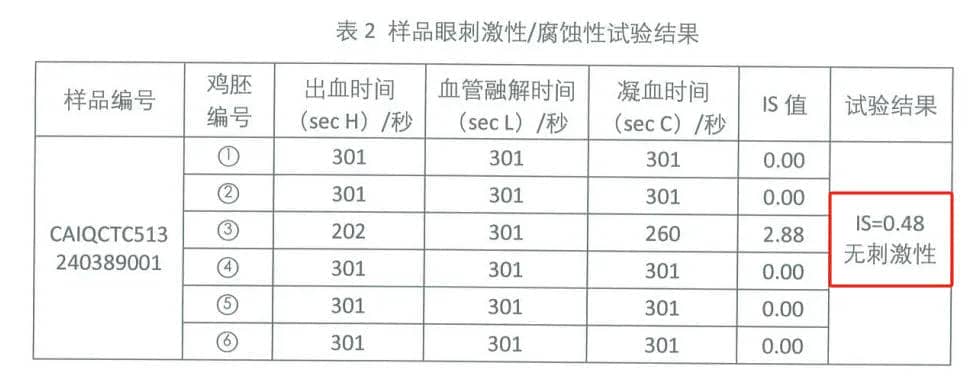
Formulation Guide: PMSoothe® Kava 97 is fully compatible with water-based serums and commonly-used thickeners. In HET-CAM anti-irritation tests against 377, a dosage of 0.5%–1% significantly reduced the irritation of the whitening actives, helping prevent post-inflammatory hyperpigmentation (PIH) caused by irritation.
Q:At the same dosage, does PMSoothe® Kava 97 perform significantly better than the older generation PMSoothe® 9728?
A: Yes, PMSoothe® Kava 97 delivers far superior performance. PMSoothe® Kava 97 represents our third-generation upgraded Kava ingredient, utilizing advanced SPEX extraction technology. The content of its core active Kavain is twice that of PMSoothe® 9728, and Kava 97 implements internal controls over the ratios of six active components, completely outperforming PMSoothe® 9728 in both efficacy and batch stability.
Q:What is the difference between Kava pepper “root extract” and commercial “root, stem, and leaf extract”?
A: The crucial differences lie in active concentration and safety. The soothing kavalactones are primarily concentrated in the roots and rhizomes of the plant. “Root, stem, and leaf extracts” dilute the active concentrations due to the heavy leaf mass and introduce alkaloids from the leaves that carry potential hepatotoxicity risks. Thus, pure root extraction is vastly superior in both efficacy and safety.
Q:Specific handling details regarding PMSoothe® Kava 97 during dissolution, stability, or compounding tests:
Q1: Precipitation after 7 days under refrigeration?
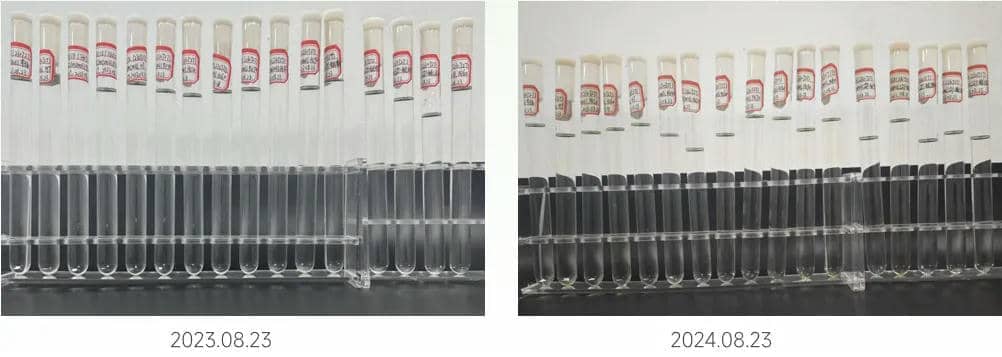
A:Our internal stability tests confirm no precipitation for up to 5 months under low temperatures. Precipitation in a finished formula is typically caused by compounding with high-molecular polymers or polysaccharides (like sodium hyaluronate or xanthan gum), which reduce free water availability. Try restoring to room temperature or heating slightly (below 45°C) to see if it re-dissolves.
Q2:Any negative impact if added at 80–90°C for 30 minutes during production?
A:No impact. PMSoothe® Kava 97 contains hydroxypropyl beta-cyclodextrin (spray-dried at over 100°C), and the active extract undergoes an 8-hour drying stage at 75°C during manufacturing without any degradation.
Q3:Difficult to dissolve via manual stirring?
A:We recommend using standard mechanical or magnetic stirrers in the lab, which will dissolve it rapidly; mild heating can also significantly accelerate dissolution.
Q4:When testing the anti-irritant efficacy, is it better to test the raw material aqueous solution directly or to make it into a basic formula?
A:For rapid screening or evaluating the raw material’s inherent ability to block a specific irritant, a simple aqueous dilution is sufficient. However, to test its buffering capacity within a complex formulation, or to evaluate long-term anti-wrinkle/repair effects, formulating it into a base formulation is highly recommended.
Q:Is your Kava extract effective against histamine-induced itching and erythema?
A: The efficacy is relatively limited due to divergent pathways. Histamine-induced pathways: This follows a “trigger-first, conduct-later” GPCR cascade. Histamine activates H1 receptors, multiplying internal second-messenger signals inside cells. Kava operates primarily via “ion-channel interception” and downstream “AP blocking”. Because the upstream GPCR signals have already amplified, downstream interception yields limited results. Kava’s Strength (Non-histamine irritations): Kava excels against stinging, heating, and burning induced by capsaicin or physical stimuli, because these follow a direct “neuronal firing” mode highly dependent on Action Potentials, which Kava cuts off directly at the master switch.