
PMWhite® Glabridin
Plamed Vision: Become the leader of natural cosmetic ingredients for sensitive skin.
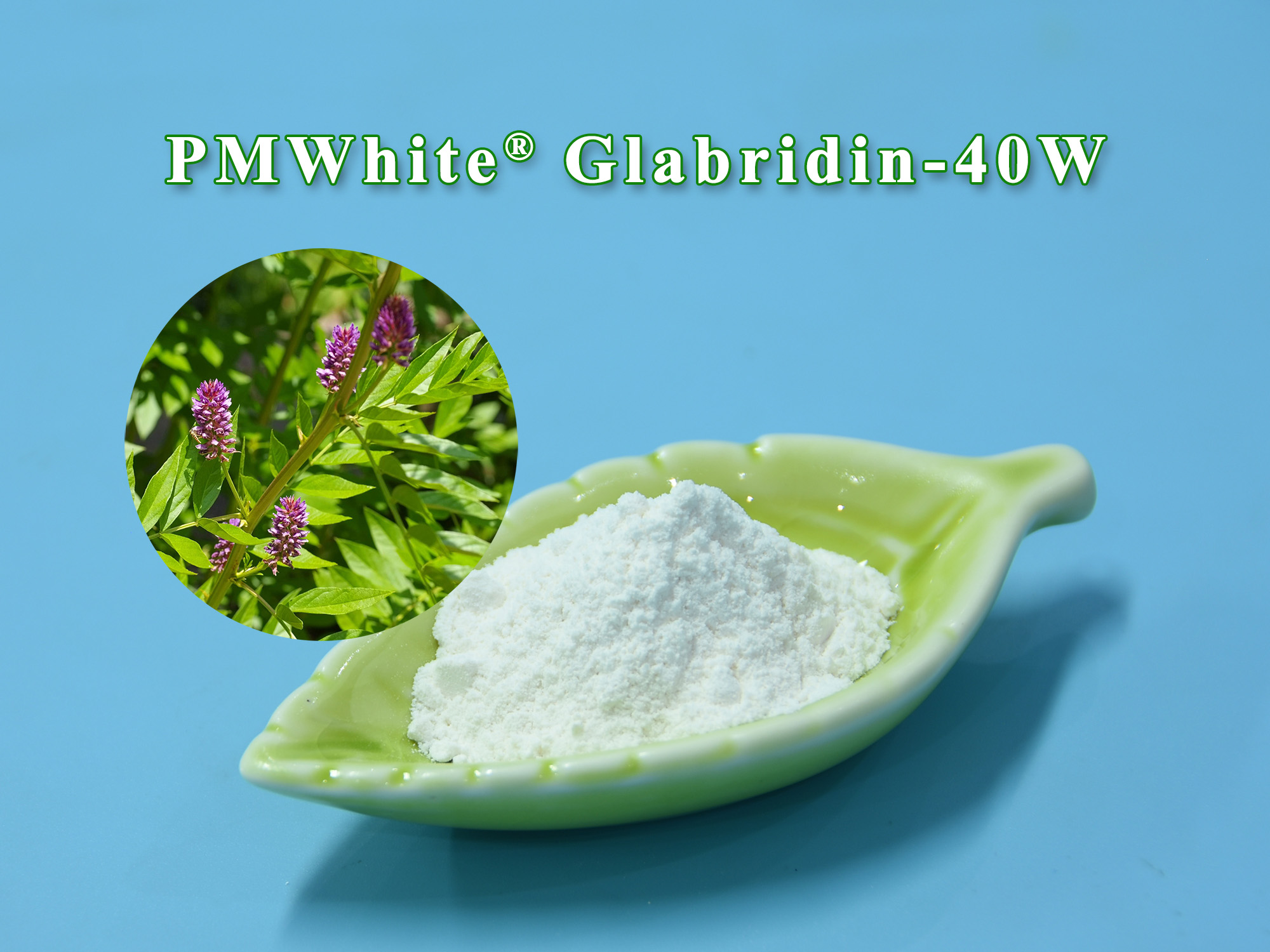
PMWhite® Glabridin
·Complete specifications, fine quality control; high purity and remarkable effect of product;
·Use high-quality Glycyrrhiza glabra as the raw material for extraction;
·Plamed has a Glycyrrhiza glabra planting base to ensure stable supply.
What is glabridin in cosmetics?
Item | Detail |
Product name | PMWhite® Glabridin |
INCI | GLYCYRRHIZA GLABRA (LICORICE) ROOT EXTRACT |
CAS | 59870-68-7 |
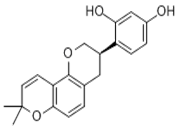
Molecular formula / weight | C20H20O4 / 324.37 g/mol |
Molecular Structure |
 |
Compound type | Isoflavonoid (licorice-specific flavonoid) |
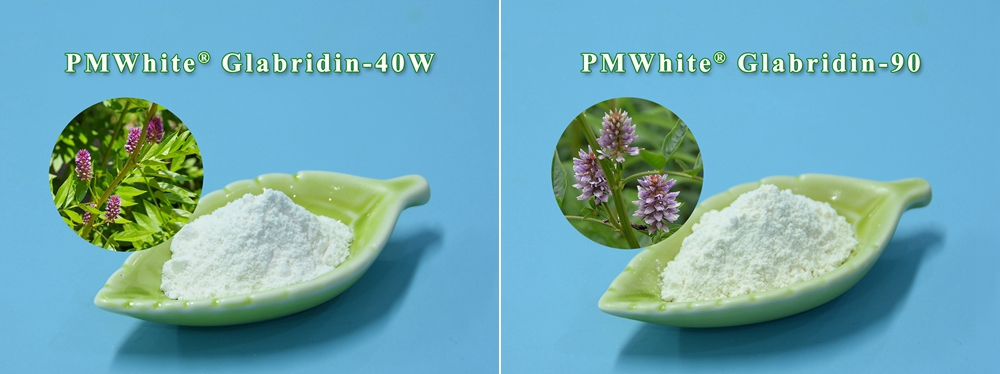
Available grades | 40% (Glabridin-40W) / 90% (Glabridin-90) / 95% (Glabridin-95) |
Soluble in | Butanediol recommended; water-soluble grade exists in the document set |
Reference dosage | 0.001%–0.1% (as pure active) |
Product IDs | PMWT0101 / PMWT0102 / PMWT0103 |
Minimal package | 100 g |
MOQ | 100 g |
Documents | 13 items verified — see Available Document |
Glabridin is a flavonoid of the isoflavonoid type extracted from the dried root of Glycyrrhiza glabra L., the licorice plant. It accounts for about 11% of the flavonoids in Glycyrrhiza glabra, and it is the compound behind licorice's reputation in brightening skin care. Only about 100 g of glabridin is extracted from 1,000 kg of dried licorice root — a yield so low, and an extraction process so demanding, that the industry calls glabridin "whitening gold". In vitro studies describe a six-channel brightening mechanism centred on tyrosinase inhibition, plus antioxidant and soothing support in the same molecule.
In short: PMWhite® Glabridin is Plamed's multi-grade natural brightening active — 40% for cost-driven full lines, 90% and 95% for premium serums — extracted from a licorice supply chain the company controls from planting base to COA.
What it is:
an isoflavonoid built on a lipophilic, conjugated skeleton (C20H20O4, 324.37 g/mol) — the glabridin structure explains both its affinity for oil-phase systems and the UV absorption discussed under Solubility & Stability.
How it works:
tyrosinase is the rate-limiting enzyme of melanin synthesis; glabridin inhibits it and works on five further channels listed under Benefits.
Where it fits:
brightening serums, essences, creams and masks positioned on natural-origin actives — see brightening solutions. Formulators usually assess glabridin next to other brightening routes before committing: the glutathione tripeptide, 3-O-ethyl ascorbic acid and ascorbyl glucoside are the three most common alternates or stacking partners, each working at a different point in the pigmentation pathway.
Glabridin extraction and the licorice supply base
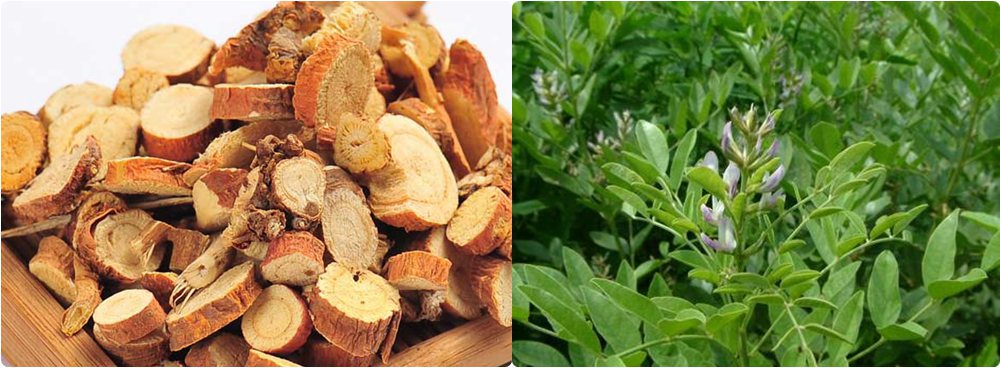
Glabridin extraction starts from the dried root and rhizome of Glycyrrhiza glabra L. (Leguminosae), known as licorice. The main Chinese producing areas are Xinjiang (Korla, Aksu and Shihezi — rich resources and good quality, both wild and cultivated) and the northeastern provinces; Europe, the Mediterranean countries, Russia, Siberia and Mongolia also have licorice distribution. Plamed runs a Glycyrrhiza glabra planting base to secure raw-material quality and stable supply. In cosmetics the dried root is the raw material of the standard Glycyrrhiza glabra extract — and, further purified, of glabridin itself.
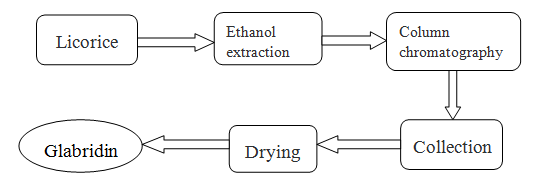
From licorice extract to glabridin powder: the flow chart
The full extraction and purification flow chart is shown below: dried licorice root → extraction → enrichment/purification → crystallization → glabridin powder (40% / 90% / 95% grades).
What are the glabridin specifications?
40% Glabridin — Manufacturer COA:
Items | Specifications |
Assay | 40% |
Appearance | White powder |
Loss on drying | ≤5.00% |
Residue on ignition | ≤2.00% |
Heavy metals | ≤20ppm |
As | ≤2ppm |
Total plate count | ≤1000cfu/g |
Yeast & mold | ≤100cfu/g |
Escherichia coli | Not detected |
Salmonella | Not detected |
90% Glabridin — Manufacturer COA:
Items | Specifications |
Assay | 90% |
Appearance | White powder |
Loss on drying | ≤5.00% |
Residue on ignition | ≤2.00% |
Heavy metals | ≤20ppm |
As | ≤2ppm |
Total plate count | ≤1000cfu/g |
Yeast & mold | ≤100cfu/g |
Escherichia coli | Not detected |
Salmonella | Not detected |
How to read this specification
A. The assay line is the selection line. An assay of 40% vs 90% directly determines both the cost per unit of active and the dosage required in the formula (see Grades & Selection).
B. Microbiology is the main risk area for a botanical extract. Total plate count, yeast & mold, E. coli and Salmonella are all controlled, and are backed by third-party Bureau Veritas reports covering pesticide residues, heavy metals and microbiology (see Available Document).
C. Heavy metals and arsenic are controlled as a pair. ≤20 ppm heavy metals plus ≤2 ppm arsenic is the standard two-marker limit for a plant-derived raw material.
Regulatory snapshot
China — Glycyrrhiza glabra root extract and glabridin are both listed in IECIC 2021. The NMPA Raw Material Safety Dossier (Attachment 14 / submission code) is supplied with each shipment.
International — recognized in international cosmetic ingredient inventories (PCPC).
Third-party safety — HET-CAM eye irritation and acute oral toxicity reports are included in the document list (see Available Document).
Which glabridin grade fits which product?
Grade | Product ID | Assay | Solvent / form guidance | Best-fit positioning |
PMWhite® Glabridin-40W | PMWT0101 | 40% glabridin | 1,3-butanediol recommended (per the product master list) | Mass-market lines across the full range — toners and emulsions, masks, body care — where cost is the deciding factor |
PMWhite® Glabridin-90 | PMWT0102 | 90% glabridin | Pre-disperse first, then add to the oil phase, or pre-disperse in butanediol | Mid-to-premium serums and creams |
PMWhite® Glabridin-95 | PMWT0103 | 95% glabridin | Same as above |
|
Three criteria for selection:
1. Cost structure. Glabridin-40W has the lowest cost per kilogram of active, which suits brand-line rollouts that need the ingredient present across an entire range. The 90% and 95% grades belong in a small number of SKUs where the unit price is high.
2. Formulation compatibility. With the high-purity 90% and 95% powders, pre-disperse in 1,3-butanediol before addition — this avoids local supersaturation and subsequent precipitation. Glabridin-40W can be added directly.
3. Claim depth. Match the claim tier to the grade tier: a premium targeted-brightening claim calls for the 95% grade, while a basic even-looking-skin-tone claim works with Glabridin-40W. Keeping the two aligned avoids the mismatch of a low grade carrying a high claim.
What are the glabridin skin benefits?
Glabridin skin benefits described in in-vitro research cluster into three groups — enzyme-level brightening, antioxidant defense, and soothing support. The brightening mechanism is unusually broad: studies describe six parallel channels rather than a single target.
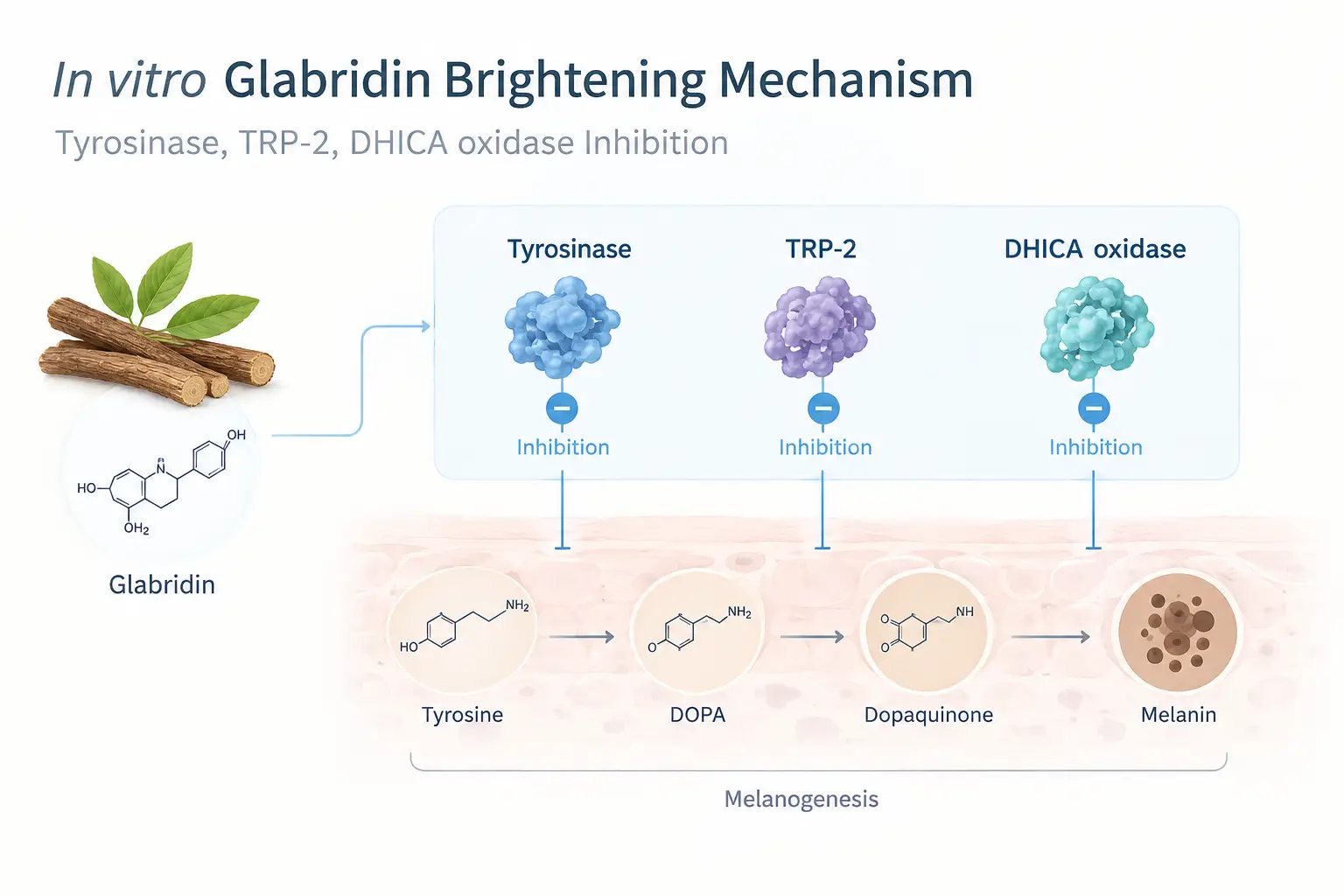
Brightening at six channels
In vitro studies describe the glabridin brightening mechanism as:
(1) inhibiting tyrosinase, the rate-limiting enzyme of melanin synthesis;
(2) inhibiting dopachrome tautomerase (TRP-2);
(3) inhibiting DHICA oxidase;
(4) acting as an endothelin antagonist;
(5) raising the skin's total antioxidant capacity;
(6) scavenging oxygen free radicals and their chain reaction.
Through these combined effects, research describes interference with DHI polymerization and dopachrome production — i.e., melanin formation and transport are slowed at several points at once, which is the basis for its use in products promising more even-looking tone and fewer visible dark spots.
Antioxidant glabridin
Glabridin antioxidant activity has been measured in vitro: the molecule scavenges reactive oxygen species generated by metabolism and UV exposure, limiting oxidative damage to skin-surface biomolecules before it accumulates. As a glabridin antioxidant for skin, this is the supporting layer that keeps new pigmentation triggers down while the enzyme-level brightening works. Its conjugated molecular structure also absorbs in the UV range — worth knowing, but glabridin is not a UV filter and does not replace sunscreen; it is positioned as an antioxidant support, not a sun-protection active.
Soothing support
In vitro work describes glabridin as reducing nitric oxide (NO) production in macrophages and the expression of inducible NO synthase (iNOS) — mechanisms associated with a calming, soothing effect on skin. This makes it a natural fit for brightening lines aimed at skin that also needs a low-irritation profile.
What is glabridin solubility in formulas?
Glabridin is lipophilic. The 40% / 90% / 95% grades disperse in oil-phase systems and dissolve in 1,3-butanediol — the recommended solvent in Plamed's specification. For water-phase systems, pre-disperse in butanediol before adding.
A water-soluble grade exists in Plamed's document set. The verified TDS list includes Water-Soluble Grades (built on the PCR supramolecular technology platform).
Stability is documented, not assumed. A Stability Data Report covers the PCR Water-Soluble and Standard Grades (thermal & light stability).
Storage: cool, dry place, sealed, away from direct sunlight and oxidizing agents
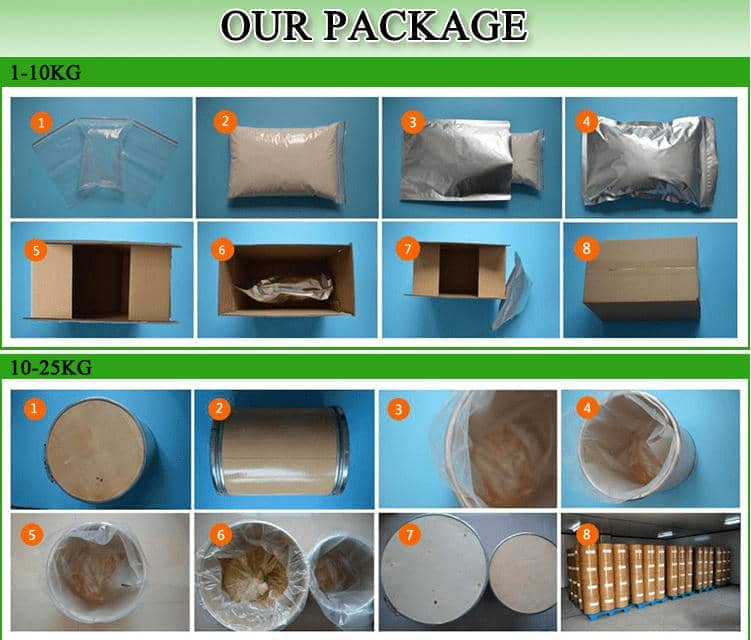
Package: 25 kg paper drums with two plastic bags inside for bulk; minimal package 100 g for trials.
Formulation takeaway: pre-disperse the 90/95 grades in 1,3-butanediol, add in the cool-down phase, and keep the drum sealed against light and air — the three conditions that protect a low-yield, high-value active to the end of shelf life.
Where is glabridin used in skin care?
Glabridin in skincare is concentrated in brightening-positioned leave-on formats. Typical glabridin products for skin include brightening serums, essences, creams, lotions, toners and masks — glabridin for face care is the core use. In glabridin skin products, the active pairs naturally with natural-origin positioning, and "glabridin skincare" claims follow the same story:
Product format | Reference dosage (as pure active) |
Brightening serum / essence | 0.02%–0.1% |
Brightening cream / lotion | 0.005%–0.05% |
Toner / mask | 0.001%–0.05% |
Attention:
The reference dosage is based on pure active. At the 40% grade, the raw-material dosage is 2.5× the pure-active figure.
Related reading:
For the mechanism in more depth, see the glabridin benefits write-up; for the botanical supply chain behind it, see licorice extract manufacturing.
Which reference formulas show glabridin in a finished product?
Formula 1 · Brightening cream
Ingredient | Content (%) | Ingredient | Content (%) |
PMWhite® Glabridin | 0.1 | Hydrogenated polyisobutene | 4.0 |
Magnesium aluminosilicate | 0.5 | Glycolic acid | 5.0 |
Xanthan gum | 0.5 | Ammonium hydroxide | to pH 4.0 |
Cetyl alcohol | 1.0 | Preservative | 0.5 |
Stearic acid | 4.0 | Refined water | Add to 100 (84.40) |
Formula 2 · Brightening night cream
Ingredient | Content (%) |
PMWhite® Glabridin | 0.003 |
Glycerin | 5.0 |
Stearic acid | 15.0 |
Propylene glycol | 3.0 |
Cetyl alcohol | 1.0 |
Potassium hydroxide | 0.7 |
Refined water | Add to 100 (75.30) |
Is glabridin safe for cosmetics?
Glabridin is an established cosmetic ingredient with three layers of safety documentation:
China — Glycyrrhiza glabra root extract and glabridin are both listed in IECIC 2021 (the Inventory of Existing Cosmetic Ingredients in China) and may be used in conventional cosmetic products on the Chinese market. The NMPA Raw Material Safety Dossier is supplied with each shipment.
International — recognized in international cosmetic ingredient inventories (PCPC).
Third-party testing — HET-CAM eye irritation test and acute oral toxicity test (third-party safety and toxicology reports), plus Bureau Veritas testing for pesticide residues, heavy metals and microbiology (see Available Document).
There are no reports indicating that glabridin is unsafe for external cosmetic use at the reference dosages stated above.
Where can I buy glabridin powder wholesale?
Product supply information:
Item | Value |
Product | PMWhite® Glabridin (Glabridin-40W / -90 / -95) |
Product IDs | PMWT0101 / PMWT0102 / PMWT0103 |
INCI | GLYCYRRHIZA GLABRA (LICORICE) ROOT EXTRACT |
CAS | 59870-68-7 |
Specification | 40% / 90% / 95% glabridin (white powder) |
Soluble in | Butanediol recommended; water-soluble grade in document set |
Reference dosage | 0.001%–0.1% (as pure active) |
Minimal package | 100 g |
MOQ | 100 g |
Samples | Available on request |
Storage | Cool, dry place; away from direct sunlight and oxidizing agents |
Package | 25 kg paper drums with two plastic bags inside |
Available Document of PMWhite® Glabridin
Technical Data Sheet (TDS - PMWhite® Glabridin-90)
Technical Data Sheet (TDS - PMWhite® Glabridin-40W)
Certificate of Analysis (COA - Various Grades)
Material Safety Data Sheet (MSDS - PMWhite® Glabridin-90)
Material Safety Data Sheet (MSDS - PMWhite® Glabridin-40W)
Composition Statement / Compositional Breakdown (Water-Soluble & Standard Grades)
Manufacturing Process Flowchart
Analytical / HPLC Test Method & Chromatogram Reports
Stability Data Report (PCR Water-Soluble & Standard Grades)
Third-Party Safety & Toxicology Reports (HET-CAM Eye Irritation, Acute Oral Toxicity)
Third-Party Efficacy & Bioavailability Reports (Transdermal Delivery, Whitening Assay)
Third-Party Purity & Safety Reports (Bureau Veritas Pesticide Residue, Heavy Metals & Microbial)
Regulatory Statements (Non-TSE/BSE Declaration, Pesticide Declaration)
NMPA Raw Material Safety Dossier (Attachment 14 / Submission Code)
Product Brochure & Technical Presentation Dossier
To request a quote or a sample, contact Plamed Green Science Group here.
Glabridin powder factory and supply chain(H3)
Plamed is a glabridin powder factory and glabridin manufacturer with a difference that is easy to verify: the licorice comes from a company-run Glycyrrhiza glabra planting base (Xinjiang origin region), so raw-material identity is controlled before extraction starts, not just tested after. Among wholesale glabridin manufacturers and glabridin extract manufacturers, this vertical integration is what keeps supply stable while the raw root market fluctuates.
Glabridin price and wholesale supply(H3)
Glabridin price reflects the extraction economics — only ~100 g of glabridin per 1,000 kg of root, which is why the industry calls it "whitening gold". For wholesale glabridin supply, price depends on grade (40% / 90% / 95%), order volume and destination documentation; request a quotation matched to your volume.
Wholesale glabridin powder: MOQ and package(H3)
Wholesale glabridin powder starts from a 100 g minimal package (PMWT0101) — one of the lowest entry points for a premium active — and scales to 25 kg paper drums for production. Whether you are screening glabridin powder manufacturers for a spot-correcting serum or a full brightening line, request the quotation and the 13-document set together.
Glabridin powder for sale — documents per shipment(H3)
Glabridin powder for sale direct from the manufacturer ships with TDS, COA and MSDS attached per shipment, plus the third-party reports on request; glabridin for sale in trial quantities starts at the same 100 g minimal package. As an experienced glabridin supplier, Plamed supports sampling before commitment: for sampling and distribution terms, visit the distributor page or contact us.
Q1: What is glabridin?
A: Glabridin is the main flavonoid of licorice (Glycyrrhiza glabra) — an isoflavonoid (CAS 59870-68-7, C20H20O4, 324.37 g/mol) extracted from dried licorice root at a yield of only ~100 g per 1,000 kg, which is why the industry calls it "whitening gold". Plamed supplies it as PMWhite® Glabridin in 40%, 90% and 95% grades.
Q2: What are the glabridin skin benefits?
A: The glabridin benefits for skin described in in vitro research cluster into six parallel channels: tyrosinase inhibition, TRP-2 and DHICA oxidase inhibition, endothelin antagonism, raised total antioxidant capacity, and free-radical scavenging — together slowing melanin formation and transport. It adds antioxidant and soothing support in the same molecule.
Q3: Is glabridin the same as licorice extract?
A: No — licorice extract is the whole-plant extract with many actives; glabridin is one purified flavonoid within it, at about 11% of the flavonoid content. This is a common question: the 40% grade is closer to an enriched extract, while 90% and 95% are high-purity glabridin powders. A "glabridin licorice extract" label, read the other way round, normally means the same enriched-extract products.
Q4: Which glabridin grade should I use?
A: Use 40W for cost-driven full lines, 90% for mid-premium serums and creams, and 95% for flagship spot-correcting products — the grade should match the claim depth and the cost target (see Grades & Selection).
Q5: Is glabridin soluble in water?
A: The standard grades are lipophilic: they disperse in oil phases and dissolve in 1,3-butanediol, Plamed's recommended solvent. A water-soluble grade exists in the document set built on the PCR supramolecular platform — ask Plamed for its current availability.
Q6: What dosage of glabridin is used in cosmetics?
A: The reference dosage is 0.001%–0.1% as pure active, split by format: 0.02%–0.1% in serums, 0.005%–0.05% in creams and lotions, 0.001%–0.05% in toners and masks. At the 40% grade, the raw-material dosage is 2.5× the pure-active figure.
Q7: Is glabridin safe for skin?
A: It is listed in IECIC 2021 for the Chinese market and recognized in international inventories (PCPC), with third-party HET-CAM eye-irritation and acute oral toxicity reports in Plamed's document set. There are no reports of unsafe external use at the reference dosages.
Q8: Why is glabridin so expensive?
A: Because of the extraction economics: about 100 g of glabridin comes from 1,000 kg of dried licorice root, through a demanding purification process — hence the industry nickname "whitening gold". Plamed's planting base is what keeps supply stable at that cost structure.
Q9: Is it glabridin, glabridine or glabridina?
A: The standard English spelling is glabridin; "glabridine" is a common variant, and "glabridina" is the Spanish/Italian form — all refer to the same molecule, CAS 59870-68-7. The INCI on this product is GLYCYRRHIZA GLABRA (LICORICE) ROOT EXTRACT.
Q10: What is the MOQ and how is glabridin packed?
A: The minimal package is 100 g — among the lowest entry points for a premium brightening active — and bulk supply is packed in 25 kg paper drums with two plastic bags inside. PMWhite® Glabridin is supplied under Product IDs PMWT0101 / PMWT0102 / PMWT0103;Contact Plamed for a quote and samples, or reach a local distributor.