
Why Has Exfoliation Traditionally Been Associated with Barrier Damage?
When it comes to skin resurfacing and peeling, the immediate association for many is more aggressive desquamation, conspicuous flaking, and rapid visible changes in skin condition. But if the goal of skin resurfacing is to improve roughness, dullness, and uneven texture, shouldn't we also ask whether these changes compromise the skin barrier or increase the risk of skin sensitivity?
This perspective is not intended to arbitrarily polarize skin resurfacing against barrier health, nor does it diminish the tangible value of effective exfoliation. Rather, it serves as a critical reminder: resurfacing efficacy and barrier integrity can indeed coexist harmoniously. Exfoliating without barrier damage does not mean compromising peeling efficacy; instead, it is achieved by shifting the biological target of exfoliation, thereby delivering both optimal renewal and barrier protection simultaneously.
Salicylic Acid vs. PMRefresh® Willow: How Do They Differ in Their Effects on the Skin Barrier After Exfoliation?
"Barrier-sparing exfoliation" is not a dilution of keratolytic performance; rather, it introduces a well-defined product value proposition: executing precise stratum corneum management while maintaining a stable, undisturbed epidermal state, ensuring that exfoliation and barrier defense are no longer viewed as a binary choice..
Because conventional acid-based chemical peels struggle to meet these twin demands, the industry requires novel biological targets and an alternative resurfacing pathway. To address this, Plamed has pioneered the concept of "endogenous exfoliation"—a biological approach designed to deliver both potent exfoliating efficacy and superior barrier protection.
When evaluating exfoliating active ingredients, assessing stratum corneum thinning alone is no longer sufficient. A comprehensive, multi-dimensional evaluation must further address:
l Whether stratum corneum modulation is supported by validated efficacy evidence;
l Whether the epidermal barrier structure remains intact without micro-damage;
l Whether the ingredient necessitates an adaptation/tolerance-building phase or triggers cutaneous irritation.
Plamed's PMRefresh® Willow fulfills all three benchmarks, directly addressing the evolving consumer demand for effective exfoliation without barrier compromise.
Let us first examine the epidermal tissue morphology following treatment with conventional acid peeling versus PMRefresh® Willow at equivalent dosages:
At an equivalent concentration of 2%, while salicylic acid demonstrated pronounced exfoliating capability, distinct structural abnormalities in the epidermal barrier were observed (as highlighted in histological analysis). In contrast, the PMRefresh® Willow group exhibited noticeable stratum corneum refinement with no observable structural disruption to the epidermal barrier.
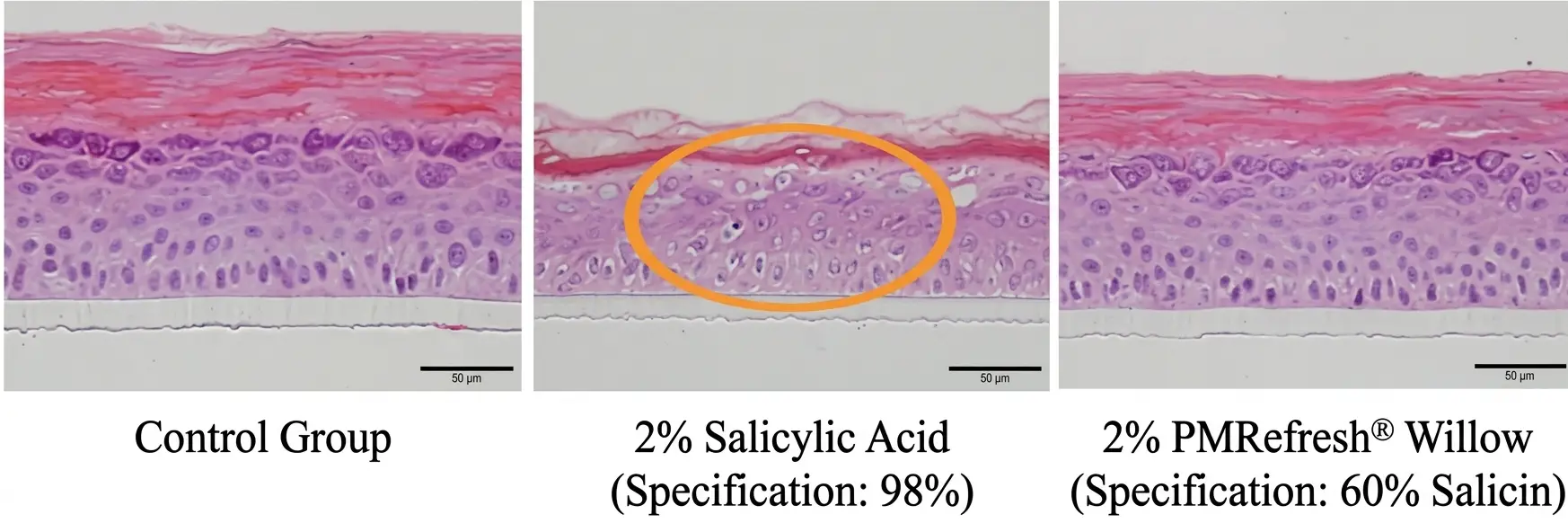
Histological Morphology Comparison in a 3D Reconstructed Human Epidermis (RHE) Model
Group | Average Thickness (μm) | P-value (vs BC) | Inhibition Rate (vs BC) |
Blank Control | 51.05 | / | / |
98% Salicylic Acid-2% | 24.36 | 0.000** | 52.28% |
PMRefresh® Willow-2% | 40.51 | 0.002** | 20.65% |
Figure: Summary of Stratum Corneum Thickness and Histological Morphology in 3D Reconstructed Human Epidermis Model
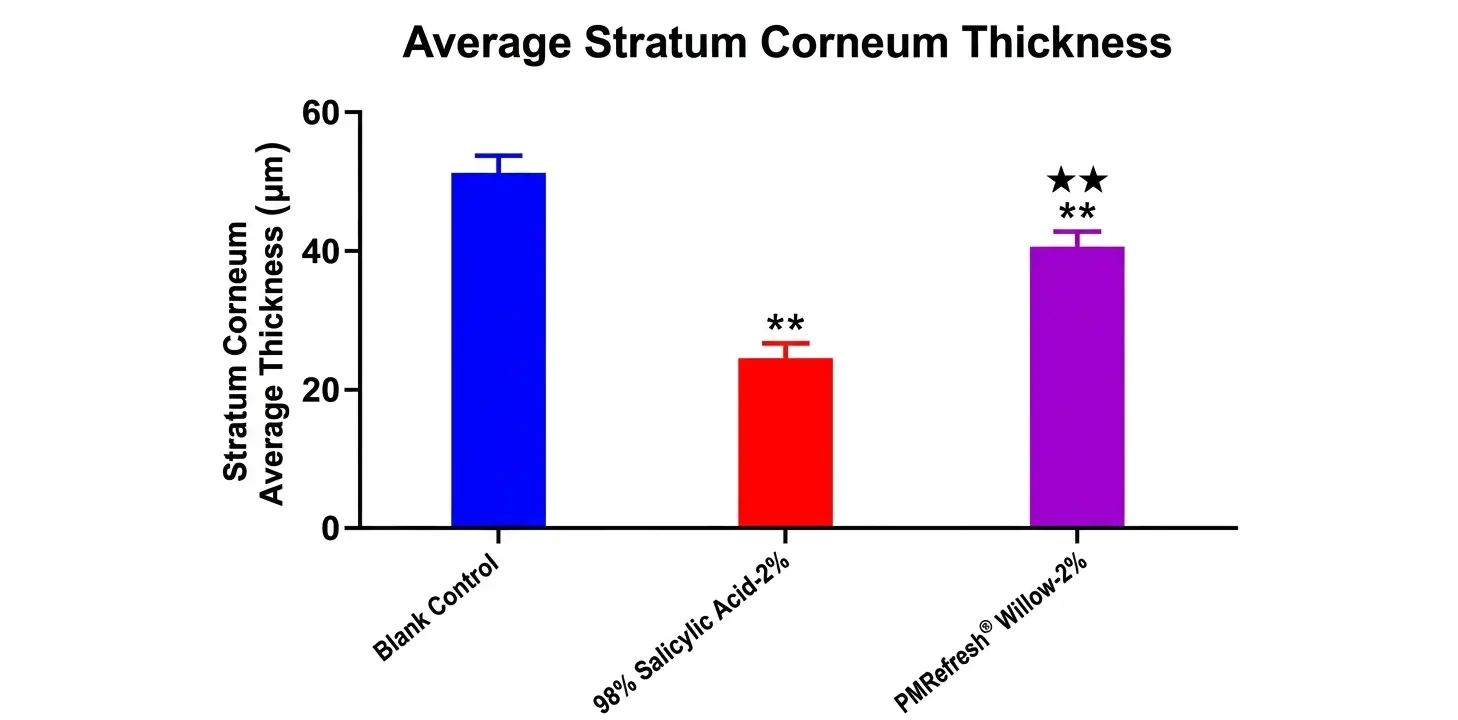
Bar chart showing the average thickness of the stratum corneum in 3D epidermal skin models
In the standardized 3D reconstructed human epidermis model, histological morphology and stratum corneum thickness were evaluated following treatment with 98% high-purity Salicylic Acid and PMRefresh® Willow:
l 2% Salicylic Acid: reduced stratum corneum thickness by 52.28%;
l 2% PMRefresh® Willow: reduced stratum corneum thickness by 20.65%.
These findings indicate that under the present model and testing conditions, both treatments induced observable stratum corneum modulation, albeit with distinct magnitudes of action.
The significance of this study lies not merely in determining which active ingredient exerts the most aggressive peeling action, but in demonstrating that exfoliation is not a binary choice between "effective" and "ineffective." Quantitative thinning data answers whether an active has an effect; histological morphology reveals the physiological and structural state of the epidermis through which that effect is achieved.
PMRefresh® Willow does not seek maximal, uncontrolled stratum corneum ablation. Instead, grounded in verifiable desquamation efficacy, it establishes a measured, controlled equilibrium between skin resurfacing and epidermal structural integrity.
At 1.5× the Concentration, PMRefresh® Willow Matches Salicylic Acid in Exfoliation Efficacy
To further validate the exfoliating efficacy of PMRefresh® Willow, we conducted a comparative evaluation between 2% Salicylic Acid and 3% PMRefresh® Willow in the 3D epidermal skin model. The results demonstrated that when PMRefresh® Willow was applied at 1.5 times the concentration of salicylic acid, its exfoliating performance closely matched that of salicylic acid, confirming its robust exfoliation efficacy.
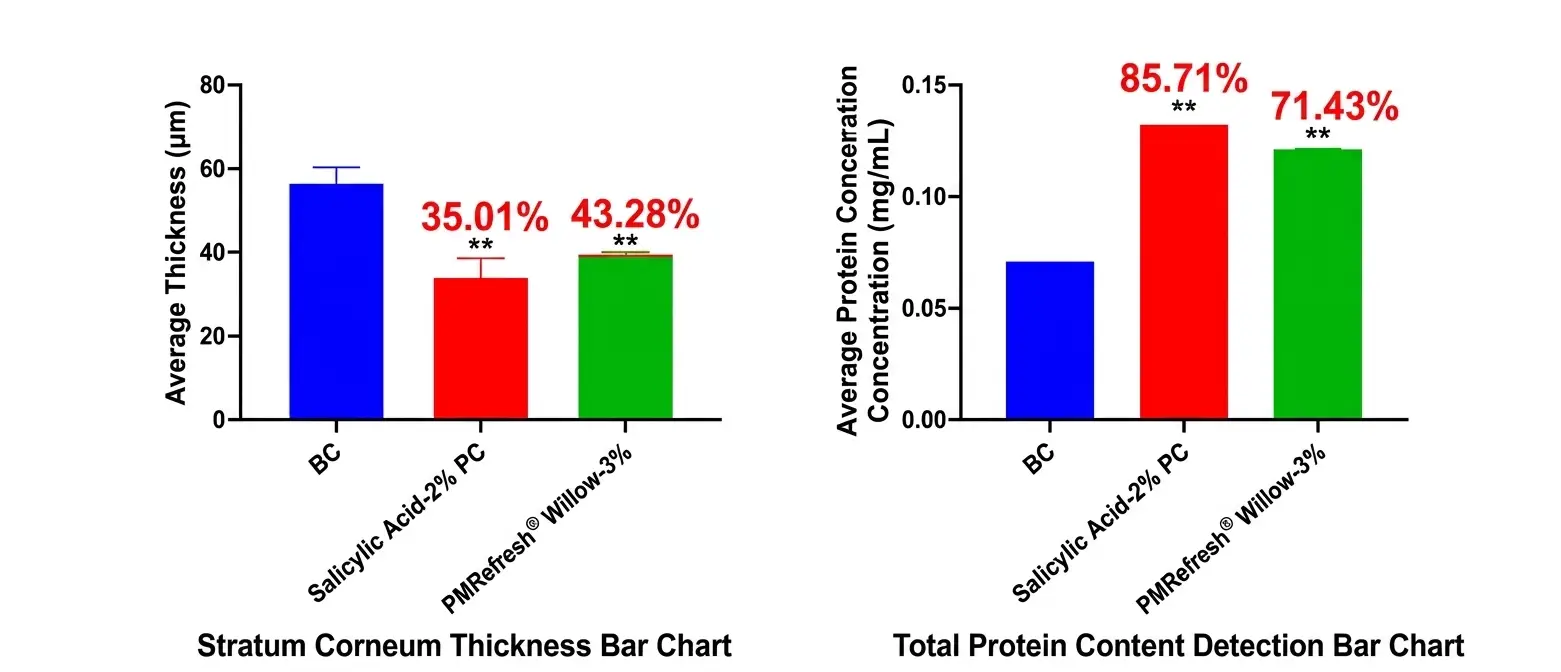
Building upon the 3D skin model evaluation, we further performed cross-validation using an ex vivo pig skin model. Evaluating the impact of both active ingredients across diverse biological models provided comprehensive, multi-angle evidence substantiating the stratum corneum regulatory capacity of PMRefresh® Willow.
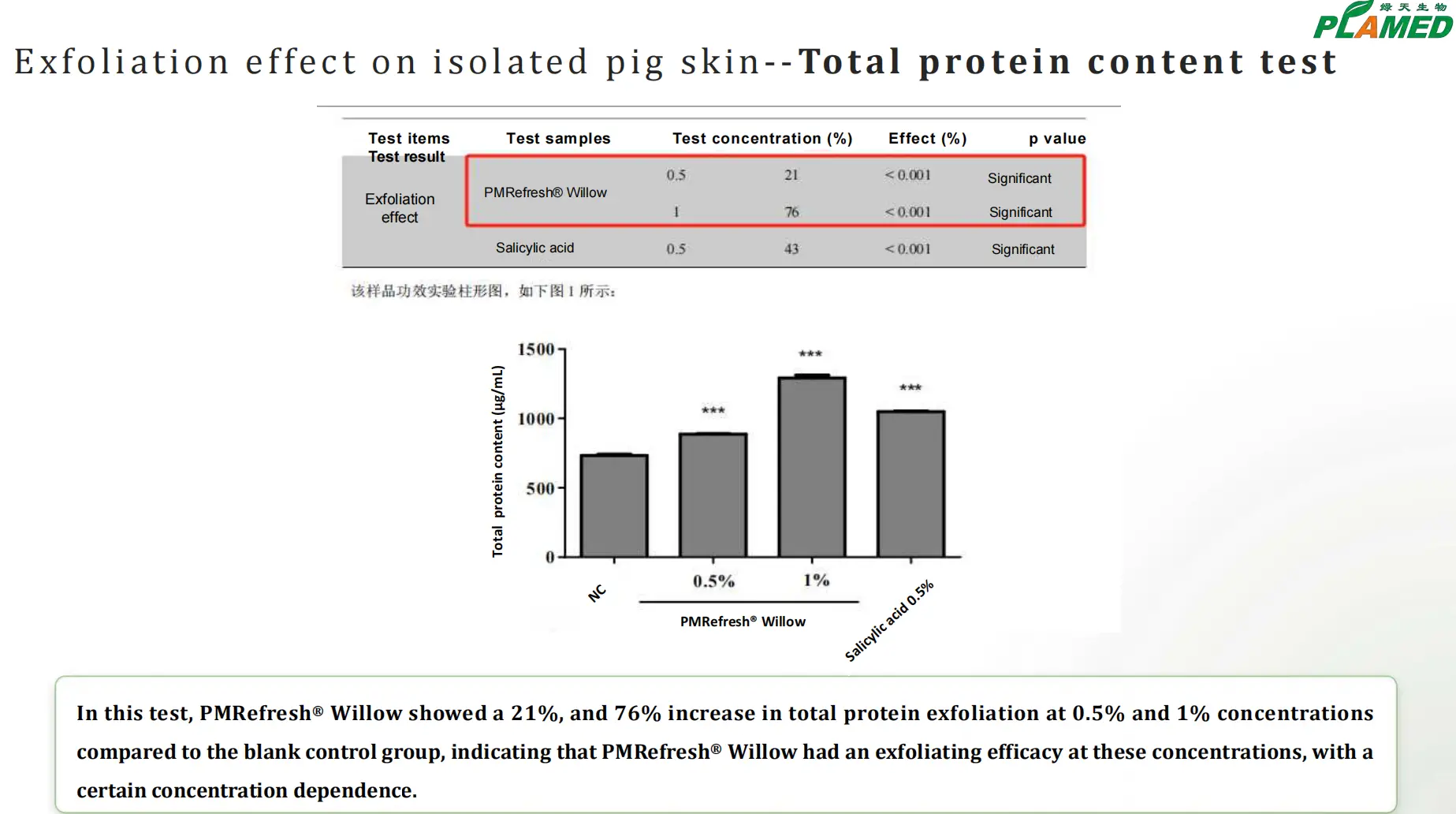
Under these experimental conditions, the ex vivo data corroborated that at 1.5 times the dosage of salicylic acid, PMRefresh® Willow delivered a comparable level of exfoliating efficacy.
From Models to Real People: Do the Results Hold Up in a 28-Day Study of 60 Participants?
While in vitro and ex vivo models elucidate tissue-level effects on the stratum corneum, whether these benefits translate into tangible skin-refining experiences requires rigorous in vivo clinical validation. To evaluate the real-world performance of PMRefresh® Willow, we recruited 60 human subjects for a comprehensive 28-day clinical efficacy study at two active concentrations (0.5% and 2.0%).
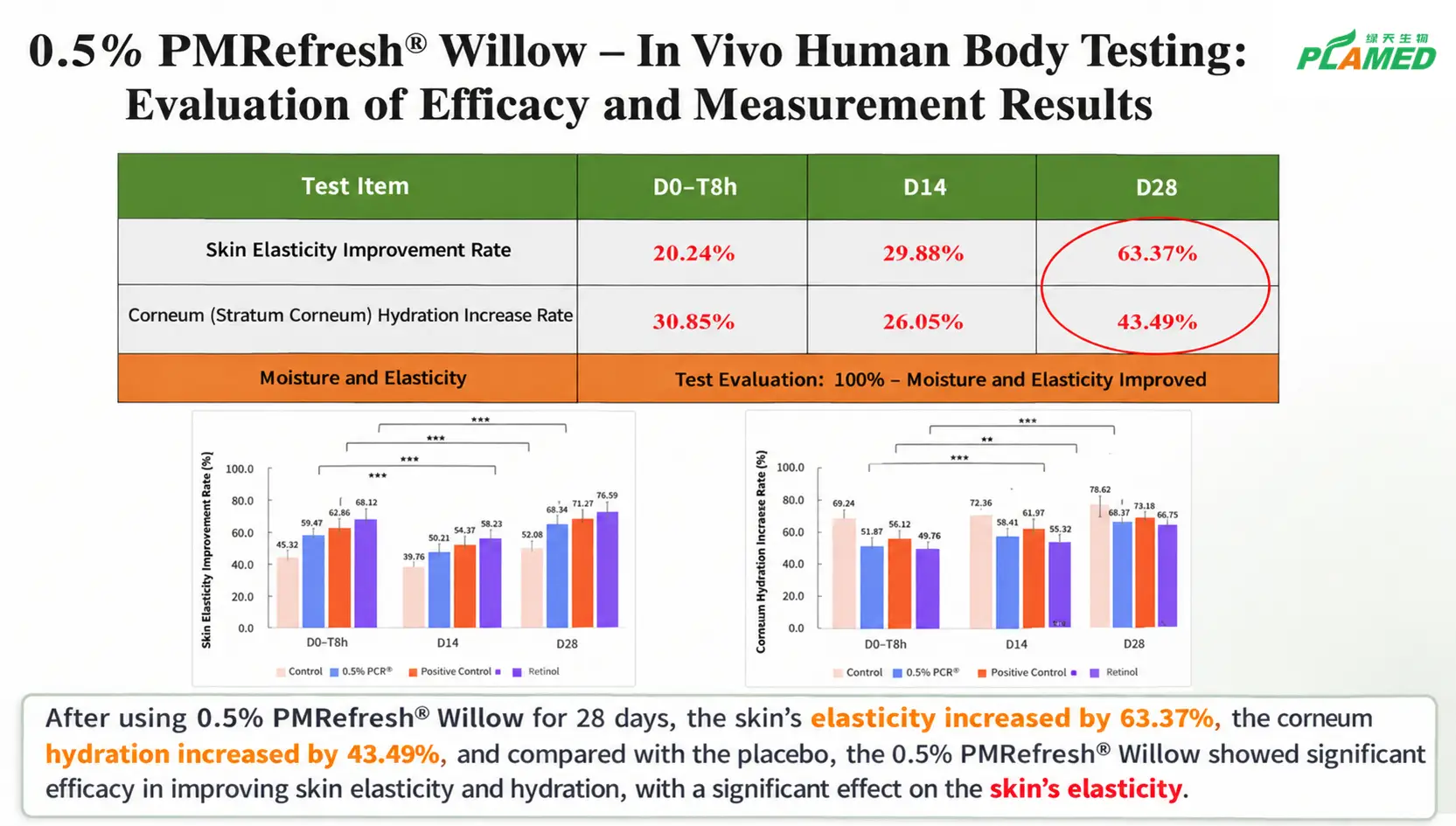
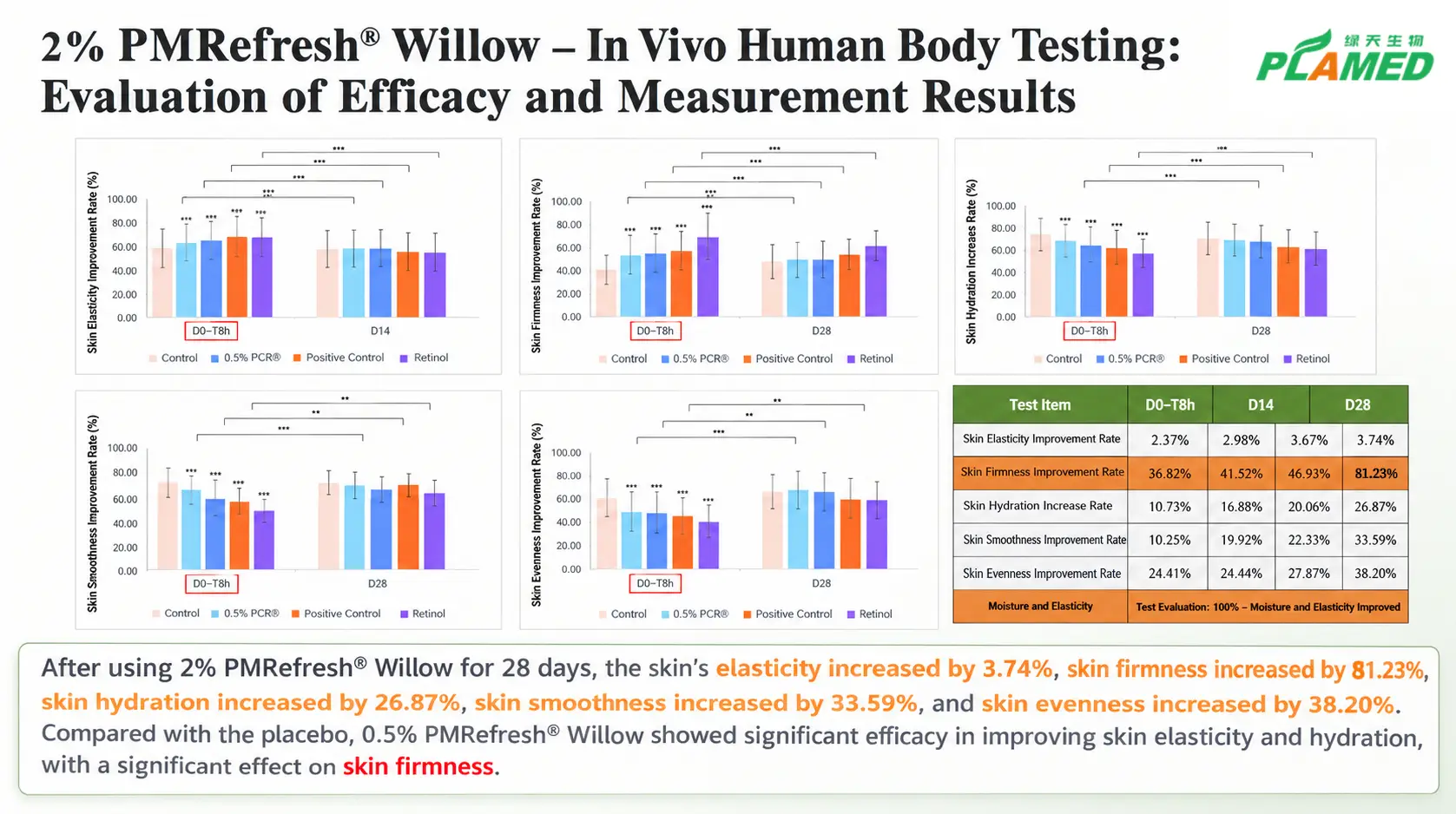
"Gentle Exfoliation" is frequently misconstrued as weak action or negligible visible improvement. However, true scientific mildness should never come at the expense of clinical efficacy. Prior multi-model studies demonstrated that PMRefresh® Willow modulates desquamation-related proteins in ex vivo skin models. In a 28-day human efficacy study, both the 0.5% and 2.0% PMRefresh® Willow test groups showed improvements in skin roughness and the stratum corneum desquamation index.
Specifically, in the 2.0% test group over 28 days:
· • Skin Roughness: improved by 81.23%;
· • Stratum Corneum Desquamation Index: improved by 33.59%;
· • Skin Smoothness: enhanced by 26.87%;
· • Epidermal Thickness Parameters: improved by 38.20%;
· • Skin Lightness (L* value): increased by 3.74%.
These clinical findings demonstrate that the value of PMRefresh® Willow extends far beyond a subjective "mildness" concept—it is firmly rooted in observable, quantifiable stratum corneum management.
True gentle resurfacing does not mean inadequate desquamation; it represents sustainable exfoliation that retains visible renewing efficacy without compromising the epidermal barrier.
Instead of Stripping Away Dead Skin Cells, Let the Skin Renew Them Naturally(H2)
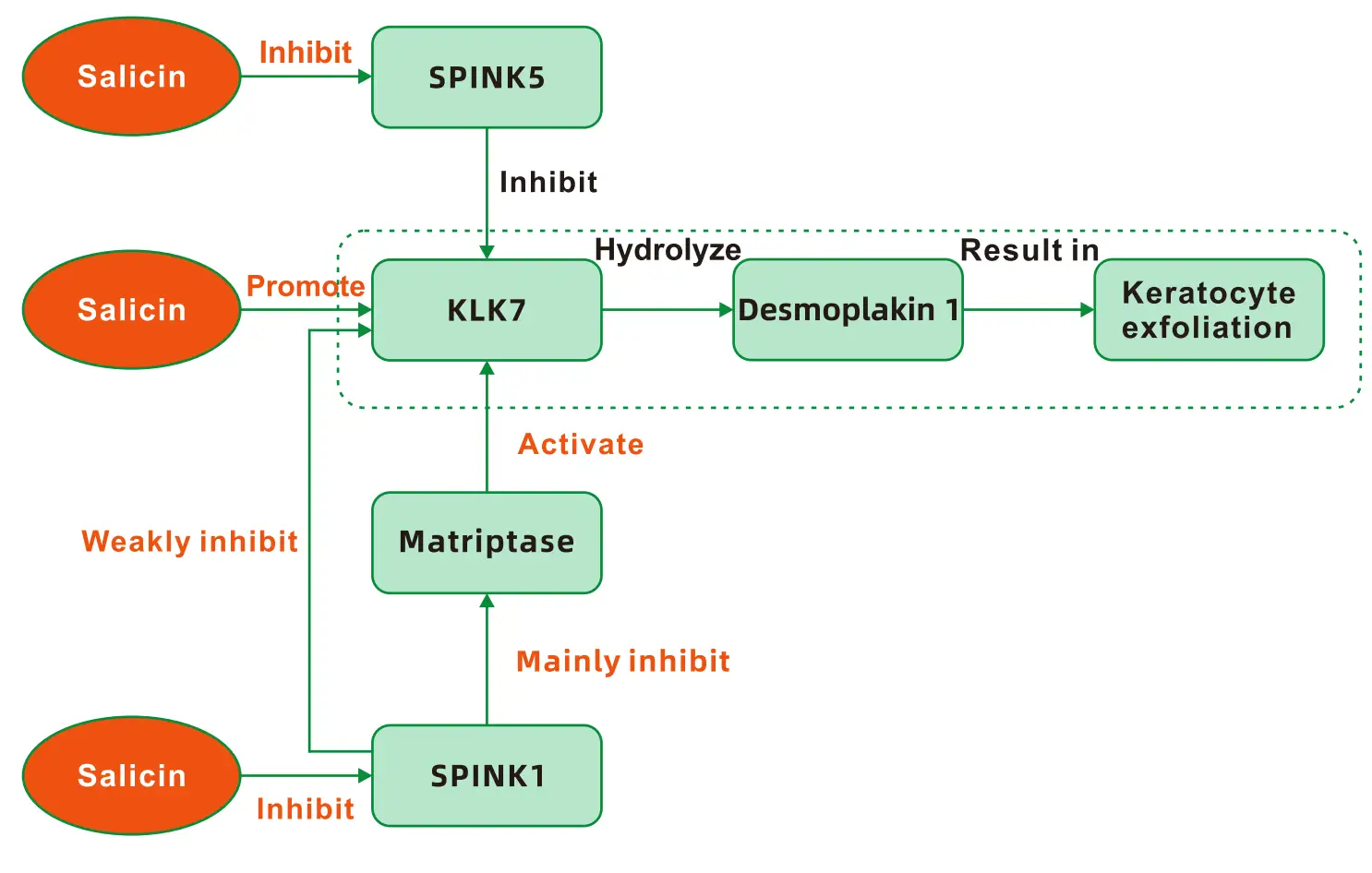
This mechanism is associated with three key regulatory pathways involving KLK7, SPINK5, and SPINK1. KLK7 is a serine protease involved in the degradation of intercellular junctions in keratinocytes, which help maintain cohesion between corneocytes. SPINK5 and SPINK1 are protease inhibitors involved in regulating the exfoliation process.
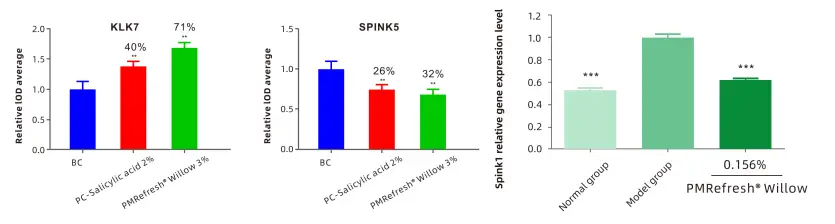
In a 3D reconstructed human epidermis model, treatment with 3% PMRefresh® Willow significantly increased KLK7 levels by 71% and reduced SPINK5 levels by 32%. In a keratinocyte model, treatment with 0.156% PMRefresh® Willow significantly reduced SPINK1 gene expression by 38%.
These findings suggest that PMRefresh® Willow may support endogenous exfoliation through coordinated regulation of these pathways: promoting KLK7-associated processes while reducing SPINK5- and SPINK1-related inhibition of desquamation. This coordinated mechanism may help facilitate the natural shedding of aged corneocytes.
The Goal of Exfoliation Isn't “Thinner Skin”—It's Controlled Renewal
The true value of effective resurfacing lies not merely in thinning the stratum corneum, but in ensuring that epidermal renewal aligns with product objectives, tissue health, and long-term user tolerance. PMRefresh® Willow does not seek to claim crude superiority over other peeling agents; rather, it introduces a biologically rational resurfacing pathway that achieves reliable keratolytic renewal while eliminating undue stress on the skin barrier.
Skin renewal should not be judged solely by how much stratum corneum is stripped away, but by whether that transformation occurs within healthy biological boundaries.
This approach offers formulators a different way to develop next-generation exfoliating skincare products, balancing visible skin renewal with skin barrier care.