
Plamed’s Glutathione (GSH) – Antioxidant & Skin-Brightening Active
High-Purity 98% Reduced Glutathione Produced by Enzymatic Synthesis to Help Combat Oxidative Stress, Improve Uneven Skin Tone, and Support Radiant-Looking Skin.
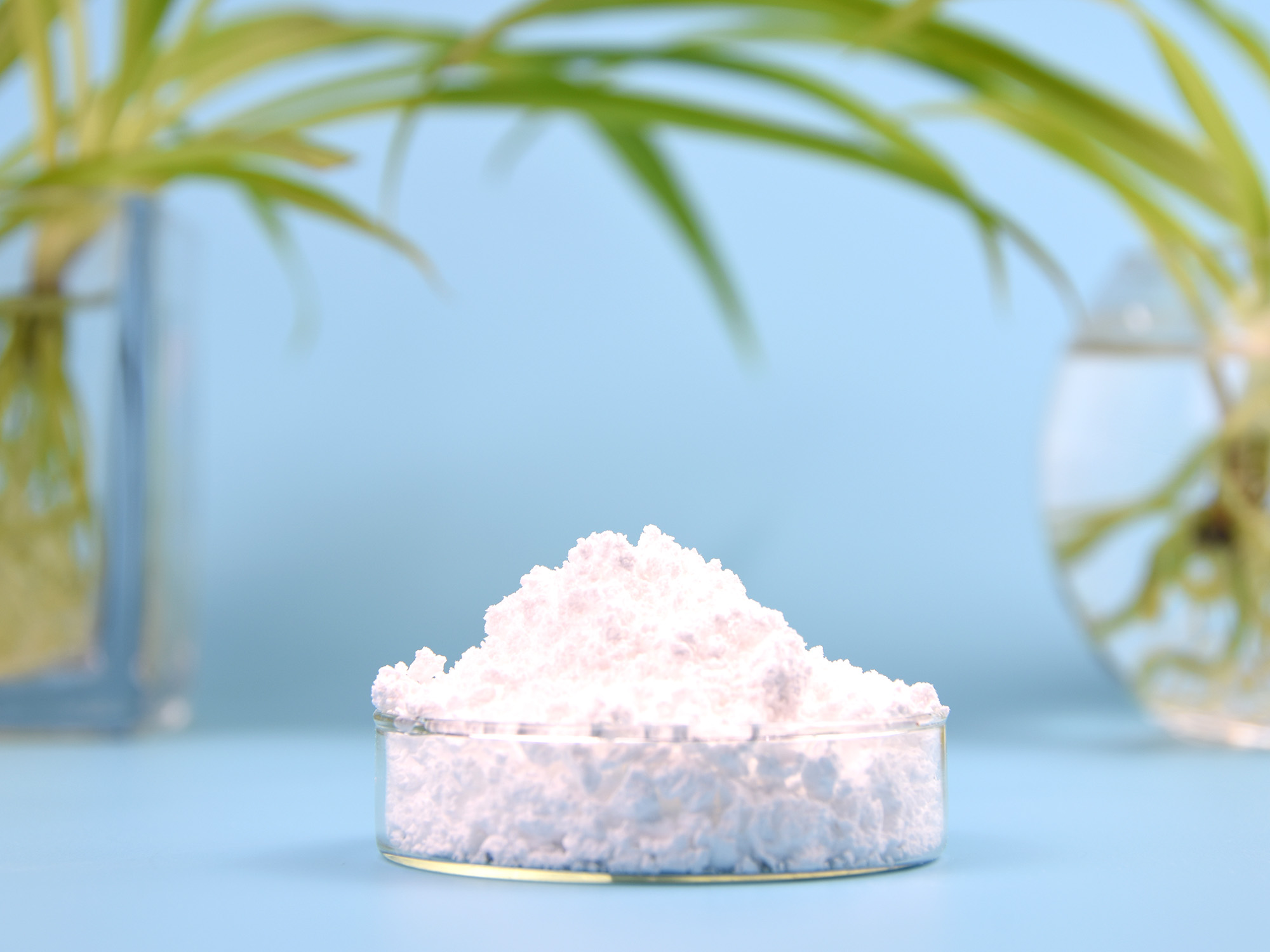
Glutathione
Glutathione is an antioxidant and skin-brightening active ingredient that helps scavenge free radicals, inhibit melanin formation, improve dull skin tone and hyperpigmentation, and provide antioxidant protection. It is widely used in skin-brightening and anti-aging skincare formulations.
Plamed produces 98% reduced glutathione (GSH) using an enzymatic synthesis process, offering high purity, good water solubility, and excellent formulation compatibility.
What is glutathione (GSH) in cosmetics?
Item | Detail |
Product Name | Glutathione (Reduced Glutathione, GSH) |
INCI Name | Glutathione |
CAS Number | 70-18-8 |
Molecular Formula | C10H17N3O6S |
Molecular Weight | 307.32 g/mol |
Product ID | PMB1603 |
Specification | 98% HPLC (white or off-white powder) |
Key purity limit | GSSG ≤ 1.5% |
Solubility | Water-soluble |
Reference dosage | 0.1%–0.5% |
Minimal package / MOQ | 1 kg |
Documents | 12 items verified (see Procurement) |
Glutathione is a glutathione tripeptide of glutamic acid, cysteine and glycine (γ-L-glutamyl-L-cysteinyl-glycine), present in almost every human cell. The commercially relevant form is reduced glutathione — GSH — the active, thiol-bearing state of the molecule; the oxidized disulfide (GSSG) is largely inactive. Industrial glutathione sources divide into four routes (enzymatic synthesis, solvent extraction, chemical synthesis, fermentation); Plamed runs the enzymatic route, which gives the highest purity and the lowest residual load. As a cosmetic raw material it is a water-soluble white powder at 98% assay, easily dosed into brightening and antioxidant formulas — the reason it appears in glutathione powder form in nearly every skin-brightening SKU.
In short: Reduced glutathione (GSH) 98% by enzymatic synthesis; GSSG ≤1.5%; water-soluble tripeptide; 0.1%–0.5% in brightening and antioxidant formulas; MOQ 1 kg with a 12-document package.
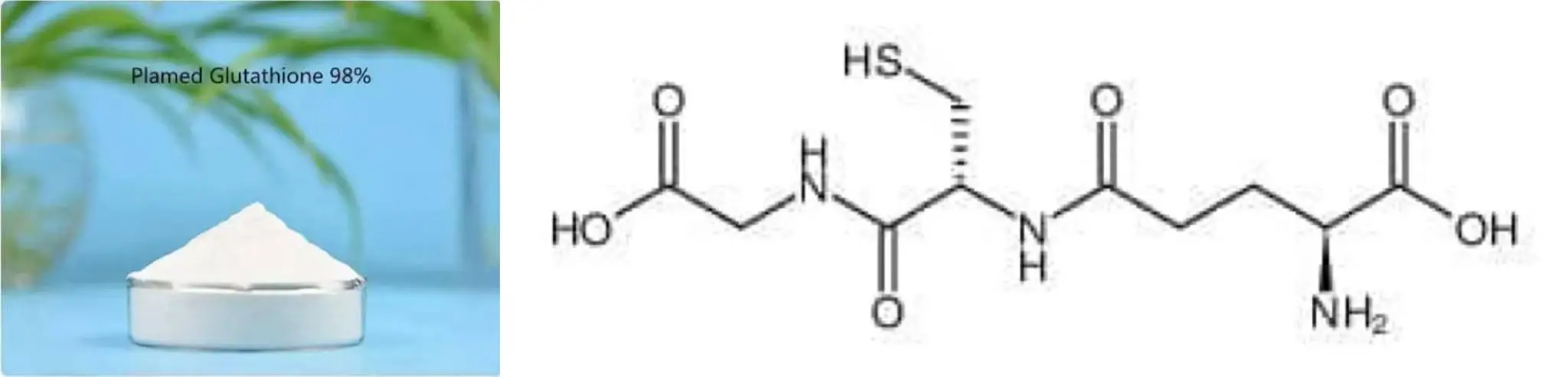
What it is:
The reduced, thiol-bearing tripeptide (GSH) — the active state of glutathione, at 98% HPLC with GSSG ≤1.5%.
How it works:
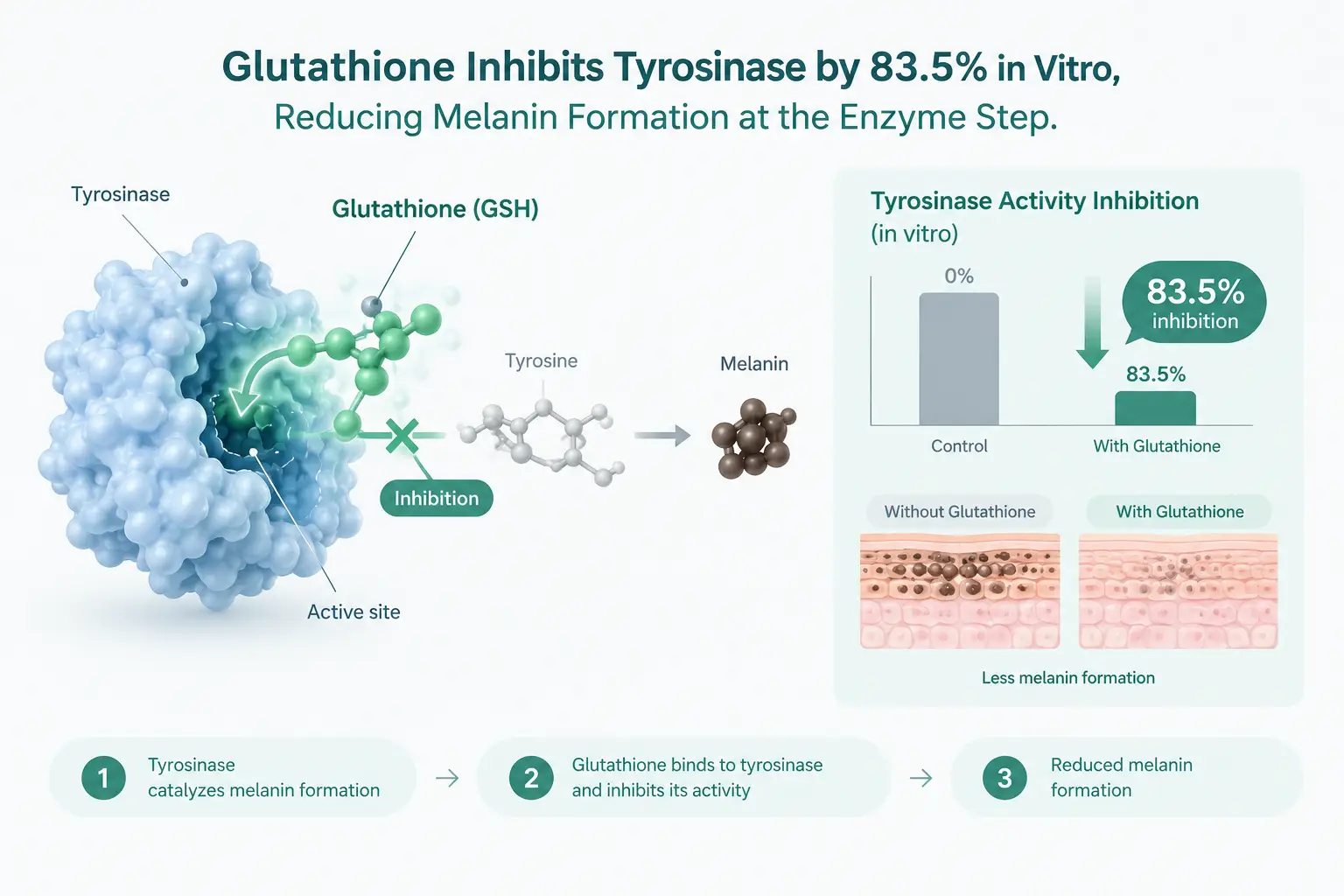
Direct free-radical scavenging through the thiol group, plus in-vitro inhibition of tyrosinase activity — brightening at the enzyme step rather than by damaging the melanocyte.
Where it fits:
Brightening serums, masks, toners and lotions at 0.1%–0.5%; also the antioxidant backbone of anti-pollution and anti-aging claims.
Source and how the four glutathione sources compare
Method | Operation | Purity | Pollution |
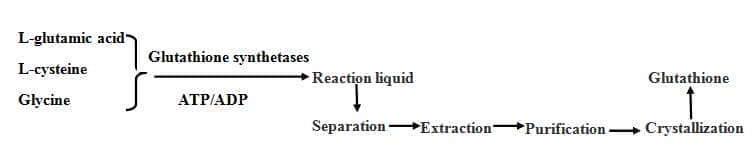
Enzymatic synthesis | L-glutamic acid, L-cysteine and glycine as substrate + natural glutathione synthetase, a little ATP/ADP to close the chain | High | Low |
Solvent extraction | Wheat germ / yeast extracted and purified | Lower than enzymatic | Low |
Chemical synthesis | Glutamic acid, cysteine, glycine via multi-step chemistry | Low | Severe |
Fermentation | Cheap carbohydrates converted by microbial metabolism | Not high | Low |
Manufacturing flow chart
The full manufacturing flow chart of the enzymatic route — substrate preparation, synthetase reaction, separation and purification, crystallization — is shown below.
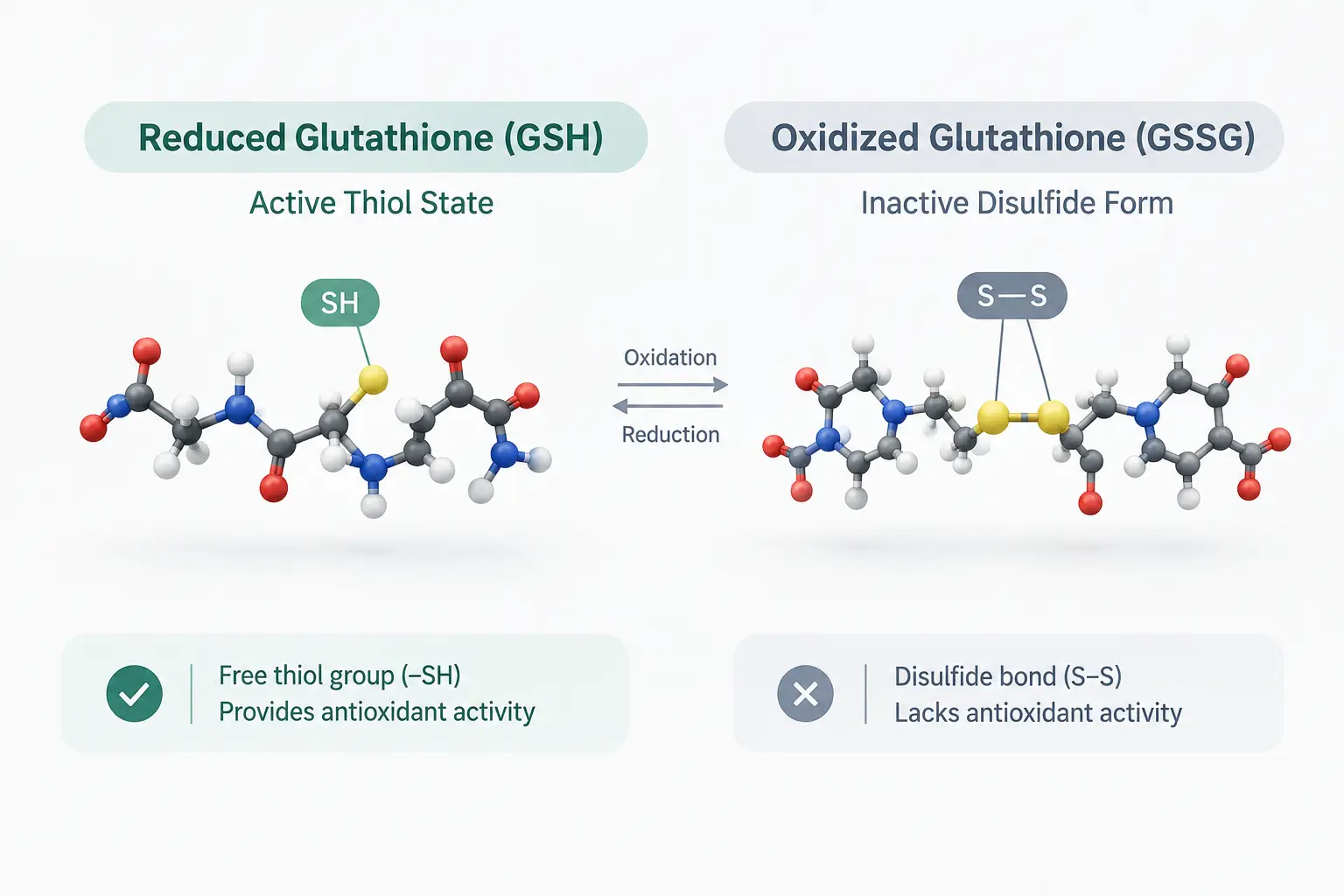
GSH vs GSSG: which form does a cosmetic formula need?
Attribute | Reduced Glutathione (GSH) | Glutathione Disulfide (GSSG) |
State | Active state | Inactive state |
Share of total glutathione in the body | More than 95% | Around 1% |
Function | Free-radical scavenging, antioxidant support, brightening | / |
Cosmetic application | Brightening and antioxidant cosmetics | / |
Relation: reduced glutathione converts into GSSG as it works. GSSG's physiological activity is very low, and because it accounts for a small proportion of total glutathione, the ingredient is usually called reduced glutathione — GSH is the form that plays the main role. This is why the GSSG limit on a COA (≤1.5% in Plamed's spec) is the clearest indicator of what you are actually buying.
L-glutathione vs reduced glutathione
The two labels describe different dimensions, and on a spec sheet they end up meaning the same product. L-glutathione vs reduced glutathione: the "L-" refers to the stereochemistry of the amino-acid building blocks (natural glutathione is the L-form), while "reduced" refers to the thiol state (GSH rather than GSSG). Commercial L-glutathione reduced powder is therefore the biologically standard molecule in its active state — and "l glutathione reduced powder" and "reduced glutathione powder" are two names for one COA line: assay ≥98%, GSSG ≤1.5%.
What are the glutathione specifications?
Items | Specifications |
Assay | ≥98% HPLC |
Appearance | White or off-white powder |
Related substances (GSSG) | ≤1.5% |
Chlorides | ≤200 ppm |
Sulfates | ≤200 ppm |
Ammonium | ≤200 ppm |
Loss on drying | ≤0.5% |
Residue on ignition | ≤0.1% |
Specific rotation | −15.5° ~ −17.5° |
Heavy metals | ≤10 ppm |
Iron | ≤10 ppm |
How to read this table:
GSSG ≤1.5% is the row that tells you the powder is genuinely reduced — oxidized lots drift toward GSSG, and the limit caps that drift.
Specific rotation −15.5° ~ −17.5° is the identity fingerprint of natural (L-) glutathione; a lot outside this window is not the standard molecule.
Chlorides / sulfates / ammonium ≤200 ppm reflect how clean the enzymatic workup is — these are the residues solvent extraction and chemical synthesis leave behind.
Regulatory snapshot
China — Glutathione is listed in the Inventory of Existing Cosmetic Ingredients in China (IECIC 2021), so it can be used in cosmetics placed on the Chinese market without new-ingredient registration.
International — recognised as a cosmetic raw material by the Personal Care Products Council (PCPC, formerly CTFA). There are no reports indicating that glutathione is unsafe for external use.
What does glutathione do for skin?
What does glutathione do for skin comes down to three things a formulator can build on — enzyme-level brightening, direct antioxidant support, and anti-pollution defense. Glutathione benefits skin without attacking the melanocyte itself, which is what separates it from legacy depigmenting actives. In short, the glutathione benefits for skin are tone support, antioxidant defense and anti-pollution protection.
Brightening at the enzyme step
Glutathione for skin brightening works at the enzyme: it inhibits the formation of new melanin and reduces the oxidation that drives visible pigmentation. In supplier in-vitro testing, tyrosinase activity was inhibited by 83.5% at 0.1 mg/mL, and B-16 melanocyte activity by 57.1% at the same concentration — brightening pressure applied at the enzyme, before pigment is even produced. Because the molecule is a small peptide, topical application lets it penetrate the cell membrane easily; topical glutathione for skin is therefore a surface-level active with an intracellular target, used at 0.1%–0.5% in leave-on formats. Summed up, the glutathione powder skin benefits are enzyme-level tone support, antioxidant defense and anti-pollution protection, and the main glutathione powder uses are leave-on brightening formats at 0.1%–0.5%.
Antioxidant glutathione: the thiol group
The antioxidant glutathione acts through a lively thiol group (–SH) that combines directly with free radicals and converts them into less reactive acids, accelerating their elimination and limiting free-radical damage to the skin. In vitro: DPPH radical elimination 65% at 0.1%, lipid peroxidation inhibited 40% at 0.1%, and UVA-induced protein damage inhibited 79.7% at 1 mmol/L. This is the same chemistry that makes GSH the cell's own antioxidant — applied topically, it supports the skin's defense rather than replacing it.
Anti-pollution support
Acting on the skin surface, glutathione is described as isolating the oxidative damage PM2.5 causes to skin — a supporting claim for anti-pollution positioning in city-skincare lines.
What has in vitro testing measured for glutathione?
Supplier in-vitro test data (not clinical claims):
Test item | Concentration | Result |
DPPH free-radical elimination | 0.1% | 65% |
Superoxide-radical removal | 1.0% | 23.1% |
Lipid peroxidation inhibition | 0.1% | 40% |
Protein damage under UVA, inhibited | 1 mmol/L | 79.7% |
Hyaluronic-acid decrease, inhibited | 1% | 57.4% |
B-16 melanocyte activity, inhibited | 0.1 mg/mL | 57.1% |
Tyrosinase activity, inhibited | 0.1 mg/mL | 83.5% |
How stable is glutathione powder, and how should it be stored?
1. The thiol group is the stability frontier. GSH works through –SH, and –SH is what oxidizes: every lot slowly drifts toward GSSG. This is why the spec caps GSSG at ≤1.5% — it is a stability indicator, not just a purity line.
2. Keep it away from oxidizing agents and direct sunlight. Storage: cool, dry place, sealed, away from sunlight and oxidants — the two conditions that accelerate thiol oxidation.
3. Add it in the cool-down phase. Like the other thiol- and vitamin-C-type actives, glutathione should not be held at high temperature; add below 40 °C in emulsions.
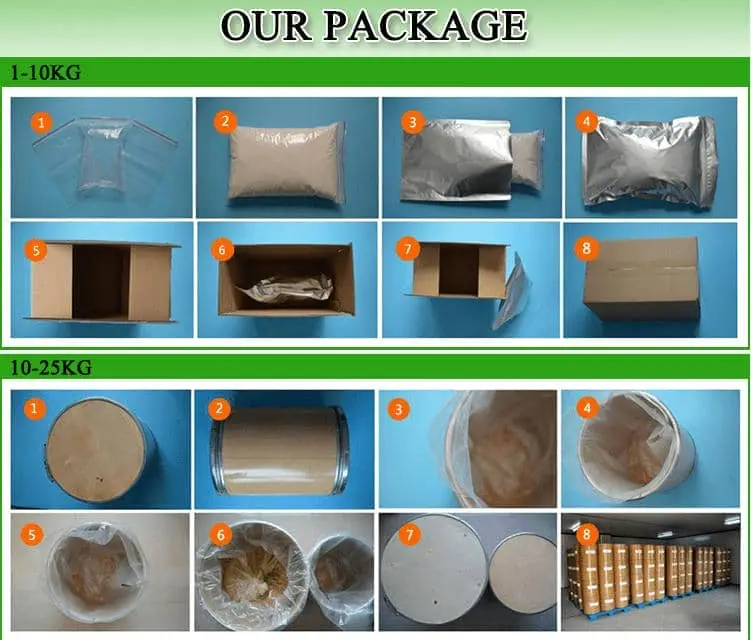
4. Watch the packaging. Supplied in 25 kg paper drums with two plastic bags inside; for lab trials, 1 kg minimal package.
How to store glutathione powder in production: keep the drum sealed between draws, dose with dry utensils, and never return unused powder to the drum — moisture and air are what turn GSH into GSSG on the shelf.
Where is glutathione used in skin care?
Glutathione in skin care is concentrated in brightening leave-on formats. Glutathione skin care formulas dose it at a reference range of 0.1%–0.5%:
Product format | Reference dosage |
Brightening serum / essence | 0.3%–0.5% |
Brightening mask | 0.3%–0.5% |
Toner / lotion | 0.1%–0.3% |
Cream / emulsion | 0.1%–0.3% |
Glutathione face cleanser & wash-off formats | 0.1%–0.3% |
The main glutathione uses for skin are brightening serums, masks and creams. In glutathione skincare lines the powder is dosed at 0.1%–0.5%: glutathione powder for skin goes into leave-on formats, and glutathione powder for face masks and cleansers into wash-off ones.
Compatibility warning
Do not combine glutathione with vitamin B12 or orotic acid (vitamin B13) in the same formula — the combination causes skin irritation.
Compounding partners:
With vitamin C derivatives — glutathione and vitamin C recycle each other's oxidized states; where ascorbic acid itself is too unstable, ascorbic acid 2-glucoside covers the vitamin C side at formula pH.
With tetrahydrocurcumin — tetrahydrocurcumin is a water-soluble antioxidant partner that supports the brightening system without adding color load (it appears together with glutathione in legacy brightening-toner formulas).
With arbutin — alpha or beta arbutin works at the same tyrosinase step from the substrate side; glutathione covers the radical-oxidation side.
With L-glutathione skin care claims in mind — pair it with soothing actives if the line targets sensitive-skin positioning.
Which reference formula shows glutathione in a finished product?
Formula · Brightening day lotion
Ingredient | Content (%) |
Glutathione | 0.5 |
DEA-Cetyl Phosphate | 2.0 |
Glycol Stearate (EGMS) | 12.0 |
Isopropyl palmitate | 12.0 |
Ascorbyl palmitate | 0.2 |
Cetearyl alcohol (C16/18) | 2.0 |
Acetic acid | 0.2 |
Petrolatum (vaseline) | 2.5 |
Ethylhexyl Methoxycinnamate | 1.0 |
Lanolin alcohol | 3.0 |
Butyl methoxydibenzoyl methane | 1.0 |
Propylparaben | 0.1 |
Methylchloroisothiazolinone (MCI) | 0.05 |
BHA | 0.2 |
Imidazolidinyl urea | 0.1 |
BHT | 0.3 |
Cysteine | 0.5 |
Fragrance | 0.6 |
Refined water | Add to 100 (61.75) |
Where can I buy glutathione powder wholesale?
Product supply information
Item | Value |
Product | Glutathione (Reduced Glutathione, GSH) |
Product ID | PMB1603 |
INCI | Glutathione |
CAS | 70-18-8 |
Specification | ≥98% HPLC (white or off-white powder) |
GSSG limit | ≤1.5% |
Form & solubility | Powder, water-soluble |
Reference dosage | 0.1%–0.5% |
Minimal package | 1 kg |
MOQ | 1 kg |
Samples | Available on request |
Storage | Cool, dry place; away from direct sunlight and oxidizing agents |
Package | 25 kg paper drums with two plastic bags inside |
Available Document of Glutathione
Technical Data Sheet (TDS - L-Glutathione Reduced)
Certificate of Analysis (COA - Reduced & Oxidized Grades)
Material Safety Data Sheet (MSDS)
Composition Statement / Compositional Breakdown
Manufacturing Process Flowchart
Method of Analysis (MOA) / COA Test Method
Stability Data Sheet (Thermal & Light Stability)
Formulation & Application Guide
Third-Party Test Report (Fluorine-Free / Fluorine Content Assay)
Regulatory & Quality Statements (Halal, Animal-Free, ISO 16128 Natural Origin Index)
NMPA Raw Material Safety Dossier (Attachment 14 / Submission Code)
Product Brochure & Technical Introduction
To request a quote or a sample, contact Plamed Green Science Group here.
Glutathione powder supplier & manufacturer
Plamed is a glutathione supplier and glutathione manufacturer running the enzymatic route in-house: substrate-grade L-amino acids in, 98% GSH out, with the GSSG limit verified on every COA. As a glutathione powder supplier and L-glutathione powder supplier, the same line supplies the reduced L-form used across brightening SKUs.
Glutathione wholesale, powder price and supply terms
Glutathione wholesale supply starts from 1 kg (minimal package 1 kg, bulk packed in 25 kg paper drums). Glutathione powder price depends on assay grade, order volume and destination documentation; request a quotation matched to your volume — 1 kg lab trials through full-production wholesale. For sampling and distribution terms, visit the distributor page.
Glutathione powder for sale — in stock, batch-verified
Glutathione powder for sale direct from the manufacturer is held against the 12-document set above, with glutathione powder in stock for standard grades and same-week sampling; L-glutathione powder for sale in lab quantities uses the same ≥98% HPLC grade as production volumes, and L-glutathione powder for skin ships from 1 kg in that same grade.
Pure glutathione powder, verified batch by batch
Pure glutathione powder here means a verifiable definition, not a marketing word: assay ≥98% HPLC, GSSG ≤1.5%, heavy metals ≤10 ppm, specific rotation −15.5° ~ −17.5°. Ask any supplier for exactly those four numbers — see FAQ Q9 for how to read them against "korean / organic / natural" labels.
Q1: What is glutathione?
A: Glutathione (GSH) is a tripeptide of glutamic acid, cysteine and glycine, present in almost every human cell. In cosmetics it is supplied as reduced glutathione powder at 98% assay (CAS 70-18-8, 307.32 g/mol), made by enzymatic synthesis. Plamed's grade is PMB1603, water-soluble, dosed at 0.1%–0.5%.
Q2: What does glutathione do for skin?
A: It brightens at the enzyme step (in-vitro tyrosinase inhibition 83.5% at 0.1 mg/mL), scavenges free radicals directly through its thiol group (DPPH elimination 65% at 0.1%), and supports anti-pollution defense against PM2.5-driven oxidative damage. Topical glutathione works as a small peptide that penetrates the cell membrane easily.
Q3: L-glutathione vs reduced glutathione — are they different?
A: They describe two different dimensions that resolve to the same product. "L-" is the stereochemistry of the amino-acid building blocks; "reduced" is the thiol state (GSH, not GSSG). Commercial L-glutathione reduced powder is the natural molecule in its active state. Check the COA: assay ≥98%, GSSG ≤1.5%.
Q4: Is glutathione safe for cosmetics?
A: Glutathione is listed in IECIC 2021 for the Chinese market and recognised by the Personal Care Products Council (PCPC); there are no reports indicating it is unsafe for external use. The applicable concentration limit is the one set by the regulation of the market where the finished product is sold.
Q5: How much glutathione should a brightening formula contain?
A: The reference dosage is 0.1%–0.5%: 0.3%–0.5% in serums and masks, 0.1%–0.3% in toners, lotions and creams. The "amount of glutathione" a formula needs is set by the finished product's positioning, not by a legal maximum — verify against your target market's regulation.
Q6: What should not be mixed with glutathione?
A: Do not combine it with vitamin B12 or orotic acid (vitamin B13) in the same formula — the combination causes skin irritation. This is a compatibility warning from the ingredient's application notes, not a general ban on vitamins.
Q7: How should glutathione powder be stored?
A: In a cool, dry place, sealed, away from direct sunlight and oxidizing agents — the two conditions that accelerate thiol oxidation into inactive GSSG. Production packs are 25 kg paper drums with two plastic bags inside; keep the drum sealed between draws and never return unused powder.
Q8: Why does the GSSG limit matter on a COA?
A: GSSG is the oxidized, largely inactive form of glutathione. A low GSSG reading (spec: ≤1.5%) proves the powder is genuinely reduced glutathione and has not drifted on the shelf — it is the clearest freshness indicator on the document. Pair it with specific rotation (−15.5° ~ −17.5°) to confirm identity.
Q9: Do origin claims like "Korean" or "organic" glutathione powder beat a COA?
A: No. Korean glutathione powder is marketing frame; glutathione is an industrially synthesized molecule, so judge every lot by four numbers: assay ≥98% HPLC, GSSG ≤1.5%, heavy metals ≤10 ppm, specific rotation −15.5° ~ −17.5°. The same rule answers "best glutathione powder": the right lot is the one whose COA passes those four lines. Plamed does not rank other companies' brands.
Q10: What is the MOQ, and where can I buy glutathione powder wholesale?
A: MOQ is 1 kg (minimal package 1 kg), packed in 25 kg paper drums, Product ID PMB1603, with TDS, COA and MSDS attached per shipment. Contact Plamed for a quote and samples, or reach a local distributor.